Key Takeaways
- Pet bedding export technical specifications must identify the exact SKU, test method, sample date, and responsible entity — a headline number alone is not enough to support a global sourcing decision.
- Mineral litter, plant-based litter, wood shavings, and bathing sand each need different quality controls and packaging strategies; treating them with one generic checklist increases the risk of claims and returns.
- AiSha figures supplied in a sales brief are reference values until the current TDS or batch report confirms the specific SKU, lot, and test method.
- Packaging must protect the product during ocean freight, communicate regulatory compliance, and fit the target market’s labeling and waste requirements.
- Container loading is a weight-first decision for dense mineral products and a volume-first decision for lightweight plant and wood products; carriers, port limits, and pallet patterns all affect the final usable tonnage.
- A complete QA/QC record connects raw-material inspection, in-process checks, finished-product testing, retained samples, and shipment documentation into one traceable chain.
- An OEM buyer should approve the product, package, label, claims, documents, MOQ, lead time, and loading plan as one locked commercial SKU before print approval.
AiSha Pet Bedding Export Technical Specifications at a Glance
| Product / Service | B2B Decision Point | Evidence to Request |
| Mineral cat litter | Moisture, absorption, dust, clumping, particle strength, package weight | Current TDS, test methods, batch report, retained sample |
| Tofu / plant-based litter | Fiber/starch formula, particle form, moisture, powdering, disposal wording | Ingredient statement, moisture/dust results, aflatoxin B1 and formaldehyde test, claim review |
| Wood shavings and bedding | Wood source, absorption, dust, compression, bulky-cargo utilization | Material statement, moisture, dust, compression test, packaging and storage data |
| Pet bathing sand | Mineral identity, fineness, cleanliness, intended small-pet use | Particle specification, safety information, additive disclosure, package details |
| OEM / ODM packaging | Formula, color, fragrance, package, label, market and claims | Approved physical sample, artwork proof, MOQ, lead time, document checklist |
| Container loading plan | Weight limit, cube utilization, pallet or floor-load method | Container calculation, loading photographs, seal record, packing list |
1. How to Read Pet Bedding Export Technical Specifications
Pet bedding export technical specifications form the backbone of a reliable B2B sourcing file. They should be read as controlled documents, not marketing posters. A complete technical data sheet for pet bedding export identifies the product name, SKU, material description, physical form, package type, test items, specification limits, test methods, sample date, and issuing entity. When a value changes by formula, package, fragrance, or particle size, the document must make the scope clear.
Why this matters to distributors and wholesalers: a spec sheet that looks complete but omits the test method behind a headline number cannot be used to compare suppliers or to respond to a downstream customer question. Before placing a full-container order, request the current TDS and verify that the product name, manufacturer, formulation, date, and scope match the quotation. You can review the AiSha cat litter wholesale range to see the SKU scope before requesting documents.
Confirming Specification Scope
Buyers should confirm whether each value is a specification limit, a typical result, or a single test result. Check the sampling point — raw material, production line, finished product, packed product, or post-transport sample. A moisture value measured at the production line does not equal a moisture value measured inside a sealed package after four weeks of ocean freight. Record the test method, units, laboratory, date, and applicable SKU for every figure that enters a commercial comparison.
Retained Samples and Document Control
Keep a retained sample that matches the approved commercial sample and the test report. The source brief lists internal TDS and SDS/MSDS support. Buyers should request the current files and cross-check the product name, manufacturer, and scope against the order. A general company capability statement is not a substitute for a SKU-specific TDS.
2. Mineral Cat Litter: Reference Parameters and Interpretation
For mineral cat litter, pet bedding export technical specifications supplied by AiSha describe natural sodium bentonite or montmorillonite-based products. Reference values in the source brief include moisture at or below 5%, water absorption at or above 330%, dust at or below 0.5%, a drop-strength test, clumping within 3–5 seconds, and odor-control results over a defined period. These figures are presented here as supplied reference specifications — not as independently verified results for every AiSha SKU.
What Each Parameter Means for a Buyer
Moisture matters for storage and transport stability, but the result depends on the test method and sample location. Absorption should be compared only when the material preparation and measurement method are identical. Dust needs a defined test method and should be checked before and after packing when long-haul transport is expected. A drop test must state the drop height, sample condition, number of drops, and pass/fail rule. Clumping time is a use-performance test — not a universal guarantee — and can change with liquid volume, substrate temperature, particle size, and test procedure. Odor-control results also need a method, odor source, time period, and laboratory description.
Mineral Packaging and Loading
Mineral litter is usually the weight-limited segment of a mixed pet bedding portfolio. The source brief gives 20GP loading references of approximately 24–26 tonnes floor-loaded and palletized references of around 12–14 tonnes, subject to destination-port limits and actual package dimensions. These are planning values — the broker, carrier, container specification, road limit, port limit, pallet pattern, and package compression strength must control the final calculation. Always separate product weight, package weight, pallet weight, and dunnage weight in the loading plan.
3. Tofu and Plant-Based Litter: Formula, Moisture, and Disintegration
The source brief describes AiSha tofu litter using soybean-residue fiber and corn starch, with reference diameters of 2.0mm and 1.5mm, powdering at or below 1%, pH 8.5–10, fast water disintegration, and testing for aflatoxin B1 and formaldehyde. For the current product-specific TDS and ingredient statement, see the AiSha tofu cat litter product page.
Plant-Based Packaging and Logistics
Plant-based litter needs a different logistics conversation from dense mineral products. Moisture stability, packaging barrier properties, warehouse humidity, pellet strength, and route conditions can all affect caking, powdering, and package integrity. A product that disintegrates quickly in water may also require careful storage and packaging design; disposal claims must follow the exact product formulation and local waste-water regulations.
Vacuum Packaging Considerations
The source brief suggests vacuum or compression packaging for tofu and cassava formats. This may improve cube utilization by approximately 30%, but buyers should test seal strength, deformation after transport, consumer opening experience, storage recovery, package appearance, and actual container loading results before adopting a new format for a large production run.
4. Wood Shavings, Shreds, and Small-Pet Bedding
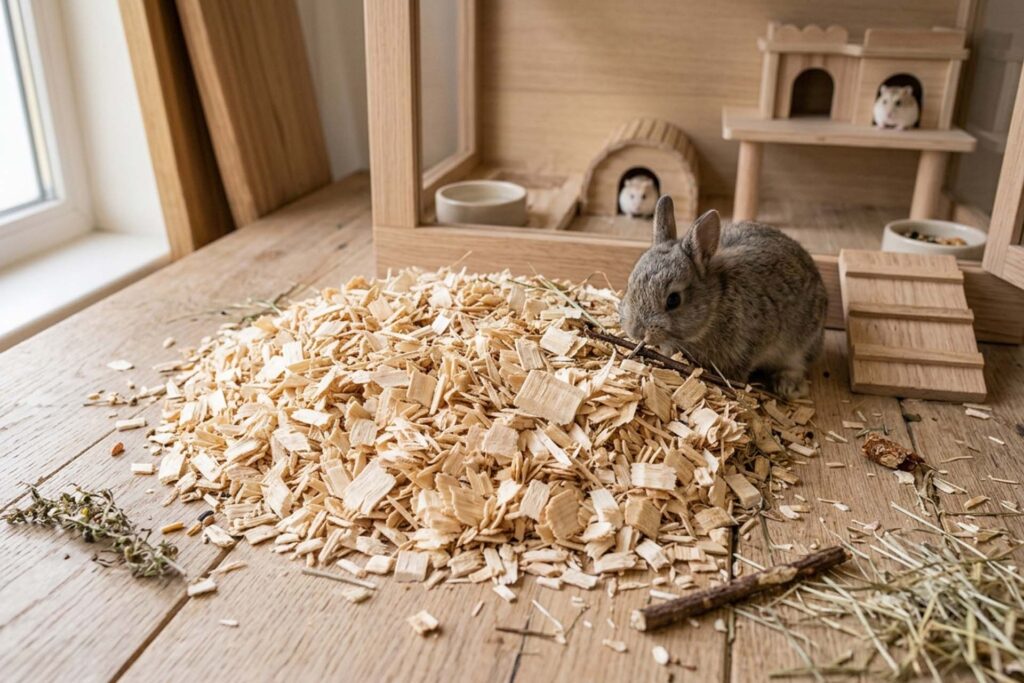
Wood-based pet bedding export technical specifications address species, particle structure, dust, absorption, and storage conditions — all of which affect small-pet environments. The source brief references pine and aspen materials, absorption above 300%, dust below 1.5%, powdering at or below 1%, and 500g, 1kg, and 4kg compressed packs. These are supplied references requiring current AiSha documentation for the specific SKU.
Wood Species and Processing Questions
Ask which species and processing steps are used, how the material is dried, how dust is measured, whether the package protects against moisture during ocean freight, and how compression affects the material after opening. A bulky product can be light but expensive to transport if the package does not use the available container cube efficiently.
ISPM 15 Compliance for Wood Packaging
If solid-wood pallets or dunnage are used for export, check the ISPM 15 phytosanitary standard and the destination-country implementation rules. The treatment mark on the pallet supports pest-risk management; it does not replace cargo inspection or importer-specific phytosanitary advice.
5. Pet Bathing Sand: A Specialized Product File
The source brief describes pet bathing sand based on natural dolomite, processed to a fine particle size, with optional cleaning or fragrance components. For this category, pet bedding export technical specifications should clarify mineral identity, particle-size distribution, additives, intended species, package weight, dust control, storage instructions, and use guidelines. Avoid medical or disease-prevention claims without appropriate evidence and regulatory review. A small-pet care product can be positioned around cleanliness, handling, and habitat management, but the claim wording must match the evidence and destination-market rules.
6. Packaging Selection and Container Loading
For pet bedding export, packaging and loading must be planned together — a cost-efficient package that fails moisture protection or cube utilization erases the logistics advantage. AiSha’s source brief describes several packaging formats, and each format makes a different trade-off between barrier protection, shelf appearance, package strength, cube utilization, handling, and cost.
Packaging Format Trade-Offs
- Woven PE/PP bags suit larger mineral packs and high-volume distribution when inner liner protection and heat-sealing are adequate.
- Printed stand-up pouches support retail presentation, handles, and controlled package sizes.
- Vacuum or compressed bags may improve cube utilization for plant or wood products, subject to seal strength, deformation testing, and storage recovery.
- Plastic buckets serve premium positioning, but cube utilization, weight, and plastic-packaging regulatory obligations must be calculated.
Labeling and Custom Packaging Requirements
Custom packaging must define the label language, barcode, net weight, lot code, production date, disposal wording, claims, carton marks, and importer information. For EU-bound packaging, review the European Commission packaging-waste guidance and the PPWR text with the importer or compliance adviser. Packaging rules depend on the market, packaging type, importer role, and date of placing on the market. A package that looks attractive but lacks a required statement can delay a launch or require costly relabeling.
Mineral Litter Container Loading
The source brief references 20GP loads of approximately 24–26 tonnes floor-loaded and palletized plans of approximately 12–14 tonnes. Use these only as preliminary planning values. Confirm payload, axle limits, pallet count, stack height, carton compression strength, and destination restrictions for each shipment. Match loading photographs, seal numbers, container numbers, packing lists, and invoices to create a complete shipment record.
Plant-Based and Wood Container Loading
The source brief gives a 30% volume-reduction reference for vacuum packing and approximately 18.6 tonnes for a 20GP plant-based shipment, plus an 18-tonne 40HQ reference for compressed wood shavings. These are supplied planning references, not guaranteed loading results. Conduct a package-level loading calculation, confirm the container type and payload, separate product weight from package and pallet weight, and retain photographs of the actual stuffing plan.
7. QA/QC, Compliance, and OEM Cooperation
For global pet bedding export buyers, the QA/QC file and the OEM cooperation workflow form the operational core of the supplier relationship. The source brief describes a three-stage control system — raw-material checks, in-process water and filling monitoring, and finished-product sampling — plus testing through SGS third-party testing and inspection, BSCI compliance, and product-specific aflatoxin and formaldehyde reports. Each certificate should be presented only with the current report number, issuing entity, date, scope, and applicable product. Never write ‘certified’ without identifying what was certified and for whom.
Suggested Quality Control Chain
- Raw material: source, lot number, moisture, foreign matter, mold or other relevant indicators.
- Production: moisture monitoring, blending ratios, forming, weight control, screening, and dust handling.
- Finished product: particle size, strength, moisture, dust, absorption, clumping, odor, and package seal integrity.
- Shipment: count, net/gross weight, pallet count, loading record, seal, documents, and retained sample.
OEM Approval Workflow
- Step 1: Requirement review and product selection — define the market, material, target price, package, claims, test expectations, target port, order volume, and launch date.
- Step 2: Sample or reference approval — evaluate the physical product and packaging together.
- Step 3: TDS, test report, packaging, label, and claim review — confirm every claim can be supported by documentation.
- Step 4: Quotation, MOQ, lead time, and loading plan confirmation — lock all commercial terms before production.
- Step 5: Production, batch release, packing, and document handover.
- Step 6: Arrival inspection, feedback, and corrective action if needed — use the first shipment to improve the next specification.
For a deeper discussion of formula-level OEM, see the AiSha tofu litter OEM formula guide.
Which AiSha Solution Fits Your B2B Project?
For value-led mineral distribution
Prioritize stable particle performance, strong packaging, payload planning, and a specification that sales teams can explain clearly. Mineral cat litter is the weight-workhorse of a pet bedding export portfolio; get the TDS, loading calculation, and compression test right first.
For a premium plant-based range
Prioritize ingredient transparency, moisture protection, package design, claim review, and a pilot shipment before a large launch. Plant-based litter demands a different logistics strategy from mineral products and deserves its own technical file.
For small-pet retail expansion
Select species-appropriate bedding, provide clear use instructions, ensure safe storage, control dust, and offer package sizes that fit the retail channel. Wood shavings and bathing sand should each have a product-specific technical sheet.
For private-label development
Approve product and packaging together as one commercial unit. Confirm claims, label language, documents, MOQ, lead time, and loading plan before print approval. Keep one controlled order file for future reorders.
3 Mistakes to Avoid in Pet Bedding Export Sourcing
Mistake 1: Treating supplied numbers as universal guarantees
A technical figure must be tied to a product, batch, method, and document. Do not move a reference value from one product category to another without a new test.
Mistake 2: Optimizing container weight without checking sellable condition
More cargo can reduce unit freight cost, but damaged packages, excessive compression during stuffing, or moisture ingress during transit can erase the saving entirely. The metric that matters is sellable units delivered — not tonnes inside the container.
Mistake 3: Approving the product without the final package and documents
The commercial SKU includes the product, package, label, claims, test record, loading plan, and shipment file. Approving the product sample without the production package and final artwork creates a gap that can be expensive to close after production starts.
8. Care, Storage, and Document Handover
Store sealed litter and bedding in a clean, dry area off the floor. Keep plant and wood products away from direct water exposure and monitor seasonal warehouse humidity. Use FIFO rotation and quarantine packages with broken seals, wet marks, unusual odor, caking, or damaged labels. At receiving, compare the container seal, package count, lot code, net weight, carton condition, and visible appearance against the packing list and approved sample.
Keep all documents and photographs in the controlled order file. Notify the supplier, carrier, broker, or insurer within the agreed claim period if any discrepancy is found. A well-maintained order file makes subsequent reorders faster, reduces negotiation friction, and provides the reference data needed to compare suppliers objectively.
Conclusion: Build Trust from the Decimal Point to the Container
For a global buyer, AiSha’s product range becomes commercially valuable when pet bedding export technical specifications, packaging records, quality documentation, and loading plans work together as one controlled system. Mineral litter, plant-based litter, wood bedding, and bathing sand should each have a clear technical file and a clear commercial use case. The safest path is to treat every capacity figure, performance value, certificate, MOQ, lead time, and loading number as a document-controlled field.
Frequently Asked Questions
These frequently asked questions address common concerns for B2B buyers evaluating pet bedding export technical specifications from AiSha.
What are pet bedding export technical specifications?
Pet bedding export technical specifications are the controlled technical documents — including the TDS, test method, packaging plan, loading calculation, and batch record — that a B2B buyer should review before placing a full-container order. They convert a product brochure into supply-chain confidence by linking each performance claim to a test method, sample date, and responsible entity.
How do you read a cat litter technical data sheet for export?
Confirm whether each value is a specification limit, a typical result, or a single test result. Check the sampling point (raw material, production line, or finished product) and the test method. Keep a retained sample matching the approved commercial sample. A general company statement cannot replace a product-specific TDS.
What packaging options work for pet bedding export?
Woven PE/PP bags suit high-volume mineral distribution; printed stand-up pouches support retail presentation; vacuum or compressed bags improve cube utilization for plant and wood products; and plastic buckets serve premium positioning. Each format involves a different trade-off between barrier protection, shelf appearance, and transport cost. For EU-bound packaging, review the PPWR with your importer or compliance adviser.
How is container loading planned for pet bedding products?
Heavy mineral litter is generally weight-first; light plant or wood products are often volume-first. The final calculation depends on package dimensions, pallet pattern, container type, local road limits, port restrictions, and the carrier’s booking rules. Buyers should compare not only tonnes per container but also the number of sellable units delivered in saleable condition.
What QA/QC documents should pet bedding export buyers request?
Request the current product specification, a relevant batch or laboratory report, the TDS, SDS where applicable, packaging information, origin or customs documents, and any certification with the number, date, scope, and issuing entity clearly identified. A three-stage control chain — raw material, production, and finished product — provides a useful structure for review.
Can AiSha support OEM private-label pet bedding?
Yes. AiSha describes support for formula, particle size, fragrance, package, color, label, and loading customization. Buyers should confirm the actual OEM range, MOQ, lead time, and document set in the current quotation before printing packaging or reserving a production slot.
How can a distributor reduce risk on a first pet bedding export order?
Start with an approved physical sample and a pilot shipment. Keep one controlled order file containing the sample, specification, artwork, quote, test report, packing list, invoice, loading record, transport document, and receiving report. Inspect the first arrival thoroughly and use the findings to tighten the next specification.
 English
  Spanish
  Russian
  Japanese
  Arabic