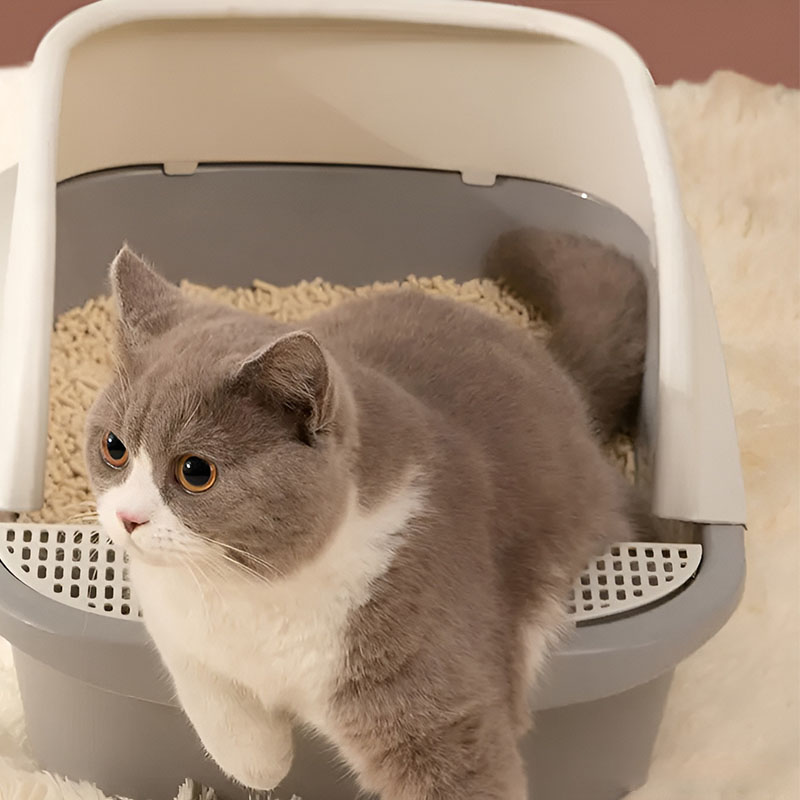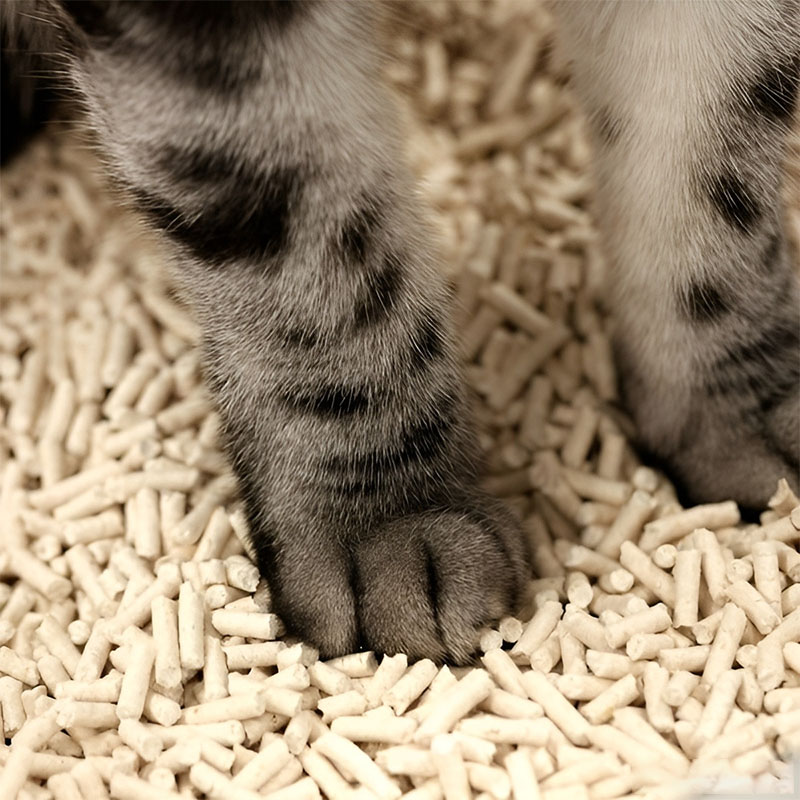
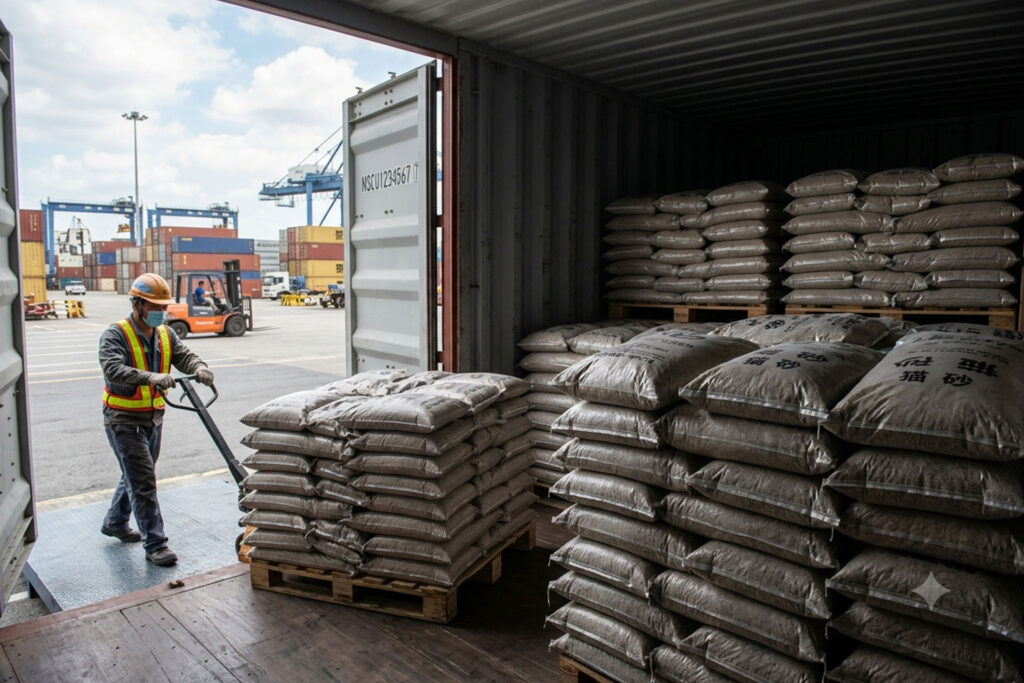
Through long-term involvement in the cat litter wholesale industry, We have gained deep insights into the actual challenges faced by distributors, retailers and bulk buyers in different markets. Every month, We hold online training sessions for our wholesale partners, and the most frequent pain points raised by B-end buyers remain consistent: their retail clients often provide negative feedback about litter dust, broken clumps and rapid odor buildup.
Procurement Quick Reference for Global Buyers:
- Main Varieties: Premium Bentonite (Sodium-based), Eco-friendly Tofu Litter (Pea fiber), Broken Tofu Litter.
- OEM Customization: Fully supports custom packaging (6L, 10L, Ton bags), scent formulation, and pellet diameter (1.5mm/2.0mm).
- Key Logistics Metrics: Direct factory container loading (FCL), standard palletization for maritime transit, moisture-controlled packaging.
- Target Audience: Pet brand owners, regional distributors, large-scale retail chains.
However, most complaints are not caused by product defects, but by mismatched household environments and irregular litter maintenance habits.
This guide is prepared for our B2B partners and provides practical training material for store staff, catteries and downstream resellers involved in cat litter wholesale and retail distribution.
It covers common AiSha application scenarios, operating procedures, storage requirements and comparisons with tofu litter sand and biodegradable cat litter.
Real bulk cooperation cases and practical sales points are included to help B-end sellers explain product advantages to consumers, improve customer satisfaction and reduce after-sales consultation pressure throughout the cat litter wholesale supply chain.
Full Matching Living Scenarios of AiSha for Cat Litter Wholesale Customers: Reference for B-End Customer Sales Explanation
As B-end suppliers engaged in cat litter wholesale, you will face diversified customer groups covering urban renters, villa families, professional catteries, pet boarding centers and pet medical institutions. Mastering the environmental adaptability of AiSha allows your sales staff to recommend targeted product advantages according to different customer living conditions, accurately meet consumer demands and boost bulk repurchase volume.
For global distributors and retailers involved in cat litter wholesale, understanding different application scenarios helps improve sales communication and customer matching. Each scenario below is matched with real wholesale feedback collected from our global partners for direct reference in store sales training and customer communication.
1. Small Closed Rental Apartments (Main Customer Groups of European & Southeast Asian Retail Stores)
Urban rental apartments generally feature narrow space, poor natural ventilation, year-round air conditioning operation and extensive use of carpets and fabric sofas, which are the most typical application scenarios where ordinary low-grade clumping cat litter receives frequent negative reviews.
Generic unprocessed mineral litter will produce massive fine ash every time cats dig waste. Dust penetrates carpet fibers and leaves permanent grey stains, requiring frequent deep cleaning by residents, which greatly reduces customer satisfaction. Many partners from kitty litter companies in France, Thailand and Singapore reported that over 70% of apartment tenants will place secondary orders after trying AiSha once.
For cat litter wholesale distributors, this scenario represents one of the most stable retail demand markets because urban apartment owners usually prioritize cleanliness, odor control and easy maintenance.
During production, AiSha implements three-stage low-temperature negative pressure dust removal to completely strip loose surface powder. When consumers pour the litter to the standard 6–8 cm thickness, dense polished grains maintain complete structure under cat paws, generating almost no floating ash.
Even if residents close all doors and windows for 3–5 consecutive days during cold winter or rainy seasons, the mineral physical adsorption structure can seal urine odor inside solid clumps, avoiding sour smells spreading to living rooms, dining areas and bedrooms.
For B-end merchants purchasing through cat litter wholesale channels, this advantage can be highlighted to customers who pay attention to home decoration maintenance. It effectively differentiates AiSha from cheap bulk cat litter with severe dust problems, improving single-store sales conversion rates and encouraging repeat purchasing.
2. Humid Coastal Residential Areas (Core Bulk Demand Market of Latin American Wholesalers)
Coastal cities are characterized by long monsoon seasons and annual average humidity above 80%, which creates the biggest performance challenge for untreated bulk cat litter.
Without grain curing treatment, cheap clumping cat litter absorbs moisture from the air within 72 hours, becomes mushy and loses clumping ability, forming hard-to-clean urine mud at the bottom of litter trays.
For cat litter wholesale suppliers, humid coastal regions require products with stronger moisture resistance because distributors must ensure stable performance after long-distance transportation, warehouse storage and retail shelf placement.
Last year, we signed a one-year container supply contract with a large distributor in Chile, purchasing large quantities of bulk cat litter for resale through chain pet stores across coastal tourist cities. Before formal cooperation, the distributor conducted four weeks of parallel tests on six mainstream mineral litter brands in the local wholesale market, and AiSha’s moisture resistance data ranked first.
AiSha’s exclusive low-temperature curing layer wraps every single grain to isolate external water vapor. Even under two consecutive weeks of continuous rainfall, the surface of the litter inside the tray remains loose and dry, forming tight waste clumps stably.
In contrast, plant-based biodegradable cat litter is prone to black mold after three days in humid air, bringing hidden bacterial risks to cats.
When communicating with coastal end consumers, B-end sellers can take mold resistance and stable clumping performance during rainy weather as core selling points. For cat litter wholesale customers, these advantages create a clear product gap compared with plant litter competitors and help distributors establish long-term retail customer groups.
3. Dry Inland Villa Families (Key Customer Group of North European & North American Distributors)
Inland suburban villas have long heating periods and extremely dry indoor air during autumn and winter. Most ordinary mineral litter will produce thick floating ash once poured, leaving a thin grey film on hardwood floors, linen bedding and fabric curtains, increasing residents’ daily cleaning burden.
For distributors engaged in cat litter wholesale, villa families represent a premium customer segment because these consumers usually have higher requirements for home cleanliness, product performance and long-term usage experience.
Multiple large-scale cat litter company partners in Canada and Sweden take AiSha as the flagship bulk product for villa customers, with stable monthly orders of wholesale cat litter supplied from cat litter manufacturers in China.
Multi-layer vibration filtration technology removes all loose powder from AiSha grains during production. Even if cats perform vigorous digging movements, only negligible micro-particles float in the air, greatly reducing the frequency of floor mopping and furniture wiping for villa owners.
Oversized deep litter trays filled with AiSha can serve 3–4 cats at the same time without rapid performance degradation caused by long-term repeated trampling. This makes AiSha especially suitable for multi-cat households and premium residential environments.
For B-end merchants purchasing through cat litter wholesale programs, the low-dust and long-lasting advantages can be packaged into high-end home pet care solutions. This helps retailers increase customer unit prices, improve gross profit margins and build stronger product differentiation compared with standard low-cost litter products.
4. Multi-Cat Breeding Farms & Pet Boarding Centers (Stable Large-Volume B-End Purchasers)
Breeding bases and pet boarding shops are high-frequency usage scenarios with dozens of cats accessing litter trays throughout the day, putting forward strict requirements for clump firmness, wear resistance and comprehensive usage cost.
As a reliable solution for cat litter wholesale supply, AiSha’s cured clumps maintain stable structure under repeated extrusion from dozens of cats every day and will not dissolve into muddy sediment at the bottom of litter trays.
Compared with budget sanitary clumping cat litter that requires full tray replacement every three days, AiSha only requires two daily scoops, significantly reducing daily labor costs for breeding staff.
From the perspective of comprehensive procurement cost accounting, AiSha’s single-tray service cycle is twice that of fast-consumed tofu litter sand, which directly reduces the monthly bulk purchase expenditure of breeding customers.
For all B2B partners involved in cat litter wholesale, breeding farms and boarding stores represent valuable long-term repeat customer resources with large purchase quantities. Sales teams can provide cost comparison data between AiSha and plant-based litter, helping farm managers calculate long-term operating expenses and secure stable bulk orders.
5. Special Crowd Households: Kittens, Senior Cats & Flat-Faced Sensitive Breeds (High-Sticky Retail Customer Groups)
Kittens have tender paw pads, elderly cats often have weaker respiratory systems, and flat-faced breeds such as Persians have narrow nasal passages that are extremely sensitive to floating dust.
Rough, unpolished clumping cat litter and coarse-grained tofu litter sand can easily cause sensitive cats to refuse litter trays, leading to off-tray urination problems and customer complaints.
Many veterinary clinics and rescue shelters cooperating with global kitty litter companies take AiSha as a fixed supply product, relying on fully polished round grains and an ultra-low dust formula to avoid skin scratches and respiratory discomfort in cats.
For cat litter wholesale distributors and retail partners, sensitive pet households are one of the most valuable customer groups because they usually show stronger product loyalty after finding a suitable litter product.
When B-end sellers receive customers raising sensitive cat breeds, they can prioritize recommending AiSha’s mild texture and low-dust characteristics. This type of consumer tends to develop long-term repurchase habits, continuously bringing stable retail revenue to stores and reducing customer churn rates.
Unsuitable Scenarios Need Clear Reminder for Downstream Consumers
As mineral clay litter, AiSha cannot be flushed down toilets like biodegradable cat litter. For cat litter wholesale customers, providing accurate usage guidance is essential to reduce after-sales problems and improve consumer trust.
Retailers and distributors should remind consumers without classified garbage collection systems to prepare sealed trash bags for waste clumps.
In addition, fully open outdoor litter areas exposed to continuous heavy rain are not suitable for long-term placement, as running water will completely destroy the clumping structure of any clumping cat litter.
Clear communication about product limitations can effectively reduce unnecessary after-sales inquiries for B-end merchants and strengthen their professional service capability.
For global partners engaged in cat litter wholesale, AiSha is more than a bulk cat litter product. Its performance characteristics help distributors match products with different consumer needs, improve retail performance and strengthen market competitiveness.
Complete Standard Operation & Storage Specifications for Cat Litter Wholesale Customers (Mandatory Training Content for B-End Store Staff)
All standardized operating steps summarized below are aggregated from five years of global B-end after-sales data, covering litter box matching, filling thickness, daily cleaning, sand replacement transition and sealed storage.
For businesses engaged in cat litter wholesale, these standardized operating guidelines provide essential training support for distributors, retailers, warehouse teams and front-line sales staff. All your sales clerks can use this unified standard to answer customer consultations consistently, eliminate irregular operation problems caused by inconsistent consumer habits, and fundamentally reduce after-sales complaint volume.
These guidelines can be used in B-end promotional materials, seasonal sales manuals, distributor training programs and breeding customer service plans. For cat litter wholesale suppliers, professional operation guidance is also an important tool to strengthen customer relationships and improve repeat purchase rates.
Step 1: Litter Tray Matching & Scientific Placement Logic
Guide consumers to select litter boxes with side walls higher than 15 cm to prevent grains from being kicked out during cat digging.
Cats have innate biological habits of separating feeding and toileting areas. Placing litter boxes near food bowls, water stations or frequent human passage areas may trigger stress and off-tray urination.
For small apartment customers, recommend quiet balcony partitions or bedroom corners, and strictly prohibit placement beside kitchen stoves and bathroom shower areas, where hot steam accelerates mineral litter moisture absorption and shortens service life.
This placement rule applies to all types of cat litter products. For cat litter wholesale distributors and retail partners, this guidance can be printed on package inserts or used as sales training material, allowing end consumers to understand correct product usage at any time.
Step 2: Standard Filling Thickness Guidance to Avoid Leakage
Many consumers who previously used thin-layer tofu litter sand habitually pour less than 4 cm of mineral litter, which is the primary cause of bottom leakage and hard urine crust formation.
It is necessary to uniformly promote the standard filling depth of 6–8 cm for single-cat households. Multi-cat oversized litter boxes should reach 8–10 cm to handle multiple consecutive urinations without seepage.
For businesses purchasing through cat litter wholesale channels, providing clear usage standards helps retailers reduce product misuse complaints and improve consumer satisfaction after purchase.
We have printed multilingual thickness reminder patterns on the outer packaging of all bulk cat litter resale containers. Warehouse teams and front-line sales staff can use these packaging patterns as visual teaching materials when communicating with buyers.
Step 3: Scientific Daily Scooping Process to Hide Residual Odor
Popularize the 10-minute waiting rule to all end consumers:
AiSha’s mineral clumps require 8–10 minutes to complete full solidification after cat urination. Premature scooping within five minutes may break unformed clumps, leaving tiny urine residues mixed into clean grains and causing hidden ammonia odor accumulation over time.
Guide consumers to use slotted litter scoops to completely remove stool and intact urine clumps, then seal waste in airtight garbage bags for centralized disposal.
Remind consumers not to leave waste clumps overnight. Even with AiSha’s strong odor-locking capacity, closed rooms will gradually accumulate pungent ammonia gas.
This cleaning logic is completely different from biodegradable cat litter that can decompose in soil. For cat litter wholesale suppliers, sales staff need to clearly distinguish the different operation methods between mineral litter and plant-based litter when introducing various product categories to customers.
Step 4: Timely Sand Top-Up & Full Tray Replacement Cycle
After daily waste scooping, consumers need to add a small amount of new AiSha every 2–3 days to maintain the recommended 6–8 cm thickness. Do not wait until obvious odor appears before replenishing litter.
Single-cat households should complete full box cleaning and litter replacement every 14–18 days, while households with 3–5 cats should shorten the replacement cycle to 7–10 days.
When cleaning empty litter trays, remind consumers to use fragrance-free mild soap and fully air-dry the tray in shade before refilling sand. Residual water droplets may damage the curing film of each clumping cat litter grain and weaken clumping performance.
For cat litter wholesale retailers, mastering this replacement cycle allows stores to launch customized bulk repurchase reminder services, improving customer retention and increasing secondary sales opportunities.
Step 5: Four-Day Gradual Transition Method to Avoid Cat Stress
Cats are extremely sensitive to changes in cat litter texture. One-time full replacement can easily lead to random urination and customer complaints.
Uniformly promote the four-day mixing transition plan to all consumers switching from other litters:
Day 1: 70% original litter + 30% AiSha
Day 2: 50% original litter + 50% AiSha
Day 3: 30% original litter + 70% AiSha
Day 4: 100% pure AiSha
This transition plan applies to replacing tofu litter sand, biodegradable cat litter and other brands of clumping cat litter.
For cat litter wholesale partners, providing transition instructions is an effective way to improve customer experience after purchase. All retail small bags supplied to our cooperative kitty litter companies include simplified transition guidance, greatly reducing after-sales problems caused by sudden litter replacement.
Step 6: Standard Storage Rules for Retail Inventory & Household Stock
For B-end merchants’ warehouse inventory management:
All unopened AiSha bulk bags need to be stored in dry, ventilated areas away from direct ground contact to prevent moisture infiltration from the floor.
For companies engaged in cat litter wholesale, proper warehouse storage management is essential to maintaining product quality during long-term inventory turnover and international distribution.
After opening the bag mouth during retail sales, use airtight clips to reseal the remaining litter immediately. Long-term exposure to humid air may reduce the clumping efficiency of this premium sanitary clumping cat litter.
As a flagship export product of cat litter China, AiSha adopts double-layer moisture-proof packaging film. However, standardized sealed storage can further extend warehouse inventory shelf life by 3–6 months, reducing product loss caused by damp deterioration for B-end merchants.
Retail consumers should also be reminded to keep opened sand bags away from washing machines, water pipes and rainy window sills to avoid partial damp failure of stored litter.
For global cat litter wholesale distributors, combining high-quality packaging with professional storage guidance ensures stable product performance from factory delivery to final consumer usage, strengthening brand reputation and long-term market competitiveness.
| نوع فضلات القطط | Target Market / Demographic | Profit Margin | Shipping & Storage Focus |
| فضلات القطط البنتونيت | Mass market, price-sensitive buyers | Moderate volume | High weight, requires strict moisture-proof bags |
| فضلات القطط التوفو | Premium market, eco-conscious, apartment pet owners | High premium | Low weight, requires vacuum sealing to prevent humidity absorption |
| رمل قطط مخلوط | Transitioning bentonite users who want flushability | High growth | Highly complementary, balances clumping and eco-friendly traits |
Differentiated Competitive Analysis of Cat Litter Wholesale Products: Core Sales Script Reference for B-End Partners
In the global pet retail market, tofu litter sand and biodegradable cat litter are the two main competing categories of mineral clumping litter. For businesses engaged in cat litter wholesale, understanding the competitive differences between these product categories is essential for developing targeted sales strategies and increasing market penetration.
As professional B-end suppliers, you need to accurately grasp the differentiated advantages of AiSha and form targeted sales scripts according to different customer demands, helping distributors and retailers strengthen their position in the cat litter wholesale market and seize more market opportunities for mineral litter products.
Plant-based biodegradable cat litter takes compostability and flushability as its core selling points, but its major weakness lies in poor moisture resistance and fast consumption in multi-cat scenarios.
This type of litter is suitable for single-cat customers living in areas with complete compost garbage classification systems. However, when facing customers in coastal humid cities, multi-cat households or professional breeding farms, cat litter wholesale suppliers and retail partners can emphasize AiSha’s mineral curing moisture resistance, stable clumping performance and longer service life.
By highlighting these advantages, sales staff can clearly demonstrate the higher comprehensive cost of plant litter during long-term use and help customers understand the economic value of choosing AiSha.
Tofu litter sand has advantages such as lightweight characteristics and low initial dust. However, its plant fiber structure breaks down rapidly under repeated cat trampling, requiring frequent full tray replacement and increasing monthly procurement expenditure.
For budget-sensitive breeding customers and long-term rental apartment tenants, B-end sellers can compare the single-box service cycle of AiSha and tofu sand using real usage data.
Through practical cost comparisons, customers can more intuitively recognize AiSha’s cost-effectiveness as a premium cat litter wholesale product, especially for consumers who prioritize long-term usage efficiency and stable performance.
For distributors purchasing in bulk, this comparison method can also help explain why a slightly higher initial product investment may create lower overall operating costs over time.
Most global kitty litter companies will stock both plant litter and mineral litter to cover different consumer demands.
As a professional supplier from cat litter China, AiSha occupies a strong position in the export market of mineral clumping litter, supported by stable batch quality, standardized production processes and complete B-end training materials.
For global cat litter wholesale partners, these advantages provide strong support in downstream retail development, helping distributors maintain stable customer groups and achieve continuous growth in bulk repurchase orders.
By combining reliable product performance with professional sales guidance, AiSha helps cooperative partners build long-term competitiveness in the international cat litter wholesale market.
الأسئلة الشائعة
How many bags of cat litter fit in a 20ft container?
Tofu cat litter packaging data: “For standard 6L (approx. 2.5kg) vacuum-packed tofu cat litter, a 20GP container can hold around 5,500 to 6,000 bags without pallets. Palletized loading reduces the risk of friction but drops the capacity to around 4,800 bags.”
Bentonite Packing Data: “For 5kg bentonite bags, due to the higher density of mineral clay, a 20GP container usually reaches its weight limit (approx. 20-22 tons) at around 4,000 bags.”
What is the standard filling thickness for wholesale bentonite cat litter?
Fill single-cat litter boxes to a standard 6–8 cm depth; multi-cat oversized trays need 8–10 cm to prevent leakage and hard urine crust. Aisa prints multilingual thickness reminders on bulk cat litter for resale containers so warehouse and front-line staff can use the packaging as visual teaching material during buyer training.
How do you store bulk cat litter inventory to prevent moisture damage?
Store unopened bulk cat litter bags in dry, ventilated areas off the ground. After opening, seal the rest with airtight clips away from humid air. Aisa’s double-layer moisture-proof film already protects the product, but standardized sealed storage extends warehouse shelf life by 3–6 months and reduces loss from damp deterioration for B-end merchants.
How long does a bulk bentonite litter order last in multi-cat households?
Single-cat households complete a full tray change every 14–18 days; 3–5 cat households shorten to 7–10 days, with two daily scoops. Aisa’s cured clumps survive repeated multi-cat trampling, giving a service cycle about 2× that of tofu sand. Stores can launch bulk repurchase reminders at these intervals to raise the secondary sales rate.
 Arabic
  English
  Spanish
  Russian
  Japanese