في تجارة مستلزمات الحيوانات الأليفة العالمية، لا تكمن أصعب مشكلة يواجهها المشترون في قطاع الأعمال (B2B) في العثور على مورد، بل في العثور على شريك طويل الأمد يضمن توفير منتجات مستقرة وعالية الجودة دفعةً بعد دفعة. فالجودة الممتازة لا تُحدد عند الفحص النهائي، بل تُبنى في كل مرحلة من مراحل عملية إنتاج رمل القطط، وتُنفَّذ بانضباط.
يعيد هذا الدليل تنظيم شرح «آيشا» للمصنع المكون من خمسة أجزاء — توريد المواد الخام، والإنتاج الآلي، ومراقبة الجودة، والاعتماد، والخدمات اللوجستية — ليشكل إطارًا عمليًّا لتقييم التعاملات بين الشركات (B2B). جميع الأرقام المتعلقة بالمصنع، وأوصاف العمليات، وقيم الأداء، والشروط التجارية الواردة أدناه هي معلومات مقدمة من الشركة ويجب التحقق منها عند تقديم الطلب الذي تختاره.
للاطلاع على مجموعة المنتجات المتاحة للجمهور، يرجى زيارة صفحة الشركة المصنعة لـ «AiSha» وـ صفحة «AiSha» الخاصة برمل القطط المصنوع من التوفو. هذا مورد تعليمي يتعلق بالمشتريات، ولا يُعد بديلاً عن وثيقة مواصفات المنتج (TDS) الحالية أو تقرير الاختبار أو تقرير تدقيق المصنع.
النقاط الرئيسية
- تُحقق الجودة خلال عملية إنتاج رمل القطط، وليس عند الفحص النهائي: فمراقبة المواد الخام، وعمليات الفحص أثناء الإنتاج، واختبار المنتجات النهائية تشكل جميعها نظامًا واحدًا.
- يصف المصدر مصنعًا تبلغ مساحته حوالي 60,000 متر مربع ويضم 13 خط إنتاج آليًّا — وتدعي الشركة أن هذه السعة تتوافق مع السجلات الحالية وما تم التوصل إليه خلال زيارة ميدانية.
- تعد سلامة المواد الخام الأساس: فالتحكم في مستوى الأفلاتوكسين B1 (المحدد أدناه بـ 10 ميكروغرام/كيلوغرام) وفحص المعادن الثقيلة عند الاستلام هما معياران داخليان للشركة يتم التحقق منهما لكل دفعة على حدة.
- يحدد الغبار والرطوبة شروط الشحن البحري: حيث تُعتبر مستويات الغبار المذكورة التي لا تتجاوز 0.5% بالنسبة للفضلات المعدنية، ومستويات الرطوبة التي تتراوح بين 5 و8% بالنسبة للفضلات النباتية، معايير الشركة.
- يجب التأكد من صحة الاختبارات المعملية المذكورة — التكتل خلال 3–5 ثوانٍ، ومقاومة السقوط من ارتفاع 1.5 متر، والامتصاص ≥330% للمواد المعدنية، والانحلال خلال 15 ثانية بالنسبة للتوفو، والصلابة ≥35 نيوتن، والتحويل إلى مسحوق ≤1% — من خلال سجلات الدُفعات الحالية.
- يجب التحقق من مراجع الشهادات (SGS، BSCI) من خلال الوثائق الحالية، ونطاقها، والجهة المُصدِرة، وصلاحيتها — ولا تنشر أبدًا رقم الشهادة دون إرفاق الوثيقة الفعلية.
- تُعد خدمات لوجستيات التصدير (تحسين استغلال الحاويات، وصحيفة بيانات السلامة (MSDS)، والفاتورة، وقائمة التعبئة، وشهادة المنشأ) جزءًا من حزمة التوريد؛ يرجى تأكيد الشروط الحالية كتابةً.
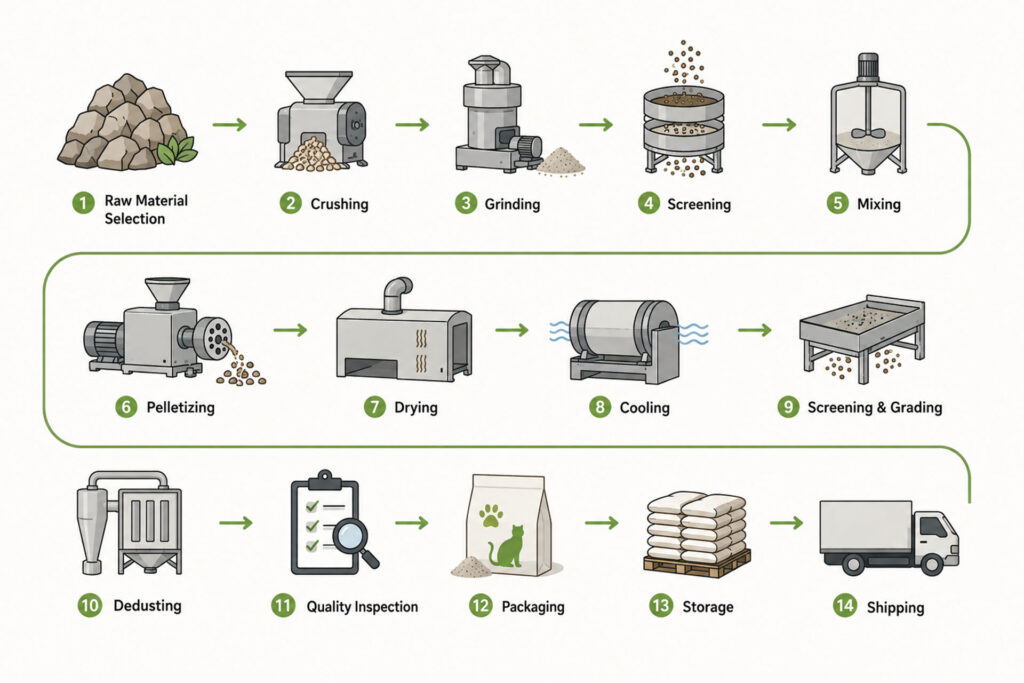
عملية إنتاج رمل القطط: نظرة عامة على المراحل الرئيسية
| المرحلة | ما يصفه المصدر | التحقق من هوية المشتري |
| المواد الخام | التوريد الاستراتيجي للبنتونيت الصوديوم؛ ألياف نباتية خالية من الكائنات المعدلة وراثيًا؛ فحص الأفلاتوكسين والمعادن الثقيلة | سجلات اختبار الاستلام وإقرارات المواد |
| خطوط الإنتاج | 13 خطًا آليًّا؛ نظام إزالة الغبار متعدد الفصادات؛ التعقيم الفوري بدرجات حرارة عالية؛ رطوبة 5–8% | حالة الخط وسجلات العمليات |
| التشكيل والخلط | موازين تدفق يتم التحكم فيها بواسطة الكمبيوتر لنسب خلط (3:7، 4:6)؛ تعبئة مرنة من 2.5 كجم إلى 1 طن | اتساق الدُفعات ومواصفات العبوة |
| مراقبة الجودة في المختبر | اختبارات التكتل، والامتصاص، والصلابة، والتفتت، وفقًا لمعايير SGS | تقارير الدُفعات مع الطريقة والتاريخ ونطاق الدُفعة |
| الشهادات والتصدير | شهادة الجودة من SGS؛ تدقيق BSCI؛ مجموعة كاملة من مستندات التصدير | المستندات الحالية، ونطاق العمل، وصلاحية العقد، والشروط اللوجستية |
1. توفير المواد الخام في عملية إنتاج رمل القطط
مصادر المعادن
يصف المصدر عملية تأمين استراتيجي لمصادر معدن البنتونيت الصوديوم عالي الجودة، مع مراقبة صارمة لنقاء الرمل الخام وأداء امتصاص الروائح. بالنسبة للمشترين من قطاع الأعمال (B2B)، يرجى طلب معلومات عن مصدر المعدن الحالي، ومحتوى المونتموريلونيت، وسجلات الفحص عند الاستلام للمنتج المختار.
انظر صفحة منتج رمل القطط من البنتونيت بالنسبة للمواصفات العامة.
توريد النباتات
بالنسبة للخطوط الإنتاجية القائمة على المكونات النباتية، يشير المصدر إلى استخدام ألياف خالية من الكائنات المعدلة وراثيًا ونشا الكسافا عالي النقاء، مع استبعاد المواد المهدرة المعاد تدويرها. وينبغي قراءة الادعاء القائل بأن المنتج يفي بمعايير السلامة الغذائية بعناية: تأكد من قائمة المكونات الحالية ووثائق السلامة السارية في السوق المستهدفة، بدلاً من الاعتماد على العبارة وحدها.
الـ صفحة منتج رمل القطط المصنوع من التوفو يعرض المجموعة النباتية المتاحة للجمهور.
فحص المواد الضارة
يُذكر أن جميع المواد الخام الواردة قد اجتازت اختبارات العينات الفيزيائية والكيميائية، مع إعطاء الأولوية لفحص الأفلاتوكسين B1 (الذي تقل قيمته عن 10 ميكروغرام/كيلوغرام) وبقايا المعادن الثقيلة. وهذه هي الحدود الداخلية المحددة من قبل الشركة؛ يرجى التأكد من سجلات الاستلام الحالية ومتطلبات السوق المقصودة للدفعة المختارة.
2. خطوط الإنتاج الآلية في عملية إنتاج رمل القطط
إزالة الغبار والتعقيم
يصف المصدر مصنعًا تبلغ مساحته حوالي 60,000 متر مربع، ويضم 13 خطًا آليًّا تعمل في عملية مغلقة بدءًا من مرحلة الإدخال وحتى التعبئة والتغليف. تخضع الفضلات المعدنية لعملية إزالة الغبار باستخدام أجهزة متعددة الدوامات للحفاظ على مستوى الغبار عند 0.5% أو أقل؛ بينما تخضع الفضلات النباتية لعملية تعقيم سريع بدرجة حرارة عالية مع الحفاظ على الرطوبة في نطاق 5–8% لمنع تكوّن العفن. هذه هي معايير العمليات الخاصة بالشركة؛ يرجى التأكد من سجلات الغبار والرطوبة الحالية للدفعة المشحونة.
تشكيل الحبيبات وخلطها
بالنسبة لرمل القطط المختلط (على سبيل المثال بنسب 3:7 أو 4:6)، يذكر المصدر وجود موازين تدفق يتم التحكم فيها حاسوبيًا تضمن توزيعًا متجانسًا للجسيمات وأداءً ثابتًا في كل كيس. يرجى التحقق من سجلات مراقبة الخلط الحالية وبيانات اتساق الدُفعات الخاصة بوحدات التخزين الهجينة.
التغليف المرن
تدعم العديد من آلات الوزن والتعبئة عالية الدقة أحجامًا تتراوح من العبوات الصغيرة سعة 2.5 كجم إلى الأكياس الكبيرة سعة 1 طن. يرجى التأكد من أحجام العبوات الحالية، وتكوين الكرتون، وخطة التحميل للطلب المحدد.
3. مراقبة الجودة المختبرية في عملية إنتاج رمل القطط
اختبارات التكتل والتأثير
يقوم مختبر ضمان الجودة ومراقبة الجودة الداخلي، الذي يُوصف بأنه مُقارن بمعايير SGS، بإجراء اختبارات التكتل التي تتطلب تكوين كتل في غضون 3 إلى 5 ثوانٍ، واختبار سلامة السقوط الحر من ارتفاع 1.5 متر دون حدوث أي كسر. يرجى التأكد من طريقة الاختبار الحالية ونتائج الدفعة الخاصة بالمنتج المحدد.
الامتصاص والذوبان
يشير المصدر إلى أن امتصاص المعادن يستقر عند مستوى 330% أو أعلى منه، وأن فضلات التوفو تذوب تمامًا في الماء في غضون حوالي 15 ثانية. هذه ادعاءات تتعلق بأداء الشركة؛ يرجى طلب تقارير الاختبار الحالية مع ذكر الطريقة والتاريخ ونطاق الدفعة.
الصلابة والتفتت
يُعرَّف اختبار متانة الجسيمات (الذي يبلغ 35 نيوتن على الأقل) بأنه الحفاظ على معدل التفتت عند مستوى 1% أو أقل تحت ضغط الشحن لمسافات طويلة. تأكد من سجلات الصلابة ومعدل التفتت الحالية للدفعة المشحونة — فهذه القيم تؤثر بشكل مباشر على جودة المنتج عند وصوله.
4. الشهادات وضمانات التصدير في عملية إنتاج رمل القطط
مراجع الشهادات (SGS، BSCI)
ويشير المصدر إلى شهادة إدارة الجودة الصادرة عن SGS وتقرير تدقيق المسؤولية الاجتماعية الصادر عن BSCI باعتبارهما دليلاً داعماً للتصدير إلى قنوات البيع بالتجزئة الكبيرة وسلاسل المتاجر. وتُعد SGS منظمة متخصصة في الاختبار والاعتماد، وتغطي تقاريرها مجالات محددة؛ أما BSCI فتعمل حاليًا تحت مظلة amfori كإطار عمل للامتثال الاجتماعي. تحقق من الوثائق الحالية، والجهة المصدرة، والنطاق، وصلاحية الشهادات، وقابلية تطبيقها على المنتج قبل الاعتماد عليها — ولا تنشر رقم الشهادة دون إرفاق الشهادة الفعلية.
انظر خدمات الشهادات التي تقدمها SGS وـ برنامج amfori BSCI للحصول على معلومات أساسية عن كل مخطط. كما تتوفر معلومات عن سياق القطاع من FEDIAF, ، الاتحاد الأوروبي لأغذية الحيوانات الأليفة ورعايتها.
معايير المؤسسات
يذكر المصدر أن شركة «آيشا» شاركت في إصدار معايير مؤسسية تتعلق بالفضلات المختلطة (Q/AS 003-2024)، وفراش الحيوانات (Q/AS 001-2024)، ورمل الاستحمام. يرجى التأكد من المعايير المنشورة حاليًا ونطاقها بالنسبة لفئة المنتجات المختارة.
لوجستيات التصدير
يصف المصدر عملية تحسين استغلال الحاويات (تكديس المنصات وخطط الشحن السائب لحاويات 20GP/40HQ) ومجموعة كاملة من مستندات التصدير — صحيفة بيانات السلامة (MSDS)، والفاتورة التجارية، وقائمة التعبئة، وشهادة المنشأ — بالتنسيق مع وكيل الشحن البحري. يرجى تأكيد خطة التحميل الحالية ومجموعة المستندات وشروط الخدمات اللوجستية كتابةً بالنسبة للطلب المحدد.
3 أخطاء يجب تجنبها عند تقييم عملية إنتاج رمل القطط
قبول المطالبات المتعلقة بالعمليات دون وجود سجلات الدُفعات
تُعد قيم الغبار والرطوبة والتكتل والامتصاص والصلابة والتفتت معايير خاصة بالشركة. يرجى طلب تقارير الدفعة الحالية مع ذكر الطريقة والتاريخ ونطاق الدفعة.
نشر أرقام الشهادات دون المستندات المرفقة
تأكد من صحة وثائق SGS أو BSCI، ونطاقها، والجهة المصدرة لها، وصلاحيتها قبل الاستشهاد بها في حملاتك التسويقية.
وصف عملية طلب كميات كبيرة عبر موقع إلكتروني
تأكد من السعة وحالة خط الإنتاج وسجلات العمليات من خلال طلب تجريبي وزيارة ميدانية أو تدقيق من جهة خارجية قبل زيادة حجم الإنتاج.
العناية والتخزين وإعادة الطلب
قم بتخزين الرمل المختوم في مكان نظيف وجاف وجيد التهوية، واتبع مبدأ «أول ما دخل أول ما خرج» (FIFO) في التناوب. تحقق من الأختام ومستوى الرطوبة وحالة العبوة عند الاستلام. احتفظ بملف منظم لكل رمز منتج (SKU): المواصفات، وتقارير الدُفعات، وسجل العينات المحتفظ بها، والتصميمات، وعروض الأسعار، وقائمة التعبئة، وسجلات الشحن، وصور الاستلام. أعد الطلب وفقًا للإصدار المعتمد؛ واطلب عينة جديدة للموافقة عليها في حالة حدوث أي تغيير في المواد الخام أو العملية أو التعبئة.
الخلاصة: تقييم عملية إنتاج رمل القطط استنادًا إلى الأدلة
لا تكمن القوة الحقيقية لأي مصنع في شعاراته، بل في بيانات الاختبار الدقيقة التي يقدمها، وخطوط الإنتاج الآلية، والتسليم في الموعد المحدد. وبالنسبة للمشترين في قطاع الأعمال (B2B)، فإن عملية إنتاج رمل القطط التي تقف وراء الكيس هي التي تحمي القناة من الشكاوى المتعلقة بالغبار، والخسائر الناجمة عن العفن، وتباين جودة الدفعات.
الأسئلة الشائعة
تغطي هذه الأسئلة الفحوصات الأكثر شيوعًا التي يجريها المشترون في قطاع الأعمال (B2B) عند تقييم عملية إنتاج رمل القطط. وتشير كل إجابة إلى الأدلة التي يجب عليك طلبها.
ما الذي تتضمنه عملية إنتاج رمل القطط؟
وتشمل هذه العملية توفير المواد الخام وفحصها، والإنتاج الآلي مع إزالة الغبار والتعقيم، وتشكيل الحبيبات وخلطها، واختبارات مراقبة الجودة في المختبرات الداخلية، والتعبئة مع الخدمات اللوجستية للتصدير. وتساهم كل مرحلة في الجودة النهائية للكيس.
هل تمتلك شركة «آيشا» خطوط إنتاج خاصة بها؟
يصف المصدر مصنعًا تبلغ مساحته حوالي 60,000 متر مربع ويضم 13 خط إنتاج آليًا. يرجى التأكد من السعة الحالية وحالة خطوط الإنتاج والسجلات الخاصة بالمشروع الذي اخترته قبل الاعتماد على هذه الأرقام.
كيف ينبغي للمشتري التحقق من الادعاءات المتعلقة بالغبار والرطوبة؟
اطلب الحصول على طرق الاختبار الحالية الخاصة بالغبار والرطوبة، والنتائج، ونطاق الدفعة المشمولة بالنسبة للدفعة التي تم شحنها. ويشير المصدر إلى أن معايير الشركة التي يجب التأكد منها هي أن نسبة الغبار يجب ألا تتجاوز 0.5% بالنسبة للفضلات المعدنية، وأن نسبة الرطوبة يجب أن تتراوح بين 5 و8% بالنسبة للفضلات النباتية.
ما هي الفحوصات المخبرية التي تحدد جودة رمل القطط؟
وتتمثل الاختبارات الرئيسية في وقت التكتل، وسلامة المنتج عند التعرض للصدمات، والامتصاص أو الذوبان، والصلابة، والتفتت، وفحص المواد الضارة. اطلب الحصول على تقارير الدُفعات الحالية التي تتضمن طريقة الاختبار وتاريخه ونطاق الدُفعة لكل اختبار.
هل المراجع المذكورة الخاصة بـ SGS و BSCI صالحة لطلبي؟
تأكد من صحة المستندات الحالية، ونطاقها، والجهة المصدرة، وصلاحيتها بالنسبة للمنتج والوجهة المحددين قبل الاعتماد عليها. لا تنشر أبدًا رقم الشهادة دون أن تكون الشهادة الفعلية في حوزتك.
ما هو الحد الأدنى المعتاد لكمية الطلب (MOQ) لأوامر الإنتاج؟
يختلف الحد الأدنى للطلب (MOQ) باختلاف المنتج والتغليف والوجهة. يرجى التأكد من الشروط الحالية الواردة في عرض الأسعار الخاص بك، ومطابقتها مع حالة خط الإنتاج وتكوين العبوة الموضحة أعلاه.
ما هي مستندات التصدير المتاحة؟
يستند المصدر إلى صحيفة بيانات السلامة (MSDS)، والفاتورة التجارية، وقائمة التعبئة، وشهادة المنشأ. يرجى التأكد من مجموعة المستندات الحالية الخاصة بالطلب والوجهة المحددين مع وكيل الشحن الخاص بك.
 Arabic
  English
  Spanish
  Russian
  Japanese