النقاط الرئيسية
- يتألف خط الإنتاج الكامل لرمل القطط من شركة «آيشا» من ستة أقسام متكاملة — بدءًا من فرز الخام وصولاً إلى الاختبارات المعملية الشاملة للدُفعات — دون أي اختصارات بين المراحل.
- يعمل الفرز اليدوي للخام على إزالة التربة المتكتلة والأحجار الداكنة غير النقية من المصدر، مما يؤدي إلى التخلص من ما يصل إلى 30% من الملوثات الجسيمية قبل أن يبدأ عملية التكسير.
- تعمل عملية الغسل بالماء على مراحل على إزالة الأملاح القابلة للذوبان وآثار المعادن الثقيلة التي لا تستطيع المصانع التي تعتمد على الطحن الجاف وحده إزالتها، مما يضمن الامتثال لمعايير سلامة الحيوانات الأليفة المعمول بها في الاتحاد الأوروبي والولايات المتحدة.
- تعمل عملية التحبيب المستديرة على مرحلتين + التصلب عند درجة حرارة ثابتة على إطالة العمر التشغيلي إلى أكثر من أسبوعين في المنازل التي تضم قطة واحدة، مما يقلل بشكل كبير من تكاليف الإمداد الشهرية للمستخدمين النهائيين.
- يعمل نظام إزالة الغبار بالضغط السلبي ثلاثي المراحل على خفض نسبة الرماد العائم إلى أقل من 0.5%، مما يجعل جهاز AiSha مناسبًا للأرضيات ذات الأسطح المسطحة، والمنازل المغطاة بالسجاد، والأسر التي لديها أطفال صغار.
- تخضع كل دفعة لاختبارات معملية لقياس سرعة الامتصاص، وقوة التكتل، ومحتوى الغبار، والمعادن الثقيلة — ويُفضل دائمًا تأخير الشحن على إرسال شحنة معيبة.
- أفاد مشترو قطاع الأعمال (B2B) بأن التكاليف الشهرية الإجمالية لرعاية الحيوانات الأليفة انخفضت بنسبة تتراوح بين 30 و40% مقارنةً برمل الحيوانات الأليفة المُخفَّض السعر، ويرجع ذلك إلى عمر الاستخدام الأطول، وتقليل وتيرة الاستبدال، وتقليل وقت التنظيف.
خط إنتاج رمل القطط «AiSha» مقابل التصنيع العام: مقارنة بين العمليات
| مرحلة الإنتاج | AiSha (المجموعة الكاملة) | عام (بسعر مخفض) | التأثير على المستخدم النهائي |
| فرز الخام | الفرز اليدوي + الغربلة الآلية؛ بنتونيت الصوديوم عالي النقاء فقط | خليط من الخامات المعدنية مع شظايا التربة والحجارة؛ لم يتم فرزها يدويًّا | القطع الصلبة الحادة تخدش الكفوف؛ والتربة الزائدة تتسبب في انتشار الغبار في الهواء |
| غسل المياه وتنقيتها | الخلط بالماء خطوة بخطوة + الترسيب الطبقي؛ إزالة الأملاح القابلة للذوبان والمعادن الثقيلة | الطحن الجاف فقط؛ حيث تظل الشوائب محبوسة داخل الحبوب | تهيج الجلد ومخاطر على الجهاز التنفسي مع مرور الوقت؛ لا يفي بمعايير السلامة المعمول بها في الاتحاد الأوروبي والولايات المتحدة |
| التحبيب | ضغط على مرحلتين + تلميع بالأسطوانة؛ حواف مستديرة ناعمة؛ حجم حبيبات متجانس | يتم الضغط عليه مرة واحدة فقط؛ حواف حادة وداخل مجوف | تتفتت الحبوب فورًا عندما تحفر القطط؛ ويؤدي الغبار المفرط إلى تعفير المنزل |
| تصلب الحبوب | غرفة ذات درجة حرارة ثابتة؛ هيكل داخلي مُعزَّز | تم تخطيها بالكامل لتقليل التكاليف | تتحول الحبيبات السائبة إلى غبار في أقل من أسبوع؛ ويلزم استبدال الصندوق بالكامل أسبوعياً |
| إزالة الغبار | ضغط سلبي ثلاثي المراحل: نفخ الهواء + الغربلة بالاهتزاز + الغسل بالهواء السلبي | نفخة هواء سريعة واحدة فقط؛ حيث يبقى الرماد الناعم على أسطح الحبوب وداخل الشقوق | يتطاير الغبار في كل مكان أثناء إعادة التعبئة والحفر؛ مما يؤدي إلى العطس لدى السلالات ذات الوجه المسطح |
| الفحوصات المعملية | اختبار عينات عشوائية لكل دفعة: سرعة الامتصاص، ومتانة التكتل، والغبار، والمعادن الثقيلة | إجراء فحص عشوائي بصري فقط أو تخطيه تمامًا | تفاوت في الجودة بين الشحنات؛ وصول دفعات معيبة إلى المستخدمين النهائيين |
لماذا يتجاوز مشترو منتجات الحيوانات الأليفة التركيز على علامات الأسعار لينظروا إلى خط الإنتاج؟
لسنوات عديدة، ظل المشترون في جميع أنحاء جنوب شرق آسيا وأوروبا وأمريكا الشمالية يطرحون السؤال نفسه: لماذا رمل القطط «آيشا» من البنتونيت تحافظ على نضارتها في الشقق الرطبة، ولا تكاد تنتج غبارًا في المنازل الجافة، وتحتفظ بشكلها رغم الاستخدام اليومي المكثف في المرافق التي تضم عدة قطط؟ الجواب لا يكمن في سعر الكيس الواحد — بل في مدى اكتمال خط إنتاج رمل القطط الذي يقف وراء كل شحنة. يكتفي معظم المشترين بمقارنة الأسعار وإلقاء نظرة سريعة على الحبيبات السطحية، متجاهلين حقيقة جوهرية: كل تجربة جيدة أو سيئة مع رمل القطط تعود إلى ما إذا كان المصنع يدير عملية إنتاج كاملة دون أي تقصير.
تتجاهل منتجات الرمل الرخيصة غير ذات العلامة التجارية خطوات التنقية وتصلب الجسيمات وإزالة الغبار متعددة المراحل. تظل هذه العيوب مخفية خلال الأيام القليلة الأولى، لكن الغبار المفرط والكتل المتفتتة والروائح المتراكمة والتحلل السريع تصبح أمورًا يستحيل تجاهلها بعد أسبوع من الاستخدام. لقد حضرت معارض تجارية للحيوانات الأليفة في الخارج وقمت باصطحاب عملاء دوليين في جولة شاملة في جميع أقسام مصنعنا. وبعد أن شاهدوا خط إنتاج رمل القطط الأصلي بأعينهم، أدركوا سبب استمرار مبيعات AiSha في النمو بثبات في الأسواق العالمية.
في العام الماضي، أحضر فريق مشتريات من سلسلة متاجر الحيوانات الأليفة النيوزيلندية ثلاث علامات تجارية محلية كعينات للمقارنة. وكان الفرق في سماكة الغبار وصلابة الحبيبات واضحًا للعيان. وكان أحد أصحاب المتاجر يمتلك ستة قطط من سلالة «راغدول» — وهي سلالات ذات وجوه مسطحة ومجاري تنفسية حساسة. وأوضح أن رمل القطط المحلي الرخيص يثير غبارًا كثيفًا في كل مرة يعيد فيها ملء الصندوق، مما يجعل قططه تعطس دون توقف، كما أن الغبار الناعم يستقر بعمق في سجاد المنزل. وبعد جولة شاملة على خط إنتاج رمل القطط بالكامل — بدءًا من تخزين المعادن الخام وصولًا إلى تعبئة الأكياس النهائية — أبرم الفريق على الفور صفقة توريد بالجملة طويلة الأجل.
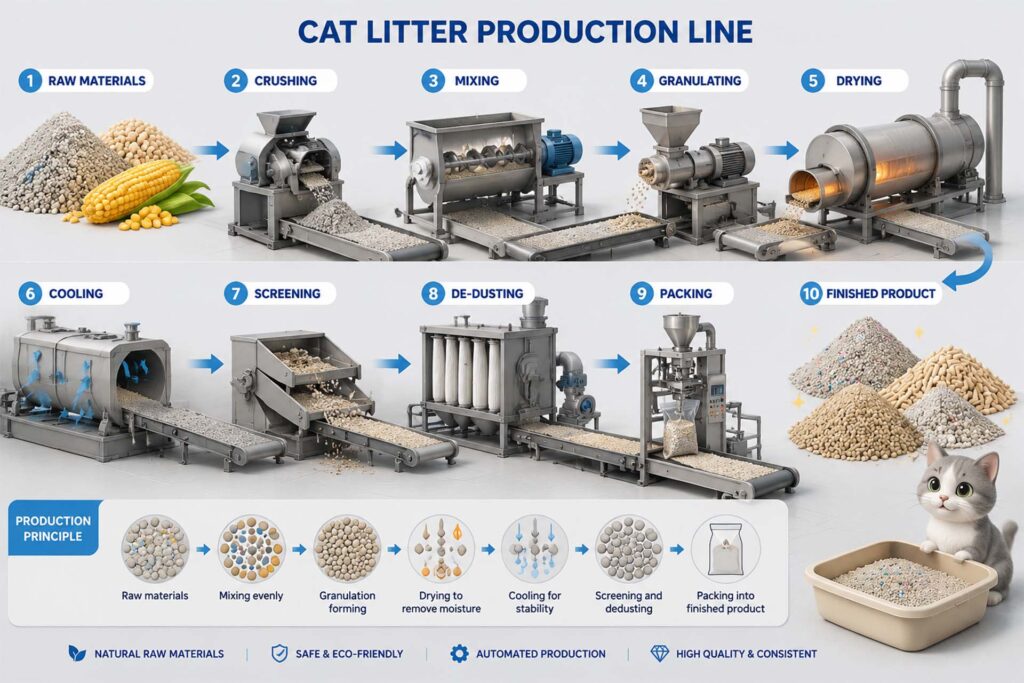
المراحل الست لخط إنتاج رمل القطط في شركة «آيشا»
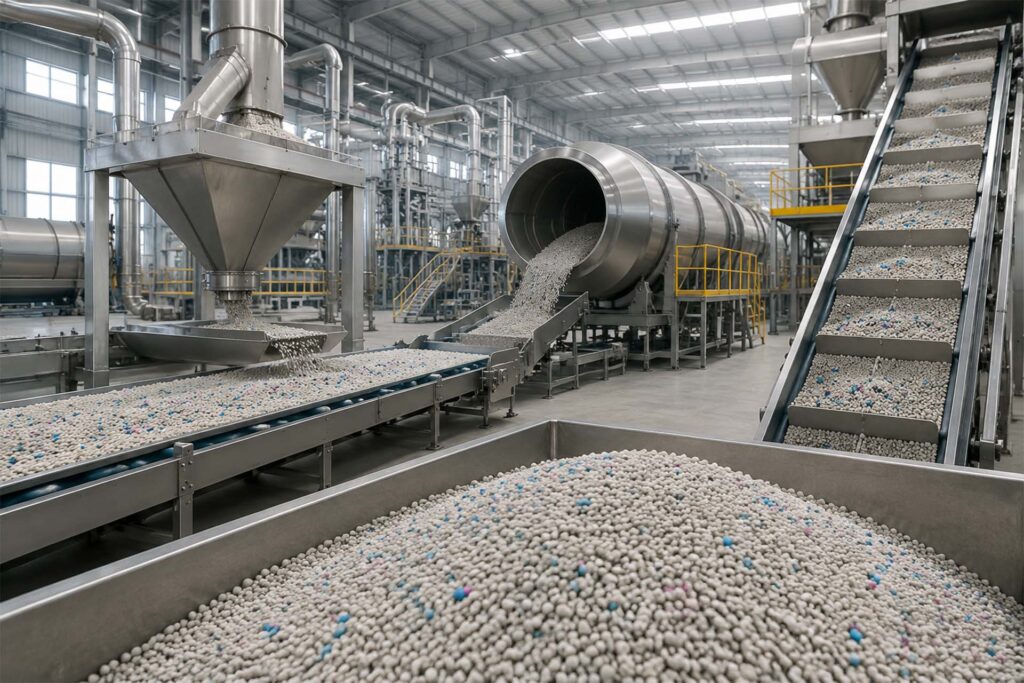
يعتقد العديد من المشترين الجدد أن صناعة رمل القطط من البنتونيت أمر سهل: ما عليك سوى سحق الصخور المعدنية، وتعبئتها في أكياس، وشحنها. لكن أي شخص يتفقد خط إنتاج حقيقي سيدرك سريعًا أن هذا بعيد كل البعد عن الحقيقة. هناك أكثر من اثنتي عشرة خطوة بين الخام الأولي ورمل القطط الجاهز للبيع، وتخطي أي خطوة منها يؤدي إلى انخفاض الأداء العام. ينقسم خط إنتاج رمل القطط في AiSha إلى ستة أجزاء أساسية — كل جزء منها إلزامي، ونحن لا نستعجل أبدًا أو نختصر أي عملية من أجل الوفاء بمواعيد تسليم الطلبات.
المرحلة الأولى: الفرز اليدوي للخام
يُعد فرز الخام الحاجز الوقائي الأول في خط إنتاج رمل القطط بأكمله، وهو ما يخلق الفارق الأكبر في الجودة بين رمل القطط الفاخر ورمل القطط الاقتصادي. تتعاون شركة «آيشا» حصريًّا مع المناجم التي تنتج البنتونيت الصوديوم عالي النقاء. وبمجرد استخراج كتل الخام الكبيرة، يقوم العمال بفرزها يدويًّا لإزالة التربة المتكتلة والحجارة الداكنة غير النقية. لا تستطيع الآلات سوى إجراء الغربلة الأولية؛ أما الشوائب الدقيقة المختلطة فتتطلب عينًا بشرية لاكتشافها وتصفيتها. نحن نحد من الجسيمات الضارة من مصدرها — ولا تدخل معدات الطحن الخشن سوى كتل الخام التي تجتاز الفحص لتتحول إلى مسحوق معدني متجانس.
Stage 2: Multi-Layer Water Purification and Activation
This stage separates AiSha from generic manufacturers and meets global pet safety standards. Most low-cost litter relies on dry grinding alone — soluble salts and heavy metal particles trapped inside the ore cannot be removed this way. AiSha uses step-by-step water mixing and sedimentation: mineral powder fully blends with water to form a smooth slurry, which sits undisturbed so light dust and heavy metal impurities rise to the top and are siphoned away, leaving only clean bentonite slurry in the middle layer.
After layering, excess water drains before the slurry enters segmented temperature-controlled dryers. We strictly limit drying heat — extreme high temperatures collapse the natural microscopic pores inside bentonite. Damaged pores lose their ability to absorb liquid and trap odours, which is why many cheap litters form weak clumps and reek quickly in closed rooms.
Stage 3: Two-Stage Rounded Granulation
Once dried, clean mineral powder enters two-stage rounded granulation — shaping grain texture and structural integrity. Small manufacturers press once, creating grains with sharp edges and hollow interiors that crumble into fine powder the moment cats dig or step on them. AiSha uses two rounds of compression plus roller polishing: the first rough press creates basic grain shapes, and a secondary fine grinding smooths all edges into gentle curves. Grain size is standardised across the batch.
Smooth, balanced grains match the soft soil cats naturally prefer outdoors. Kittens with tender paw pads, senior cats with worn joints, and pregnant mothers all step and dig comfortably. Many European customers report that their extremely picky cats take to AiSha immediately — with no transition period — cutting down stress-related accidents like urinating outside the litter box.
Stage 4: Low-Temperature Grain Hardening
Grain hardening extends service life and lowers monthly pet care expenses, yet most factories skip it entirely. Without hardening, grains have loose internal structures that break into dust quickly after repeated digging and trampling, requiring full-box replacement every week. After granulation, AiSha sends grains into a constant-temperature hardening chamber. Mild, steady heat slowly reinforces each grain’s internal frame, dramatically boosting resistance to wear.
Hardened grains degrade evenly over time with no uneven spoilage. Single-cat owners only need to scoop waste daily and add small amounts of fresh litter as levels drop — a full box stays dry and odour-free for over two weeks under normal use. This makes AiSha especially popular with busy overseas office workers and international students seeking budget-friendly long-term pet care.
Stage 5: Three-Stage Negative Pressure Dust Removal
Dust removal on a cat litter production line directly affects respiratory health for both cats and owners. Regular litter runs through a single quick air blast, leaving fine ash stuck to grain surfaces and inside crevices. AiSha’s three-part system works in layers: the first air blast strips thick surface ash, the second vibration sifts off attached fine powder, and the third negative air wash clears tiny dust trapped inside grain crevices.
Combined, these steps cut floating dust far below international pet product safety limits. Overseas owners with Persians, British Shorthairs, and other flat-faced breeds reorder year after year — reporting far less sneezing and nasal itching in their cats after switching to AiSha, plus no permanent grey dust coating sofas, floors, and soft furnishings, which slashes weekly home cleaning time.
Stage 6: Full-Batch Laboratory Testing
Finished grains never go straight into packaging on AiSha’s cat litter production line. Every full batch moves to the laboratory for random sample testing — our final quality checkpoint before cross-border shipment. Lab staff pull multiple samples per batch and test four core metrics: liquid absorption speed, clump compression strength, total dust content, and heavy metal residue.
Products only proceed to packaging when all indicators meet standard levels. If even one reading falls slightly short, the entire batch cycles back through dust removal and hardening for reprocessing. We once delayed an overseas shipment by three days to reprocess a batch with minor excess dust. After years of cross-border trading, we know how strict safety regulations are in Europe, America, and Australia — one defective shipment can destroy years of built-up trust.
How the Full Production Line Adapts to Different Global Markets
AiSha’s complete cat litter production line adapts seamlessly to different climates and pet-raising setups worldwide, something that fragmented manufacturing processes cannot achieve.
Southeast Asia (humid coastal).
Water purification plus grain hardening stops grains from absorbing ambient moisture and turning sour within days. The result is stable litter performance even in 80%+ humidity environments where generic litter fails within 48 hours.
North America & Australia (dry inland, carpeted homes).
Three-stage dust removal prevents fine ash from staining carpets and polished hardwood floors. Customers report a visible reduction in weekly cleaning time compared to standard single-stage dust removal products.
Large multi-cat breeding facilities.
Dense, durable grains from the full hardening process withstand constant daily digging and trampling without crumbling into messy debris. Facility managers report replacing litter 40% less frequently than with previous suppliers.
Why B2B Buyers Calculate Total Cost, Not Per-Bag Price
In conversations with breeding facility managers and chain store buyers across the globe, one pattern keeps emerging: the smartest purchasers no longer judge litter solely by per-bag price. They calculate total monthly pet care costs.
Low-cost litter may seem cheaper upfront, but it wears out fast, creates massive dust, sticks hard to box bottoms, and demands constant scrubbing. Owners refill supplies far more often, raising total spending over time — often by 30–50% within a single quarter. AiSha’s full purification and hardening workflow lengthens usable life and simplifies daily cleaning. Every batch maintains uniform performance with no inconsistent quality swings between shipments.
For casual cat owners, weaknesses like excess dust, broken clumps, built-up odours, and frequent full-box changes only become obvious after one to two weeks of consistent use. Litter that skips water washing holds metal impurities that trigger itchy skin over time. Products without hardening turn to powder rapidly. Brands skipping thorough dust removal leave homes coated in ash. Every frustration traces back to corners cut during manufacturing — and that is precisely why a complete cat litter production line is the most important factor in supplier selection.
Continuous Investment in the Production Line: How AiSha Keeps Improving
Since opening our factory, AiSha has never prioritised slashing production costs above all else. Instead, we continuously upgrade manufacturing equipment and refine every process detail on the cat litter production line.
Each year, we adjust machine settings based on feedback from global clients: softening grain polishing curves for small European apartments to boost paw comfort; tweaking drying and hardening parameters for rainy tropical countries to strengthen moisture and odour resistance; boosting negative pressure dust removal power for North American carpeted homes. Pain points reported by pet owners across every region drive constant improvements to our production line.
Over my career, I have watched many litter brands grab short-term overseas market share with rock-bottom prices, only to lose all clients over time due to rough manufacturing and inconsistent quality. Fancy marketing tricks only bring one-time trial purchases. Stable, long-lasting craftsmanship that holds up under heavy daily use builds lasting repeat business from global buyers.
The Bottom Line: Production Craftsmanship Is the Real Brand Promise
Sharing life with cats is meant to bring gentle comfort to ordinary days. Clean litter boxes, fresh indoor air, and relaxed digging motions from cats all rely on a strict, complete cat litter production line. AiSha bentonite cat litter does not rely on flashy advertising to stand out. We hide our quality within every stage: raw ore sorting, water purification, grain shaping and hardening, multi-layer dust removal, and full-batch lab inspection. Our unshortened production line delivers steady, low-hassle long-term use to cat families across the globe. This reliable, consistent craftsmanship packed into every bag of AiSha is the solid quality promise we keep for all our overseas partners.
الأسئلة الشائعة
Common questions from B2B buyers and pet owners about how a cat litter production line affects product quality, safety, and total cost.
How does a cat litter production line work?
A modern cat litter production line integrates six core stages: raw ore sorting, multi-layer water washing and purification, temperature-controlled drying, two-stage rounded granulation, low-temperature grain hardening, and three-stage negative pressure dust removal. Every batch also undergoes laboratory testing before packaging. Each stage directly impacts the final product’s clumping strength, dust level, and service life.
What makes AiSha’s cat litter production line different from generic manufacturers?
AiSha’s cat litter production line runs all six stages without shortcuts. Unlike generic manufacturers that skip water washing (leaving soluble salts and heavy metals in the product) or skip grain hardening (causing rapid breakdown), AiSha completes every step: manual ore sorting, layered water purification, two-stage granulation, constant-temperature hardening, and three-stage dust removal. Each batch also passes full lab testing before shipping.
How does the production line control dust levels in bentonite cat litter?
AiSha uses a three-stage negative pressure dust removal system on its production line. The first air blast strips thick surface ash, the second vibration sifts off attached fine powder, and the third negative air wash clears tiny dust trapped inside grain crevices. Combined, these steps cut floating dust far below international pet product safety limits, making the litter suitable for flat-faced cat breeds and homes with finished flooring.
What quality control checks are performed on the cat litter production line?
After dust removal, every full batch moves to the laboratory for random sample testing before packaging. Lab staff test four core metrics: liquid absorption speed, clump compression strength, total dust content, and heavy metal residue. Products only proceed to packaging when all indicators meet standard levels. If any reading falls short, the entire batch cycles back through dust removal and hardening for reprocessing.
Why does grain hardening matter in a cat litter production line?
Low-temperature grain hardening reinforces each grain’s internal structure, dramatically boosting resistance to digging, trampling, and powdering. Without hardening, grains have loose internal structures that break down into dust within days of repeated use. Hardened grains wear down evenly over time, extending service life to over two weeks for single-cat homes and lowering monthly pet care costs for owners.
Can a cat litter production line adapt to different climates and markets?
Yes. AiSha’s complete production line adapts seamlessly across climates. For humid coastal regions in Southeast Asia, water purification plus grain hardening prevents moisture absorption and souring. In dry inland regions of North America and Australia, three-stage dust removal prevents fine ash from staining carpets and hardwood floors. Large multi-cat facilities benefit from dense, durable grains that withstand constant daily use.
Is a full cat litter production line worth the investment for B2B buyers?
For B2B buyers, the production line directly determines long-term supply reliability. AiSha’s unshortened production workflow ensures every batch maintains uniform performance with no quality swings between shipments. Chain pet stores and breeding facilities worldwide keep placing large repeat orders because consistent manufacturing eliminates the hidden costs of cheap litter — fast wear, excessive dust, stuck waste, and frequent full-box replacements.
 Arabic
  English
  Spanish
  Russian
  Japanese