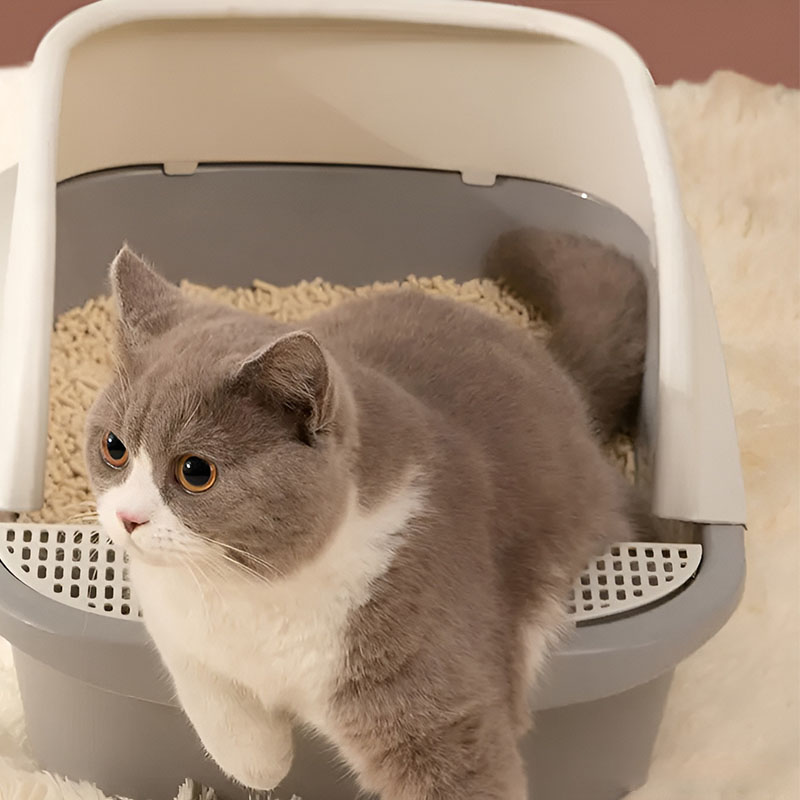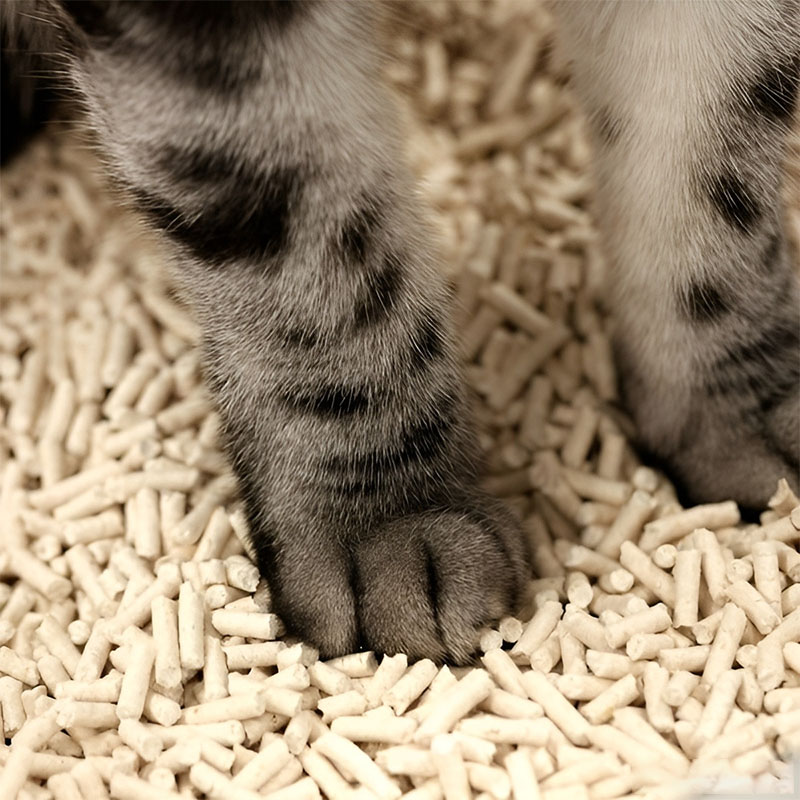

Cats are naturally clean and solitary animals, with an instinctive strict requirement for the hygiene standards of their excretion areas. In single-cat households, it’s relatively easy to manage environmental hygiene. However, in cat-gathering places such as breeding bases, pet boarding centers, stray cat rescue stations, pet experience centers, and large-scale catteries, the cats live in high-density groups. With a large number of cats and overlapping activity ranges, the frequency of excrement production increases exponentially, and the pressure of environmental cleaning is much higher than in ordinary households.In the hygiene management system of these special places, cat litter management serves as the most basic and important medium for hygiene control.
The quality of the litter, the way it’s laid, the cleaning frequency, and the storage management directly affect the overall air quality of the environment, the degree of bacterial growth, and the health status of the cat group. Most cat-gathering places rely on professional cat litter companies to stably supply large-quantity consumables and cooperate with standardized control processes to reduce common breeding risks such as odor diffusion, cross-infection, and germ growth. Implementing a reasonable system for cat litter management and litter box maintenance can cut off the bacterial transmission path from the source, maintain a stable and clean group-living environment, and create a safe and comfortable living space for a large number of cats.
Product Selection and Material Optimization in Cat Litter Management
Compared with ordinary household cat-keeping, cat-gathering places have higher and stricter requirements for the comprehensive performance of consumables, making professional cat litter management a necessity. In households, cat owners can freely change the type of cat litter according to the cat’s constitution and the breeding budget. In group-living places, however, multiple factors such as odor-removal ability, clumping stability, dust control, safety, harmlessness, and cost-effectiveness must be balanced within the overall cat litter management framework.
In high-density breeding environments, odor gases such as ammonia and hydrogen sulfide are generated quickly. If the chosen product has poor odor-locking ability, a pungent smell will appear in a short time. Long-term accumulation not only affects the living experience of humans but also irritates the cats’ respiratory mucosa, potentially inducing group-wide respiratory inflammation. Therefore, expert cat litter management in these venues generally dictates avoiding single-material cat litter.
Most operators choose composite cat litter made by mixing minerals and plants. This type of product combines the advantages of bentonite’s fast clumping and plant-based litter’s low-dust and antibacterial properties. The particles have moderate hardness, are not easy to break, can quickly wrap solid and liquid excrement, and slow down the diffusion of odors.
In the large-quantity purchasing model, the operators of these places usually directly cooperate with long-term partner cat litter companies. Effective cat litter management involves customizing special formulas according to the ventilation conditions of the venue, the number of cats, and the age structure of the cats. By adjusting the particle size of the litter, the proportion of odor-removal additives, and the content of antibacterial ingredients on the premise of ensuring safety and harmlessness, they improve the adaptability of large-quantity use and reduce the long-term cost of purchasing consumables.
Spatial Layout and Layer Thickness Control
The layout of litter boxes and the thickness of the cat litter layer are important details of cat litter management that are often overlooked in cat-gathering places. In group-living cats, there is a hierarchy. Dominant cats will deliberately occupy the best excretion spots. If the litter boxes are placed too closely with insufficient spacing, it can easily lead to behaviors such as cats competing, confronting, and fighting, causing problems like excretion disorders and stress-induced inappropriate urination.
According to professional breeding standards, proper cat litter management should follow the principle of dispersing and staggering the placement of multiple litter boxes. Sufficient safety distances should be maintained between the boxes to avoid creating a sense of oppression when cats can see each other. At the same time, cleaning passageways should be reserved for the convenience of daily maintenance by the staff.
In terms of the laying thickness, 5-7 centimeters of cat litter is enough for single-cat households. However, in group-living environments where cats excrete frequently, advanced cat litter management requires a deeper layer, because shallow laying can easily lead to urine penetrating the litter layer and sticking to the bottom of the box.
Therefore, the laying thickness of cat litter should be controlled between 8 and 12 centimeters. Sufficient thickness can buffer the cats’ digging force, prevent them from digging to the bottom, completely wrap the excrement, and reduce dirt residue at the bottom of the box. For areas where kittens are concentrated, the hardness and diameter of the particles should be appropriately reduced to avoid sharp particles scratching the kittens’ tender paw pads and reduce the probability of injury from stepping.
Daily Maintenance and Disinfection Workflows
The daily cleaning and maintenance process determines the bottom line of environmental hygiene and the service life of consumables within a cat litter management system. In a multi-cat environment, a single large-scale cleaning cannot maintain cleanliness. A regular, quantitative, and segmented cleaning system must be established.
During the daytime operation period, the staff needs to inspect all the litter boxes every two hours, promptly remove urine clumps, solid feces, and moldy and blackened deteriorated litter particles, and quickly isolate and clean the contaminated litter to prevent dirty litter from contaminating the surrounding clean litter. After the cats’ activity frequency decreases at night, a thorough screening should be carried out to pick out the fine clumps hidden inside the litter layer, level the litter surface, and add new litter to maintain a uniform litter layer thickness.
Once a week, a full-box disinfection operation should be carried out as part of the routine cat litter management protocol. The old cat litter should be completely emptied, and the inner wall and edge gaps of the litter box should be wiped with a pet-specific disinfectant. After being exposed to the sun and dried, new litter should be refilled to prevent bacteria and insect eggs from accumulating in the corners of the litter box. In cat-gathering places in humid areas, dehumidification equipment and ventilation systems should be installed to continuously reduce the humidity in the space, prevent the cat litter from getting damp, softening, and molding, and avoid the growth of mites and fungi in the humid environment.
Consumable Storage and Replenishment Strategies
The storage and bulk supply of consumables are key links to ensure long-term, stable cat litter management in cat-gathering places. These places consume a large amount of cat litter, and a single purchase usually reaches hundreds of kilograms. In some large-scale breeding bases, the monthly consumption is even calculated in tons. Reasonable storage can prevent the cat litter from deteriorating in advance, getting damp, or being infested by insects.
Unopened whole packages of cat litter should be placed in a dry, ventilated, and elevated storage area, away from water-drinking areas, bathing areas, and damp walls. The openings of the packages should be well-sealed to isolate moisture and mosquitoes. Most partner cat litter companies will customize thickened moisture-proof packaging for bulk-purchasing customers, adding oxygen-blocking and waterproof layers to adapt to large-scale storage environments and slow down the oxidation and deterioration of the raw materials.
When replenishing the cat litter, avoid replacing all the old litter with new litter at once. Mixing the old and new litter is a vital tactic in cat litter management that can retain a faint familiar smell, reducing the probability of collective stress among group-living cats and avoiding group-wide inappropriate behaviors such as refusing to use the litter box or urinating in inappropriate places due to a sudden change in the smell of the litter.
Disease Prevention and Feline Health Monitoring
In terms of disease prevention and health monitoring, high-quality cat litter management combined with scientific control methods can significantly reduce the risk of cross-infection among group-living cats. In cat-gathering places, there is a large flow of people and frequent contact among cats. Fungi, bacteria, and parasites can easily spread through excrement. Low-quality products with large amounts of dust, many impurities, and weak antibacterial ability can compromise your cat litter management efforts, accelerate the spread of pathogens, and induce group-wide diseases such as cat ringworm, trichomoniasis, and urinary system inflammation.
The group-specific cat litter produced by regular cat litter companies usually contains food-grade antibacterial raw materials and does not rely on irritating chemical agents. It can gently inhibit the growth of bacteria, slow down the decay of excrement, and reduce the growth of germs from the source. While executing daily cat litter management and cleaning the litter boxes, the staff can observe the clumping state of the litter surface, the color of the urine, and the shape of the feces to quickly judge the cats’ health conditions. If there are abnormalities such as blood in the urine, frequent urination, constipation, or diarrhea, the affected cats should be isolated and examined immediately to prevent the spread of the disease.
Systematic Operation and Optimization Data
Overall, the execution of cat litter management in cat-gathering places is not just about laying the litter and scooping the feces. It is a complete, rigorous, and systematic environmental hygiene control process. From the early stage of selecting suitable cat litter, cooperating with reliable cat litter companies for bulk purchasing, to the middle stage of standardizing the placement of litter boxes, controlling the laying thickness, and regularly cleaning and maintaining, and then to the later stage of scientific storage, reasonable litter replenishment, and disease monitoring, each link affects the health of the cat group and the hygiene standards of the venue.
Only by establishing a perfect cat litter management framework, rationally utilizing the physical properties of cat litter, and optimizing the operation and maintenance process can a clean, odor-free, and safe group-living environment be continuously maintained, reducing breeding risks and the incidence of diseases, and enabling every group-living cat to maintain a stable, healthy, and comfortable living state.
Therefore, in actual operation, managers need to dynamically adjust their cat litter management strategy according to the scale of the venue, the number of cats, and their behavioral characteristics. For example, additional temporary litter boxes can be added in high-density areas to relieve usage pressure, or dehumidification and ventilation can be strengthened during season-changing periods to prevent the performance of the cat litter from deteriorating due to environmental changes.
At the same time, the product stability and service response ability of partner cat litter companies should be regularly evaluated to ensure an uninterrupted supply chain and stable product quality. In addition, cleaning staff should be given standardized training to unify the scooping frequency, disinfection methods, and abnormal identification standards, avoiding management loopholes caused by operational differences. By combining detailed implementation with systematic planning, a full-chain hygiene guarantee from the source to the end can be truly achieved.
In the specific implementation process, the cat litter management plan also needs to be continuously optimized based on the cats’ behavior observation data. For example, by recording the usage frequency of litter boxes in different areas, the cats’ preferred excretion spots can be identified, and the layout can be adjusted to reduce the waste of resources caused by idle litter boxes. Or, according to seasonal temperature and humidity changes, the particle ratio and laying thickness of the cat litter can be dynamically adjusted to ensure that it is always in the best working state.
In addition, the introduction of intelligent monitoring equipment, such as litter boxes with weighing sensors or odor sensors, can enhance cat litter management by monitoring the usage load and odor concentration in real-time, providing data support for the cleaning frequency and litter-replenishing timing, and further improving management efficiency and accuracy.
Integrating Animal Behavior into Management Systems
These data-driven optimization methods not only enhance the pertinence of the cleaning work but also reduce human judgment errors, gradually shifting cat litter management from experience-oriented to scientific and refined operation. At the same time, managers can also establish a file of the cats’ excretion behaviors, associate individual toileting habits with health indicators, detect potential disease signs at an early stage, and implement preventive interventions. By continuously iterating the management strategy and integrating animal behavior principles, cat-gathering places can ensure hygiene and safety while respecting the cats’ natural instincts, reducing environmental stress, and thus building a truly cat-centered group-care system.
This cat-centered care concept requires managers not only to focus on the physical properties of the tools but also to deeply understand the behavioral logic and psychological needs of cats in a group environment. For example, some cats may show tentative avoidance of newly laid cat litter, which may be due to an unfamiliar smell or different particle texture. In this case, a small amount of old litter can be retained and mixed during cat litter management routines to help them adapt smoothly. In addition, in a multi-cat co-living space, weak individuals are often forced to use the litter boxes at the edge to avoid dominant cats.
Therefore, it is necessary to ensure that there are no obstructions around all the litter boxes and that the access paths are unobstructed to avoid creating “blind-spot” excretion points that may lead to hygiene problems. By integrating the concept of animal welfare into daily cat litter management details, not only can the overall cleaning efficiency be improved, but also behavioral abnormalities caused by environmental discomfort—such as repeatedly digging in the litter box without excreting, excreting across litter boxes, or excessive burying—can be effectively prevented.
These behavioral abnormalities are often external manifestations of environmental stress. Timely identification and adjustment of the layout can effectively relieve the cats’ anxiety. For example, when it is found that multiple cats frequently enter and exit the same litter box without actually excreting, it may indicate that there is an odor residue or a sense of spatial oppression in the area. The area should be cleaned immediately, and the surrounding layout should be evaluated for reasonableness.
At the same time, food and water bowls should not be placed near the litter boxes, and high-traffic passages should be avoided to prevent interfering with the cats’ sense of security when using the box. Through continuous observation and fine-tuning of your cat litter management practices, managers can create an excretion environment that conforms to the cats’ natural instincts while maintaining efficient hygiene control, truly achieving a double guarantee of health and behavior.
This continuous attention to details and dynamic adjustment not only reflects the depth of professional management but also shows respect for the complex social structure of group-living cats. In actual operation, comprehensive cat litter management needs to be coordinated with the overall environmental design. For example, the litter-box area should be clearly separated from the rest area and the eating area to reduce odor interference. Or, a combination of open-type and semi-enclosed litter boxes can be used to meet the different privacy and visual-field needs of cats with different personalities.
At the same time, frequent changes in the location of the litter boxes should be avoided to prevent disrupting the cats’ established spatial cognition and causing unnecessary stress reactions. By organically combining behavior observation, environmental regulation, and the performance of consumables, a hygienic management system that is both efficient and user-friendly can be constructed, allowing cats to maintain the freedom and sense of security to express their natural behaviors in group living.
The establishment of this system depends on continuous learning and practical verification of the cats’ natural habits. For example, some cats prefer to stay around the litter box for a long time after excretion, which may be related to their territorial-marking behavior. If the cleaning is too frequent at this time, it may interfere with their normal behavior rhythm. On the other hand, some cats are extremely sensitive to the residual odor in the litter box and require more frequent cleaning to maintain their willingness to use it. Managers need to find a balance between unified standards and individual differences within their cat litter management programs and avoid a one-size-fits-all approach.
At the same time, the relationship between the material of the litter tools and the health of the cats’ paws should be noted. Long-term use of overly hard or sharply-edged particles may cause wear and even hidden damage to the paw pads, which may affect the cats’ willingness to dig in the litter and indirectly lead to hygiene problems. Therefore, when choosing cat litter, in addition to functional indicators, the tactile comfort and long-term safety of use should also be evaluated to ensure that the physical properties are suitable for the cats’ physiological structure.
Especially in a long-term group-living environment, the cats’ sense of familiarity and security with the excretion area directly affects the stability of their toileting behavior. Frequent changes in the type of litter box or complete removal of the original odor traces may trigger avoidance reactions in some individuals, such as delaying excretion, excreting across litter boxes, or even excreting in non-designated areas. Therefore, when performing cleaning and litter-replenishing operations, retaining an appropriate amount of old litter with a faint usage trace is a key technique in successful cat litter management to serve as an odor-transition medium and help the cats maintain spatial recognition continuity.
In addition, cats with different personalities have significantly different acceptance levels regarding the openness of the litter box. Introverted cats prefer semi-enclosed structures for a sense of shelter, while extroverted or highly-vigilant cats prefer open-type designs to observe the surrounding environment. Managers need to identify the spatial-use preferences of different types of cats through continuous behavior records and adjust the shape and orientation of the litter boxes accordingly to prevent some individuals from being forced to abandon using the regular excretion points due to a single type of facility.
At the same time, the height of the edge of the litter box also needs to be flexibly configured according to the cats’ body sizes. Elderly cats or those with joint problems may have difficulty crossing a too-high edge, which may easily lead to excretion outside the box. Kittens need to be prevented from feeling trapped due to an overly high box wall. By considering both physiological characteristics and psychological needs at the detail level, the organic unity of thorough cat litter management and animal welfare can be truly achieved.
Especially in a multi-cat co-living environment, excretion behavior is not only a manifestation of physiological needs but also closely related to social interaction among individuals. Some cats may use covering or not covering their excrement to convey status signals.
If your approach to cat litter management ignores such behavioral characteristics, it may inadvertently intensify tension within the group. For example, over-frequent and thorough cleaning of all litter boxes, although maintaining surface cleanliness, may erase the only remaining odor marks of weak cats, further depriving them of their sense of security and causing them to avoid using the public litter boxes. Therefore, the cleaning strategy needs to find a balance between hygiene standards and behavioral expression, retaining an appropriate amount of odor clues to support the cats’ natural social logic.
In addition, the number of litter boxes should strictly follow the principle of “one more than the number of cats” and be dynamically adjusted according to actual usage data to avoid hidden competition caused by insufficient resources. In places with limited space, a vertical layout can be adopted to set up litter boxes at different heights, which not only saves floor space but also provides cats with diverse selection paths, reducing the sense of oppression caused by congestion in the ground passages.
At the same time, the floor material around the litter boxes also needs to be considered. Smooth tiles can easily cause the litter to splash and feel cold under the cats’ feet. Laying non-slip mats or soft floors can not only improve comfort but also absorb scattered particles and reduce the risk of secondary pollution. By fully integrating behavioral ecology principles into facility configuration and daily operation and maintenance, proper cat litter management will successfully maintain the physiological health and psychological stability of cats under high-density breeding conditions.
FAQ
Why does a multi-cat environment require a deeper layer of cat litter than a single-cat household?
In single-cat homes, a litter depth of 5–7 cm is usually enough. However, in high-density multi-cat environments where cats excrete frequently, the depth should be maintained between 8 and 12 cm. A deeper layer provides a better buffer against frequent digging, completely wraps both solid and liquid waste, and prevents urine from penetrating to the bottom of the box. This prevents messy bottom-sticking, reduces dirt residue, and keeps the boxes much easier to clean.
When topping up or refilling litter boxes in a multi-cat cattery, should the old litter be completely replaced?
No, when doing routine replenishments, you should avoid replacing all the old litter with new litter at once. Instead, mix the remaining clean old litter with the new supply. Retaining a faint, familiar scent helps reduce collective stress among group-living cats, preventing behavioral issues like litter box refusal or inappropriate urination caused by sudden environmental scent changes.
 English
  Spanish
  Russian
  Japanese
  Arabic