Puntos clave
- La selección es anterior a la negociación: el entorno en el que se tienen las mascotas, el clima y el poder adquisitivo determinan qué categoría de arena para gatos se adapta a cada mercado objetivo.
- Europa y Norteamérica lideran el ámbito de los criterios ESG y el rendimiento: tofu desechable por el inodoro y yuca apta para el consumo, para los compradores ecológicos, además de mineral triturado con un contenido de polvo ultrabajo para marcas blancas.
- En Oriente Medio y Asia Central se compra en función del olor y el clima: bentonita esférica muy perfumada que forma grumos rápidamente y retiene los olores en condiciones de calor y sequedad.
- En el sudeste y el este de Asia se apuesta por la humedad y la relación calidad-precio: tofu envasado al vacío y arena para gatos mezclada que resiste el moho, además de mineral en envases grandes y económicos para la venta al por menor.
- Según la matriz de categorías basada en la física: los minerales son carga pesada que reduce el volumen de carga por tonelada; el tofu es voluminoso pero comprimible; y la yuca es ultraligera y tiene una rápida rotación.
- Las cifras logísticas —26 toneladas por contenedor de mineral y un ahorro de volumen de 30% gracias al envasado al vacío— son datos facilitados por la empresa que deben confirmarse en cada envío.
- Todos los parámetros de rendimiento (índice de polvo, capacidad de absorción, tiempo de aglomeración, biodegradabilidad) deben verificarse comparándolos con la ficha técnica y el informe de ensayo vigentes.
Selección de arena para gatos por región: tabla comparativa 2026
| Región | Categorías de primera elección | Prioridades clave de los compradores | Líneas de referencia de AiSha |
| América del Norte y Europa | Residuos de tofu y yuca; mineral triturado con bajo contenido en polvo | ESG, aptitud para su eliminación por el inodoro, bajo nivel de polvo, marca propia | Tofu de 2,0 mm con carbón activado o té; mineral triturado con bajo contenido en polvo |
| Oriente Medio y Asia Central | Bentonita esférica de alta fragancia | Bloqueo de olores, aglomeración rápida, estabilidad en climas secos | Bentonita en forma de mezcla de gránulos de color azul-rosa de 1 a 3,5 mm |
| Sudeste y Este de Asia | Tofu envasado al vacío, arena para gatos mezclada, minerales económicos | Resistencia al moho, envases que ahorran espacio, buena relación calidad-precio | 3:7 de lecho mixto; envases de minerales de 5 kg y 10 kg |
A quién va dirigida esta guía para elegir arena para gatos: importadores, distribuidores regionales, operadores de marcas blancas, cadenas minoristas y marcas emergentes de venta directa al consumidor (DTC) que compran arena para gatos para su reventa. Se centra en la selección de categorías y la adecuación regional, no en el marketing de marca a nivel minorista. Si vas a entrar en un nuevo mercado por primera vez, utilízala como una lista de comprobación previa a la búsqueda de proveedores: define la región, preselecciona las categorías y recopila los datos de rendimiento que necesites antes de ponerte en contacto con los proveedores. La demanda occidental de formatos de origen vegetal es objeto de seguimiento por parte de organismos del sector como el Asociación Americana de Productos para Mascotas.
La elección acertada de la arena para gatos empieza por el mercado, no por el producto. Los entornos en los que se tienen mascotas, el clima y el poder adquisitivo varían considerablemente de una región a otra, y esas diferencias determinan qué categoría de arena para gatos se vende realmente. Una línea premium de arena de tofu desechable por el inodoro, diseñada para los baños europeos, puede fracasar en un almacén húmedo del sudeste asiático, mientras que una línea mineral con bajo contenido en polvo que satisface a las marcas blancas norteamericanas puede no ser competitiva en precio en Oriente Medio. Esta guía detalla la lógica de selección región por región —qué productos almacenar primero, qué prestaciones hay que verificar y cómo interpretar la matriz de decisión de la categoría— basándose en la experiencia en abastecimiento que AiSha ha acumulado en casi 90 mercados de exportación.
AiSha es un fabricante de arena para gatos orientado a la exportación, cuyos materiales oficiales describen 24 años de experiencia en exportación a nivel mundial y un profundo conocimiento de casi 90 mercados. Todas las descripciones de los procesos, las afirmaciones sobre los productos y las cifras de rendimiento que figuran en esta guía son declaraciones de la empresa y deben contrastarse con la documentación técnica vigente antes de realizar un pedido.
Para consultar la gama de productos disponible al público y los detalles sobre la colaboración, visita la página web oficial de AiSha. Esta guía es un recurso educativo sobre abastecimiento y no sustituye a un presupuesto actualizado, una ficha técnica ni un acuerdo por escrito.
Las cuatro familias de arena para gatos
El mercado mundial de arena para gatos se divide básicamente en cuatro familias: arena mineral de bentonita, arena vegetal a base de tofu, arena de yuca a base de almidón y fórmulas mixtas que combinan dos bases. La arena mineral sigue acaparando el volumen de ventas en la mayoría de los mercados, pero las categorías vegetales son las que crecen más rápidamente allí donde son importantes las presiones en materia de ESG, la posibilidad de tirarla por el inodoro o el peso reducido en el transporte. Una buena elección de arena para gatos nunca se reduce a determinar qué familia es ‘la mejor’ en términos abstractos; se trata de determinar qué familia se adapta mejor al clima, los hábitos de uso del baño, el canal de distribución y el nivel de precios del mercado objetivo.
Lecho mineral de bentonita
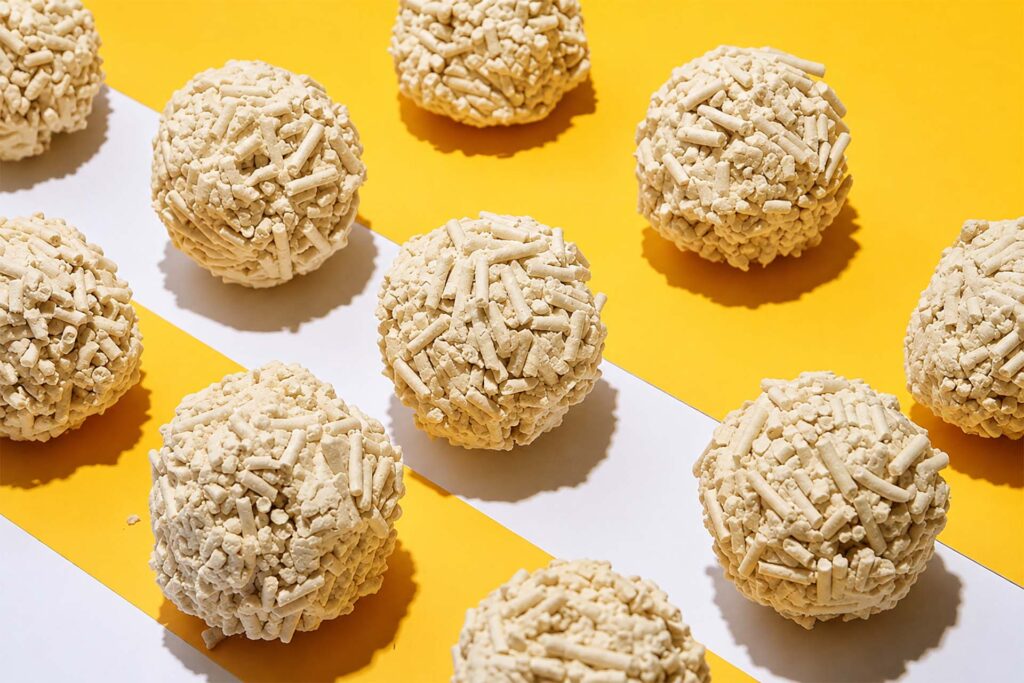
La bentonita es la arena mineral aglomerante por excelencia. Predomina en la mayoría de los mercados porque es barata, fácil de encontrar y absorbe rápidamente los líquidos. Su punto débil es el peso: es una mercancía pesada que encarece el coste del transporte por tonelada. Sigue siendo la opción por defecto para el comercio minorista, donde prima el precio, y para aquellas regiones en las que la rapidez de aglomeración y la retención de olores son más importantes que las características ecológicas.
Lecho vegetal a base de tofu
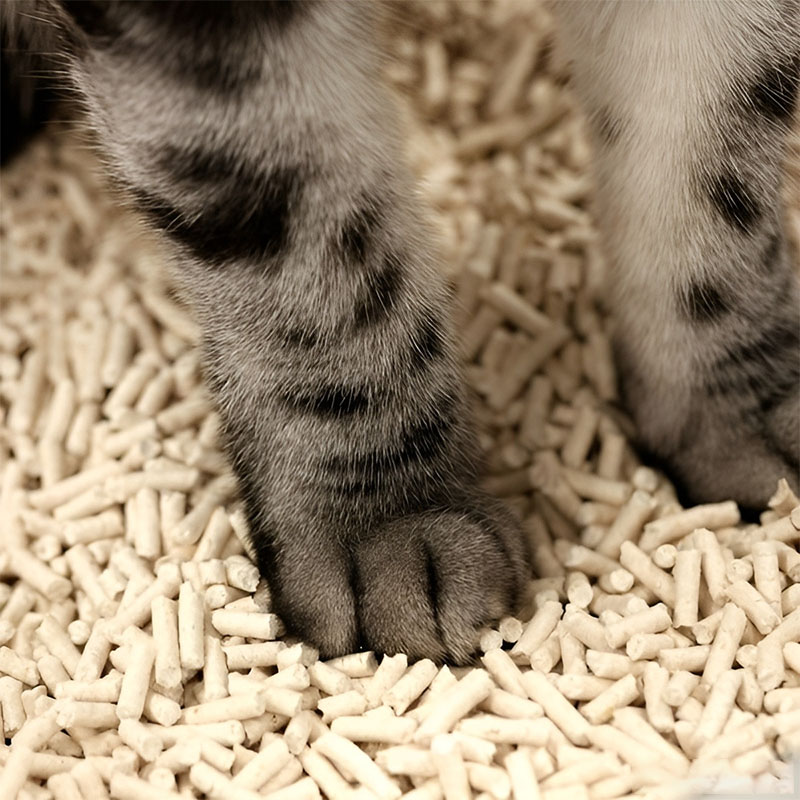
La arena para gatos de tofu se elabora a partir de residuos de soja y se comercializa haciendo hincapié en su carácter ecológico: se describe como biodegradable y apta para tirar por el inodoro, con ingredientes de calidad alimentaria. La dureza de los gránulos y su bajo nivel de polvo la hacen compatible con las bandejas sanitarias automáticas. Es la categoría estrella para los compradores urbanos con conciencia ecológica en Occidente y se adapta perfectamente al mercado minorista asiático, donde se controla la humedad, cuando se presenta en envases al vacío.
Lecho a base de almidón de yuca
La arena de yuca, a base de almidón y apta para uso alimentario, se sitúa en la gama alta de las opciones de origen vegetal. Es ultraligera, lo que mejora la rotación de existencias y reduce los gastos de transporte, y su color claro facilita la observación de la orina a los propietarios que controlan la salud de sus mascotas. Combina bien con el tofu en los mercados donde los compradores buscan el sustrato vegetal más ligero posible.
Fórmulas combinadas
La arena mezclada combina una base vegetal (tofu o yuca) con minerales para equilibrar el rendimiento y el precio de compra. La mezcla 3:7 descrita por AiSha es su equilibrio predeterminado entre el rendimiento del tofu y la rentabilidad de los minerales. Las mezclas permiten al distribuidor situarse en un nivel de precio medio, al tiempo que mantienen la capacidad de aglomeración y el control de olores a un nivel similar al de la arena mineral pura.
América del Norte y Europa: Selección de arena ecológica para gatos
Los mercados occidentales son el lugar donde se originó la economía global de las mascotas, y su lógica de compra está pasando de la arena mineral tradicional a categorías ecológicas de origen vegetal, bajo la presión de los criterios ESG. El sector minorista también está experimentando cambios estructurales: los programas de marcas blancas se están expandiendo dentro de las cadenas de supermercados, las marcas online que venden directamente al consumidor (DTC) prueban nuevas fórmulas con rapidez y las bandejas sanitarias automáticas elevan el listón en cuanto a la dureza de los gránulos y el polvo. Por lo tanto, la selección en Occidente busca un equilibrio entre el aspecto medioambiental y el rendimiento medible. La arena para gatos exportada a la UE también debe cumplir REACH normativa sobre seguridad química, por lo que debe comprobarse que las sustancias cumplan con la normativa de los Estados miembros de destino.
Tofu y yuca: opciones occidentales
Los consumidores europeos y norteamericanos prestan mucha atención a los criterios ESG —medio ambiente, sociedad y gobernanza—. La arena de tofu se describe como biodegradable 100% y la de yuca como apta para uso alimentario, lo que responde directamente a la demanda ecológica. AiSha recomienda elegir gránulos finos de 2,0 mm. arena de tofu para gatos con carbón activo o aroma a té, que se comercializa con dos argumentos de venta: descarga directa en el inodoro y eliminación extrema de olores. Confirma el informe de biodegradabilidad y la prueba de descargabilidad actuales para la fórmula seleccionada.
Mineral triturado con bajo contenido en polvo
Para los compradores que se decantan por la arena mineral, el estándar básico descrito por AiSha es un nivel de polvo ultrabajo, de no más de 0,5%. La línea mineral Blue Diamond n.º 5 de AiSha se describe como la preferida para marcas blancas occidentales de gama alta debido a su alto contenido en SiO₂ y a la forma regular de sus gránulos. El polvo es importante por dos razones: la salud respiratoria en el hogar y la compatibilidad con las bandejas sanitarias automáticas, en las que el polvo acelera el desgaste de los sensores.
Una declaración sobre el contenido de polvo de 0,51 TP3T es precisamente el tipo de dato que un comprador debería incluir en la lista de comprobación de las pruebas de recepción. Confirma el resultado actual de la prueba de polvo y el análisis de SiO₂ para la referencia seleccionada. Las declaraciones sobre degradabilidad y impacto medioambiental deben ajustarse a las Guías Verdes de la FTC En Estados Unidos, los compradores deben conservar la documentación que acredite las afirmaciones realizadas en los mercados en los que venden.
Oriente Medio y Asia Central: Elección de la arena para gatos basándose principalmente en el olor
Oriente Medio —Arabia Saudí, los Emiratos Árabes Unidos y sus países vecinos— es una zona cálida y seca, y tener mascotas en el interior supone un reto extremo en cuanto al enmascaramiento de olores y la estabilidad del producto. Los mercados de Asia Central, como Kazajistán y Uzbekistán, comparten climas continentales secos similares, por lo que se aplica la misma lógica: un control eficaz de los olores, gránulos resistentes al calor y envases que resistan los largos y calurosos transportes por tierra o por mar.
Bentonita esférica de alta intensidad aromática
A altas temperaturas, el olor de la orina se propaga rápidamente, por lo que los compradores de Oriente Medio prefieren productos con fragancias intensas añadidas —lavanda, café o talco para bebés— y exigen que la arena se aglomere en un plazo de 3 a 5 segundos para retener el olor dentro de los grumos. Las preferencias en cuanto a fragancias varían según la región: los perfiles de lavanda y talco de bebé son los más demandados en el Golfo, mientras que algunos mercados prefieren productos sin perfume; confirme las opciones de fragancia con la muestra actual antes de pasar a la producción a gran escala. Confirme los datos actuales sobre el tiempo de aglomeración del granulado seleccionado.
Estabilidad de los gránulos en climas cálidos
AiSha recomienda una mezcla de gránulos de color azul-rosa de entre 1 y 3,5 mm arena de bentonita para gatos: la combinación de colores transmite una impresión visual de limpieza, y la absorbencia declarada de 330% o superior contribuye a que los gránulos se mantengan estables en climas secos. Confirma el resultado actual de la prueba de absorbencia y la distribución granulométrica del lote.
Sudeste y Este de Asia: Elección de arena para gatos adaptada a la humedad
La densidad de mascotas en el sudeste asiático —Tailandia, Filipinas y Vietnam— está aumentando rápidamente, pero la elevada humedad es el verdadero enemigo de la arena para gatos de origen vegetal. Los países vecinos del este de Asia, como Japón y Corea del Sur, se sitúan en el segmento de gama alta siguiendo la misma lógica: el control de la humedad es importante, pero los compradores de allí también valoran la textura fina de los gránulos, que no se adhieran a las patas y el envase de marca. La proporción de mezcla de 3:7 es el equilibrio que AiSha describe entre el rendimiento del tofu y la rentabilidad de los minerales; confirma las opciones de proporción actuales para el proyecto seleccionado.
Tofu y mezclas envasados al vacío
La paja vegetal normal absorbe la humedad y se enmohece con la humedad tropical. AiSha describe un embalaje comprimido al vacío que reduce el volumen en un 30%, mantiene el producto seco y reduce el coste por tonelada de los envíos marítimos de corta distancia. AiSha también recomienda una mezcla de material de relleno en proporción 3:7 que equilibra el rendimiento y el precio de compra. Confirma la relación de compresión actual y las opciones de embalaje.
Paquete grande económico de agua mineral
En el caso del comercio minorista orientado al precio, los envases de minerales de 5 kg y 10 kg se adaptan a las estanterías de los grandes supermercados e hipermercados, con una propuesta de valor clara. Confirma los formatos de envase actuales y los precios por niveles.
Matriz de decisión para la elección de arena para gatos
AiSha describe un marco de referencia para la toma de decisiones basado en la física que sirve de guía para la selección de categorías. Las tres familias de productos están dirigidas a públicos, perfiles de carga y argumentos de venta distintos:
- Bentonita (de origen mineral): consumidores a gran escala y hogares con varios gatos; carga pesada, con un peso declarado de 26 toneladas por contenedor que diluye el coste del transporte; absorción clásica de olores y aglomeración firme.
- Tofu (de origen vegetal): profesionales urbanos y propietarios con conciencia ecológica; carga voluminosa pero comprimible que ahorra espacio; grumos que se pueden tirar por el inodoro e ingredientes aptos para el consumo.
- Yuca (a base de almidón): propietarios de mascotas de gama alta que necesitan controlar la salud de sus mascotas; producto ultraligero que mejora la rotación de existencias; aglomeración rápida y color claro que facilita la observación de la orina.
Lee la matriz en dos pasos. En primer lugar, realiza una selección preliminar según el clima y el perfil de compra para preseleccionar una o dos familias de productos —por ejemplo, tofu para un importador de la UE, bentonita para un distribuidor del Golfo—. En segundo lugar, verifica los aspectos económicos: el flete por contenedor, la relación de compresión, los tamaños de los envases y la cantidad mínima de pedido (MOQ) en relación con el precio de venta al público previsto. Una categoría que sea adecuada para el clima pero inadecuada desde el punto de vista logístico seguirá fracasando en el mercado. Los importadores que crean su propia arena para gatos de marca propia y OEM La línea debería comparar esta matriz con su precio de venta al público antes de dar luz verde a la fabricación de las herramientas.
3 errores que hay que evitar a la hora de elegir la arena para gatos
Error n.º 1: Copiar un éxito de ventas
Un éxito de ventas en Europa no tiene por qué serlo automáticamente en Oriente Medio o el Sudeste Asiático. El clima, los hábitos de higiene personal y la sensibilidad al precio cambian por completo la categoría ganadora; hay que volver a seleccionar en función del mercado objetivo en lugar de copiar el mercado anterior. La adecuación a la categoría no se traslada bien: una historia sobre el tofu desechable por el inodoro que convence a los inquilinos europeos no significa gran cosa para un mayorista del Golfo cuyos clientes recogen los residuos con cubos de basura.
Error n.º 2: Ignorar el clima
La alta humedad destruye la hojarasca sin proteger, y los climas cálidos y secos alteran el olor y la capacidad de aglomeración. Elige envases y fórmulas adecuados para el clima del lugar de destino y simula las condiciones del almacén antes de realizar el pedido al por mayor. Solicita información sobre el rango de contenido de humedad, la relación de compresión del envase y cualquier resultado de simulación de humedad que el proveedor pueda facilitarte antes de confirmar el envío de un contenedor.
Error n.º 3: Saltarse las comprobaciones por lotes
Una muestra de homologación obtenida del mejor lote no sirve de nada si en la producción a gran escala se modifica la fórmula. Exige muestras de la tirada de producción, informes de análisis de lotes y muestras de control para cada envío; así se reduce la diferencia entre lo que has homologado y lo que recibes.
Almacenamiento y controles de calidad a la entrada
Al recibir el pedido, comprueba si los palés presentan humedad derivada del transporte y abre algunas bolsas representativas para comprobar la dureza de los gránulos y la presencia de polvo. Mantén la arena mineral seca y elevada sobre los palés; almacena la arena vegetal sellada y separada del suelo, siguiendo el método de rotación FIFO. En el caso de las líneas minerales, compruebe la barrera interior contra la humedad de la bolsa; en el caso de las líneas de origen vegetal, abra una bolsa por palé y compruebe si huele a humedad. Anote cada comprobación en la lista de embalaje, fotografíe cualquier daño para el expediente de reclamación y conserve muestras selladas de cada envío a granel durante al menos un ciclo de reposición. Confirme por escrito las condiciones de sustitución y compensación.
Conclusión: aplica esta guía de selección de arena para gatos a tu mercado
La selección no es una simple transacción, sino una combinación precisa entre las características físicas del producto y las condiciones del mercado. La lógica por regiones que se sigue en esta guía —ESG y bajo nivel de polvo para Occidente; resistencia a los olores y al calor para Oriente Medio y Asia Central; humedad y relación calidad-precio para el Sudeste Asiático y Asia Oriental— ofrece a los importadores, distribuidores y marcas DTC un marco de trabajo para elegir primero la categoría adecuada y negociar el precio en segundo lugar. Dado que el clima, el canal de distribución y el nivel de precios determinan cuál es la categoría ganadora, una misma familia de productos puede ser un éxito de ventas en una región y un artículo sin salida en otra; seleccionar en función del mercado y contrastar cada afirmación con la documentación correspondiente es lo que distingue a los importadores rentables de quienes solo buscan descuentos.
Preguntas frecuentes
Estas son las preguntas más frecuentes que plantean los importadores y distribuidores a la hora de elegir arena para gatos.
¿Qué tipo de arena para gatos debería elegir un importador para Europa y Norteamérica?
El tofu y la yuca lideran en materia de ESG: el tofu se describe como biodegradable y apto para tirar por el inodoro (100%), mientras que la yuca se considera apta para uso alimentario. Para los compradores de minerales, una línea de triturado con bajo contenido en polvo, como el Blue Diamond n.º 5 de AiSha, resulta adecuada para marcas blancas de alta gama. Solicita el informe de biodegradabilidad, la prueba de eliminación por el inodoro y los resultados del análisis de polvo junto con el presupuesto.
¿Qué norma sobre el polvo es importante en el caso de la arena mineral de alta calidad?
AiSha establece un estándar de polvo ultrabajo, de no más de 0,5%, para el segmento premium. Solicita el resultado actual de la prueba de polvo del lote seleccionado e inclúyelo en la lista de comprobación de la inspección de entrada, ya que el polvo también afecta a los sensores de las bandejas sanitarias automáticas.
¿Por qué en Oriente Medio se prefiere la bentonita con alto contenido en fragancia?
El calor propaga rápidamente el olor a orina, por lo que los compradores buscan una fragancia intensa (lavanda, café, talco para bebés) y que los gránulos se aglomeren en un plazo de 3 a 5 segundos para retener el olor. En condiciones de calor seco, la dureza de los gránulos también es importante: los gránulos blandos se desmenuzan hasta convertirse en polvo, lo que propaga el olor. Confirma los datos actuales sobre el tiempo de aglomeración.
¿Cómo deberían actuar los compradores en los mercados húmedos del Sudeste Asiático?
Utiliza tofu envasado al vacío o arena mezclada resistente al moho, y consigue un equilibrio óptimo con una proporción de mezcla de 3:7; los envases económicos de 5 kg y 10 kg de arena mineral son ideales para el mercado minorista orientado a la relación calidad-precio. Solicita la relación de compresión y los resultados de la simulación de humedad antes de comprometerte a comprar un contenedor.
¿En qué se diferencia, desde el punto de vista logístico, la hojarasca mineral de la vegetal?
Los minerales son una carga pesada, con un peso declarado de 26 toneladas por contenedor, lo que reduce la densidad de carga; el tofu es voluminoso pero compresible (un ahorro de volumen declarado de 30% gracias al envasado al vacío); la yuca es ultraligera y mejora la rotación en los estantes. La compresión también modifica la presentación en los estantes: los envases al vacío se apilan mejor y resisten mejor la humedad que las bolsas sueltas. Confirma los datos de carga actuales.
¿Ofrece AiSha servicios de marca blanca y OEM?
AiSha describe la línea de minerales Blue Diamond n.º 5 como una opción de marca propia de alta gama, junto con el envase estándar de fabricante original (OEM). Confirma por escrito los pedidos mínimos de compra (MOQ), los formatos de envase y las condiciones relativas al material gráfico antes de ampliar la producción de una línea. En cuanto a la planta de producción, consulta nuestro Análisis en profundidad de la arena para gatos a base de yuca para ver las opciones de sustrato.
¿Hasta qué punto son fiables las cifras de rendimiento que aparecen en esta guía?
Todas las cifras —índice de polvo, capacidad de absorción, tiempo de aglomeración, degradabilidad, tonelaje del contenedor y ahorro de volumen— son declaraciones de la empresa que deben contrastarse con la ficha técnica actual, el informe de ensayo y el presupuesto. Considéralas como puntos de partida para la calificación de proveedores, no como argumentos de marketing definitivos.
 Spanish
  English
  Russian
  Japanese
  Arabic