El olor es la principal queja sobre la arena para gatos y el factor más determinante a la hora de volver a comprar. Un propietario de gato tolera el polvo, paga por la comodidad, pero cambia de marca por culpa del olor. Lo complicado para los compradores es que el mercado está lleno de productos que solo enmascaran el olor con fragancias, y una bolsa perfumada puede oler bien en el almacén, pero no dar buenos resultados en casa.
Entender cómo funciona realmente el control de olores —adsorción física, aglomeración que retiene el olor y fragancia como capa final— es lo que marca la diferencia entre una línea de productos que se vuelve a pedir y otra que se devuelve. Esta guía ofrece a los importadores, distribuidores y marcas blancas un marco práctico para seleccionar la mejor arena para gatos en cuanto al control de olores, basado en las categorías que fabrica AiSha: bentonita, tofu y arena mezclada.
AiSha es un fabricante de arena para gatos orientado a la exportación cuyos materiales oficiales describen 24 años de experiencia en exportación a nivel mundial y la presencia en casi 90 mercados de exportación, con un sistema normativo interno que abarca sus principales líneas de productos. Todas las cifras de rendimiento y descripciones de productos que figuran en esta guía son declaraciones de la empresa, por lo que deben confirmarse mediante la documentación técnica vigente antes de realizar el pedido.
Para conocer la gama de productos disponibles para el público y los detalles sobre la colaboración, visita la página AiSha página web oficial. Esta guía es un recurso educativo sobre abastecimiento y no sustituye a un presupuesto actualizado, una ficha técnica ni un acuerdo por escrito.
El control de olores también determina la rentabilidad en el punto de venta. Una marca de arena para gatos que resuelve el problema del olor consigue compras recurrentes, precios más elevados y publicidad boca a boca; una marca que no lo consigue malgasta los presupuestos de captación de clientes en nuevas pruebas. Para los distribuidores, la implicación práctica es que las líneas centradas en el olor merecen sus propios criterios de selección, y no la lista de verificación que se utiliza para una referencia de producto básico y barato. Por eso esta guía distingue entre el mecanismo, la categoría, el escenario y el método de verificación. Los datos del sector procedentes de la Asociación Americana de Productos para Mascotas muestra que el control de los olores es uno de los principales factores que influyen en la repetición de la compra de arena para gatos.
A quién va dirigida esta guía sobre la mejor arena para gatos contra los olores
Esta guía está dirigida a importadores, distribuidores, cadenas minoristas y operadores de marcas blancas que se abastecen de arena para gatos especializada en el control de olores, ya sea para hogares con varios gatos, mercados con climas cálidos, pisos pequeños o hogares en los que se presta especial atención a las fragancias. En ella se abordan los mecanismos que provocan los olores, las ventajas e inconvenientes de la categoría, los métodos de verificación y los controles de los proveedores.
Puntos clave
- El olor es el primer factor que lleva a cambiar de marca de arena para gatos: los propietarios cambian de marca por el olor antes que por el polvo o el precio.
- El verdadero control de olores funciona por capas: la adsorción física captura el amoníaco, la aglomeración firme lo retiene dentro del grumo y la fragancia solo enmascara lo que queda.
- La bentonita destaca por su capacidad de adsorción y por la formación de grumos, y cuenta con versiones muy perfumadas para los mercados que demandan productos perfumados; la arena de tofu y las mezclas de arena destacan por el carbón activado y los extractos vegetales, para quienes prefieren productos sin perfume o ligeramente perfumados.
- Cada situación determina la fórmula: los hogares con varios gatos necesitan capacidad de adsorción; los climas cálidos y los espacios reducidos requieren una retención duradera; y los hogares con personas sensibles necesitan opciones sin fragancia o con poca fragancia.
- La verificación es más importante que el marketing: solicita datos de las pruebas de adsorción de amoníaco, resultados del tiempo de aglomeración, tipo de fragancia y dosis, y realiza una comparación a ciegas de las muestras conservadas.
- La fragancia es una característica del mercado, no un criterio de calidad: el mismo problema de olor vuelve a aparecer cuando fallan los procesos de aglomeración y adsorción subyacentes.
- Cada dato que aparece en esta guía —tasa de adsorción, tiempo de aglutinación, opciones de fragancias— debe ser confirmado por escrito mediante una declaración de la empresa.
La mejor arena para gatos contra los olores: comparación de tres mecanismos
| Mecanismo | Cómo funciona | El más adecuado |
| Adsorción física | Los gránulos y los aditivos absorben el amoníaco y la humedad en su estructura | Hogares con varios gatos, intervalos de cambio prolongados |
| Bloqueo por aglomeración | Los grumos de orina se forman rápidamente y retienen el olor en su interior hasta que se eliminan. | Climas cálidos, espacios reducidos, limpieza diaria |
| Enmascaramiento de olores | El perfume disimula los olores residuales; los enmascara en lugar de eliminarlos. | Mercados en los que se demanda arena perfumada (por ejemplo, algunas zonas de Oriente Medio) |
La mayoría de los productos combinan estos tres mecanismos en diferentes proporciones, y esa proporción es lo que realmente determina la elección del producto. Una gama de bajo precio suele incluir una fragancia intensa para compensar una adsorción débil y una aglomeración lenta; una gama de alta calidad invierte primero en la calidad de los gránulos y considera la fragancia como un elemento de personalización regional. Saber interpretar esa proporción a partir de la ficha técnica del producto es la primera habilidad de selección que deben tener los compradores.
Por qué el control de olores es determinante a la hora de elegir la mejor arena para gatos en cuanto a olores
El olor a orina de gato proviene principalmente del amoníaco y de los compuestos de azufre, y el sentido del olfato de un gato es aproximadamente diez veces más sensible que el de un humano: lo que a un dueño le parece un olor aceptable puede hacer que el gato siga evitando la bandeja. La orina se descompone rápidamente en amoníaco a temperatura ambiente, y los compuestos de azufre que dan a los excrementos del gato ese olor penetrante permanecen en la bandeja mucho tiempo después de haberla limpiado. La humedad agrava ambas cosas: en condiciones cálidas y húmedas, la actividad bacteriana se acelera y la intensidad del olor aumenta en los primeros días del ciclo de cambio. Por eso, el control de olores no puede limitarse a la superficie: tiene que actuar hora a hora en el interior de la bandeja.
Cuando un gato deja de usar la bandeja, el dueño culpa primero a la arena y cambia de marca. Por eso, el control de olores no es una característica premium, sino el requisito funcional básico que determina si un producto se mantiene en las estanterías. Por lo tanto, la mejor arena para gatos en cuanto a control de olores debe cumplir tres requisitos en este orden: gránulos que absorban rápidamente, grumos que retengan el olor hasta que se retire la arena, y solo entonces una capa perfumada adecuada para el mercado al que va dirigida.
Opciones de categorías para la mejor arena para gatos que elimina los olores
La gama de productos de AiSha, centrada en la eliminación de olores, se divide en dos familias de productos, cada una de las cuales combate los olores mediante un mecanismo diferente, además de líneas combinadas que aúnan ambos. Consulta la gama completa AiSha gama de arena para gatos para consultar las referencias y especificaciones actuales.
| Categoría | Mecanismo principal del olor | Mercado más adecuado | Opciones de fragancia | Descripción de la función de AiSha |
| Bentonita | Alta capacidad de adsorción + fijación firme de los grumos | Regiones con alta adsorción y en las que se espera la llegada de perfumes | Sin perfume o con aroma intenso (lavanda, café, talco para bebés); capacidad de absorción 330%+ | Bentonita sódica de alta pureza, aglomeración en fracciones de segundo |
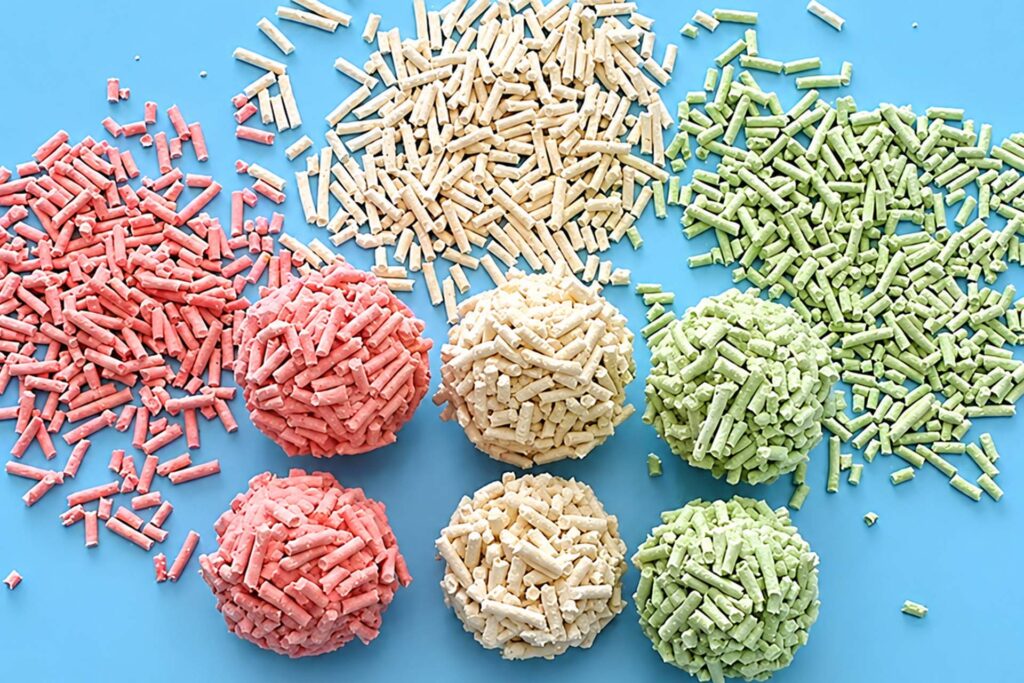
| Tofu / de origen vegetal | Carbón activo y extractos vegetales + fibras que absorben la humedad | Sin aroma / con aroma suave, hogares ecológicos | Sin aroma o con un aroma suave | Tofu con carbón activado o té; grumos solubles en agua |
| Mezclado (p. ej., 3:7) | Combina la adsorción de minerales con la rentabilidad de los cultivos | Mercados volátiles y sensibles a los precios | Mixto / personalizable | Mezcla de tofu y minerales para eliminar el olor y aportar valor añadido |
La bentonita, el mejor relleno para gatos contra los olores
AiSha lecho de bentonita sódica de alta pureza Se caracteriza por una fuerte adsorción de amoníaco, gránulos que se aglomeran a los pocos segundos de entrar en contacto y aglomerados lo suficientemente firmes como para retener el olor hasta que se recogen con la pala. Para los mercados que demandan productos perfumados, AiSha también ofrece bentonita esférica altamente perfumada con aromas de lavanda, café o talco para bebés, y una absorbencia declarada de 330% o superior. El tamaño de los gránulos también es importante: los gránulos más finos se compactan más, lo que favorece la adsorción y reduce los huecos por los que se escapa el olor, mientras que los gránulos más grandes mantienen la superficie de la bandeja más limpia entre cada cambio. AiSha describe opciones de gránulos para sus líneas minerales que permiten a los compradores equilibrar el rendimiento frente al olor con sus preferencias a la hora de recoger los residuos. Confirma los datos actuales de adsorción, aglomeración y tamaño de partícula del gránulo seleccionado.
Tofu y arena mezclada en la mejor arena para gatos contra los olores
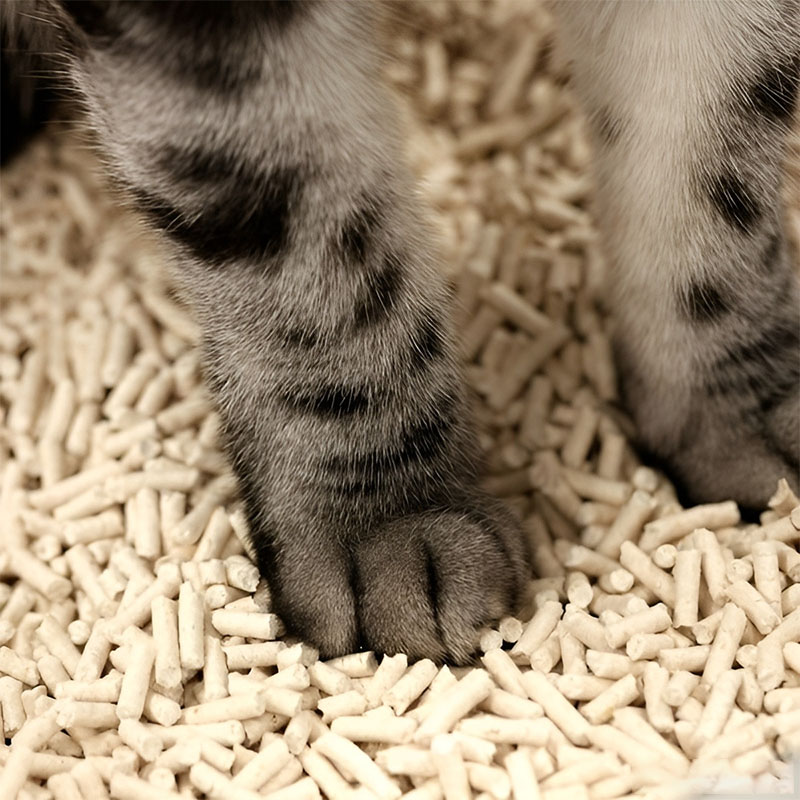
Lecho para tofu con carbón activo AiSha y las fórmulas mixtas combaten los olores gracias a aditivos y a un material base limpio. AiSha describe la arena de tofu con carbón activado o aroma a té para una supresión duradera de los olores, así como fórmulas mixtas que combinan el rendimiento del tofu con la rentabilidad de los minerales; una mezcla descrita en proporción 3:7 está dirigida a mercados húmedos y sensibles al precio, en los que tanto el olor como la relación calidad-precio son importantes.
El propio material base contribuye a ello: las fibras vegetales absorben la humedad en su estructura en lugar de dejar una superficie húmeda, lo que frena la actividad bacteriana que genera el olor. AiSha describe unos gránulos de tofu que se aglomeran con firmeza y se disuelven rápidamente en agua, de modo que la arena usada puede eliminarse tirándola de la cisterna en lugar de quedarse en un cubo donde se acumula el olor. Las versiones sin aroma o con un aroma suave son adecuadas para hogares que rechazan los perfumes fuertes. Confirma los datos actuales sobre aditivos, proporciones, disolución y aglomeración para el proyecto seleccionado.
Los requisitos en materia de olores varían no solo según la región, sino también según el tipo de hogar. Analizar el panorama de la demanda antes de seleccionar la fórmula permite evitar los dos errores más habituales: añadir demasiada fragancia en un mercado sensible a los olores y no proporcionar suficiente capacidad de adsorción en un mercado con varios gatos.
Situaciones en las que se exige al máximo a la mejor arena para gatos contra los olores
Hogares con varios gatos: la mejor arena para gatos contra los olores
Tener varios gatos implica múltiples orinas al día y una carga de amoníaco que se acumula rápidamente. El orden de prioridades para este segmento es: capacidad de adsorción, firmeza de los grumos y rentabilidad de las bolsas. AiSha ofrece líneas de productos minerales y mezclados con una fuerte capacidad de adsorción del amoníaco y grumos firmes, en envases grandes que reducen el coste mensual para los hogares con varios gatos. La concentración de amoníaco también aumenta con el número de bandejas y las limitaciones de espacio en el interior; un hogar con varios gatos que cuente con dos bandejas en el lavadero necesita un producto que aguante todo el ciclo de cambio. Los envases económicos de gran tamaño reducen el coste por cambio y evitan que los propietarios tengan que complementar con un segundo producto de menor eficacia, una razón habitual por la que vuelven a aparecer las quejas por los olores.
Climas cálidos y espacios reducidos: la mejor arena para gatos contra los olores
El calor acelera la propagación de los olores, y en los pisos pequeños no hay sitio para esconder la bandeja sanitaria. Los compradores de Oriente Medio, el norte de África y los mercados urbanos densamente poblados buscan una aglomeración rápida que retenga el olor, además de una capa perfumada donde las preferencias locales así lo exigen. AiSha describe una bentonita esférica muy perfumada y una aglomeración en 3-5 segundos para estos mercados; confirma los datos actuales sobre el tiempo de aglomeración.
Hogares sensibles: la mejor arena para gatos contra los olores
Los hogares con niños, personas alérgicas o gatos sensibles a los aromas rechazan los perfumes intensos. Para ellos, la mejor arena para gatos en cuanto a olores es la que no tiene aroma o tiene uno muy suave, y que ofrezca una verdadera capacidad de adsorción y aglomeración. AiSha describe opciones sin aroma a base de tofu y mezclas; confirma las referencias actuales sin aroma y su lista de aditivos.
Cómo eligen los compradores la mejor arena para gatos para combatir los olores
Las afirmaciones sobre los aromas son fáciles de hacer, pero difíciles de comprobar en una sala de exposición. Una rutina de verificación práctica para los equipos de abastecimiento:
- Solicita los datos de las pruebas de adsorción de amoníaco o de supresión de olores, y comprueba el alcance de las pruebas y el laboratorio que las ha realizado.
- Mide el tiempo de aglomeración en una muestra de producción pagada: los grumos que se forman en segundos y mantienen su forma retienen el olor; los grumos que se forman lentamente o que se desmenuzan lo dejan escapar.
- Comprueba los aspectos relacionados con la fragancia: tipo, dosis y si existe una versión sin perfume para los canales sensibles a los aromas.
- Realice un control ciego comparativo de las muestras conservadas de diferentes lotes y conserve muestras selladas de cada envío para volver a analizarlas.
Para que la comparación sea imparcial, realiza las pruebas en las mismas condiciones de ciclo de renovación, con la misma rutina de limpieza y en un espacio del mismo tamaño, ya que el control de olores es un sistema, no una simple cifra. Un resultado obtenido en un laboratorio con ventilación ideal no servirá para predecir lo que ocurrirá en un cuarto de baño cerrado en verano. Adapta las comprobaciones a marcos de referencia reconocidos, como el Directrices de FEDIAF sobre el cuidado de las mascotas y confirmar con el proveedor el alcance actual de las pruebas y el formato del informe antes de realizar el pedido al por mayor.
3 errores que hay que evitar a la hora de elegir la mejor arena para gatos contra los olores
Error n.º 1: Elegir la mejor arena para gatos contra los olores basándose únicamente en la fragancia
Un producto con un aroma muy intenso puede pasar la prueba rápida del olfato en la sala de exposición, pero fallar en el hogar si la adsorción y la formación de grumos en la parte inferior son deficientes. Consulta la ficha del producto para ver los datos de adsorción y formación de grumos antes de que la ficha de fragancia convenza a nadie. La fragancia es una característica comercial; la adsorción y la retención de los grumos son el estándar de calidad.
Error n.º 2: Pasar por alto la capacidad de aglomeración de la mejor arena para gatos contra los olores
Si los grumos se deshacen al recogerlos con la pala, los fragmentos empapados de orina permanecen en la bandeja y el olor vuelve a aparecer en cuestión de días. La prueba de aglomeración dura dos minutos y ha puesto fin a más negociaciones fallidas que cualquier catálogo. Comprueba el tiempo de aglomeración y la resistencia de los grumos en una muestra de producción, no solo en la ficha de producto.
Error n.º 3: una fórmula única para todos los mercados en la categoría de «la mejor arena para gatos contra los olores»
Las preferencias en cuanto a fragancias y los niveles de humedad varían según la región: la bentonita con fragancia intensa es adecuada para algunas zonas de Oriente Medio, la sin fragancia es ideal para los hogares ecológicos occidentales y la arena mezclada se adapta a los mercados húmedos y sensibles al precio. Almacenar una única fórmula para todos los canales genera existencias muertas y la pérdida de ventas recurrentes.
Almacenamiento y recepción de cheques para la mejor arena para gatos que elimina los olores
Al recibir el producto, abra las bolsas representativas y compruebe el estado de los gránulos, el nivel de polvo y la intensidad del aroma comparándolos con la muestra aprobada. Almacene la arena seca, elevada sobre palés, siguiendo el principio de «primero en entrar, primero en salir»; las líneas de origen vegetal deben almacenarse en contenedores sellados y separados del suelo, ya que absorben la humedad más rápidamente que las de origen mineral. Conserve muestras selladas de cada envío y confirme por escrito las condiciones de sustitución y compensación.
Conclusión: Haz acopio de la mejor arena para gatos que elimine los olores
El olor es el factor decisivo para que una arena para gatos conquiste o pierda a un cliente, y también es donde un equipo de abastecimiento puede crear una gama sólida. El marco es sencillo: comprender los tres mecanismos —adsorción, aglomeración y fragancia—; adaptar la categoría al mercado —bentonita para regiones donde prima la adsorción y se espera que el producto tenga perfume, y líneas de tofu y mezclas para mercados que prefieren productos sin aroma y con clima húmedo—; y verificar cada afirmación contrastándola con los datos de las pruebas y las muestras conservadas. Los compradores que seleccionan de esta forma la mejor arena para gatos en cuanto a olor consiguen una línea que se vuelve a pedir, no una que se devuelve. Empieza con una referencia centrada en el olor por canal, compruébala según este marco y amplía la línea a medida que se vayan recibiendo datos de repetición.
AiSha se define como un fabricante directo abierto a mayoristas, importadores y marcas de marca blanca, que ofrece personalización en fragancias, gránulos y envases. Para solicitar presupuestos, muestras e información sobre colaboración, visita la página web oficial de AiSha. Todas las afirmaciones sobre los productos, las cifras de rendimiento y las condiciones comerciales deben confirmarse por escrito antes de la compra.
Preguntas frecuentes
¿Qué es lo que realmente provoca el olor de la arena para gatos?
La orina de gato libera amoníaco y compuestos de azufre, y los gatos los detectan en concentraciones mucho más bajas que las personas. Por lo tanto, la mejor arena para gatos en cuanto al olor controla esos compuestos desde el origen: absorbe el amoníaco a través de los gránulos y retiene el olor dentro de grumos compactos, en lugar de limitarse a enmascararlo con fragancias.
¿La arena perfumada controla mejor los olores?
No por sí sola. La fragancia solo enmascara el olor residual; no lo elimina. El control real se consigue mediante la adsorción y la retención en los grumos que se forman en el fondo. Las versiones muy perfumadas son adecuadas para mercados que buscan un aroma, mientras que las versiones sin perfume son adecuadas para hogares con personas sensibles. A la hora de seleccionar la mejor arena para gatos en cuanto a control de olores, pregunta siempre por el tipo de fragancia y la dosis, para que el perfil se adapte al canal de distribución al que va dirigida.
¿Qué categoría gana en cuanto al olor: la bentonita o el tofu?
La bentonita destaca por su capacidad de adsorción y fijación de grumos, y ofrece opciones muy perfumadas para las regiones donde se prefiere el perfume. Las líneas de tofu y las mezclas utilizan carbón activado y extractos vegetales para satisfacer la preferencia por productos sin aroma o ligeramente perfumados. Elige en función del mercado objetivo en lugar del nombre de la categoría y confirma los datos de las pruebas actuales para la referencia específica antes de comprometer el volumen.
¿Cómo comprueban los compradores las afirmaciones sobre el control de olores?
Solicita los datos de las pruebas de adsorción de amoníaco y el alcance de las pruebas de laboratorio, mide el tiempo de aglomeración en una muestra de producción pagada, comprueba el tipo y la dosis de fragancia, y realiza comprobaciones a ciegas comparativas con las muestras conservadas. Dado que el control de olores es un sistema y no una cifra aislada, realice las pruebas en las mismas condiciones de ciclo de cambio, cantidad recogida y tamaño de la estancia que espera encontrar en el mercado.
¿Qué es lo importante en los hogares con varios gatos?
Capacidad de adsorción, firmeza de los grumos y rentabilidad de la bolsa. Cuando hay varios gatos, se producen múltiples evacuaciones de orina al día, por lo que el amoníaco se acumula rápidamente. Los envases grandes de arena mineral o mezclada con gran capacidad de adsorción son la recomendación habitual como mejor arena para gatos en lo que respecta al olor en hogares con varios gatos; comprueba el intervalo de cambio recomendado y el tamaño del envase según el perfil de tu hogar.
¿Ofrece AiSha la posibilidad de crear marcas blancas para líneas de productos centradas en los olores?
Sí. AiSha ofrece servicios de personalización de bentonita altamente perfumada, «tofu» de carbón activado y proporciones de mezcla, incluyendo envases de marca propia y formatos OEM/ODM. Los importadores y distribuidores que deseen fabricar la mejor arena para gatos contra los olores bajo su propia marca deben confirmar por escrito las cantidades mínimas de pedido (MOQ), las fórmulas y los formatos de envase antes de realizar el pedido al por mayor. Ver Fábrica de arena para gatos OEM/ODM de AiSha.
¿Se han comprobado las cifras de rendimiento que figuran en esta guía?
Todas las cifras —adsorción, capacidad de absorción, tiempo de aglomeración y opciones de fragancia— son declaraciones de la empresa que deben contrastarse con la ficha técnica actual, el informe de pruebas y el presupuesto. Considera esta guía como un marco orientativo para la selección de proveedores; las especificaciones definitivas de cualquier gama de arena para gatos que reduzca los olores deben validarse por escrito antes de la compra.
 Spanish
  English
  Russian
  Japanese
  Arabic