Key Principles for Choosing the Right Cat Litter Thickness
There’s no fixed rule for how thick cat litter should be. The main things to consider are the type of cat litter, your cat’s age, and the style of the litter box. You need to balance your cat’s natural instinct to cover their waste with practicality. If it’s too thin, it’ll stick to the bottom of the box and smell will leak out. If it’s too thick, it’ll be harder for your cat to dig, you’ll waste more litter, and it’s more likely to kick up dust or get tracked around the house. The right thickness is all about making both your cat and you happy with how clean and easy it is to use.
The Best Litter Thickness for Different Situations
1. Adjust by litter type:
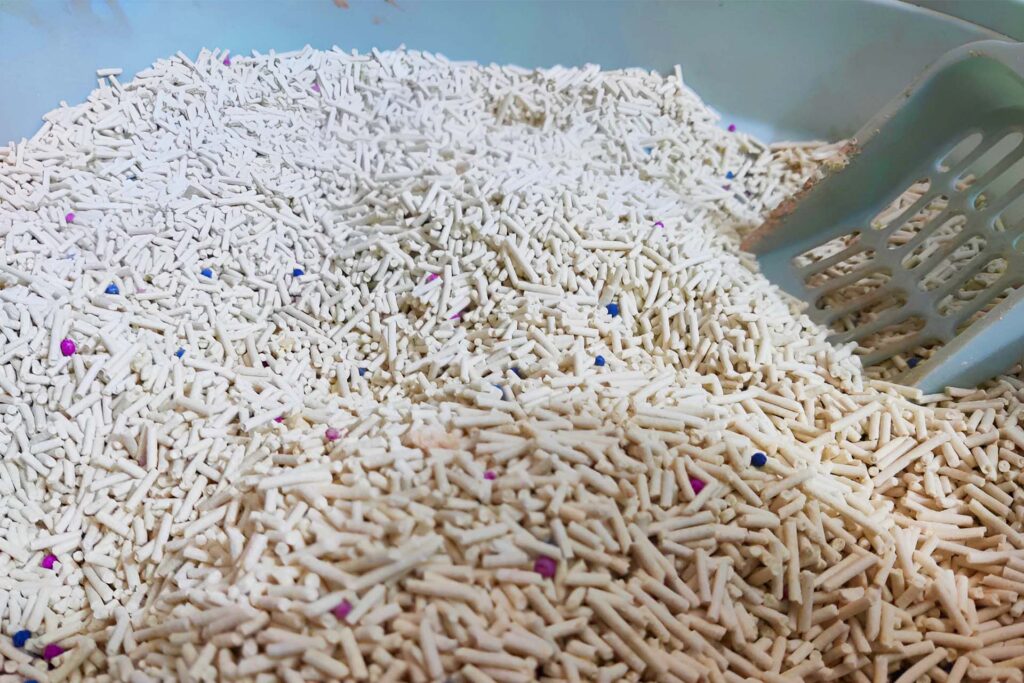
Bentonite litter has fine, smooth grains that are easy for cats to dig through. 3-4 centimeters is perfect, and if you use extra-fine bentonite, go for 4-5 centimeters to prevent leaks. Tofu or plant-based litter is light and clumps a bit loosely, so you’ll need 4-5 centimeters to make sure it covers waste well and doesn’t overflow when it soaks up urine. Crystal litter is just for absorption—no digging needed—so 2-3 centimeters is enough. Pine litter goes in a double-layer litter box; only 2-3 centimeters on the top layer is needed to let it sift down properly. Mixed litter is in the middle—3-5 centimeters works best.
2. Adjust by your cat’s age:
Kittens (3-6 months old) are weak and their claws aren’t fully grown. 2-3 centimeters is ideal so they don’t sink too deep and struggle to get up. Adult cats are strong enough, so just follow the thickness guide for your litter type. Senior cats have less flexible joints, so 2.5-3.5 centimeters is a good balance—it’s easy for them to dig but still covers waste well, without straining their joints.
3. Adjust by litter box style:
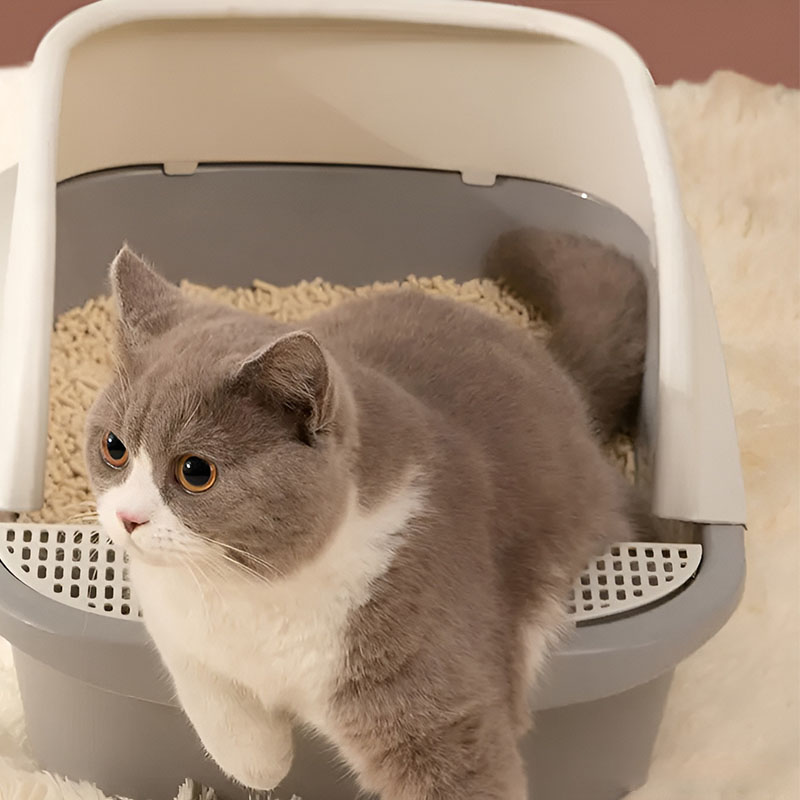
Open litter boxes have plenty of space, so stick to the standard thickness. Closed litter boxes are more cramped—go 0.5-1 centimeter thinner than the standard to keep litter from piling up and spilling out. For double-layer litter boxes, keep the top layer strictly 2-3 centimeters to make sure it sifts correctly.
Practical Tips for Laying and Adjusting Litter Thickness
1. Spread evenly for a solid base:
Clean and dry the litter box first. After pouring in the litter, smooth it out with a scoop. Make sure the thickness doesn’t vary by more than 0.5 centimeters anywhere—this way, your cat has the same experience no matter where they go.
2. Watch your cat’s behavior and adjust as needed:
After laying the litter, observe how your cat digs. If they dig stiffly or only stir the top layer, it’s too thick. If they can’t cover their waste properly and only scratch the surface, it’s too thin. Adjust by 0.5 centimeters each time until your cat can cover their waste completely in about 10 seconds.
3. Maintain the thickness daily:
Clean out feces and clumped litter every day, and add a little fresh litter afterward to keep the thickness consistent. For single-cat households, change all the litter regularly based on the type—every 7-10 days for bentonite, and 10-14 days for tofu litter. This prevents the litter from getting too thin as it’s used up.
PREGUNTAS FRECUENTES
Do I need to adjust the litter thickness for multiple cats?
Yes! For each extra cat, add 1-2 centimeters of litter to help control odors. It’s also a good idea to have more than one litter box so your cats don’t get crowded and refuse to use them.
Any special tips for laying litter in humid southern areas?
You can add 0.5-1 centimeter to the standard thickness to help it absorb better and prevent sticking to the bottom. Also, put the litter box in a well-ventilated spot to keep moisture from building up.
If my cat loves digging deep, can I make the litter as thick as I want?
Not really. Don’t go thicker than 8 centimeters. Too thick will tire your cat out when digging, making them lazy about covering their waste. It also wastes a lot more litter and leads to more tracking around the house.
Do I need to adjust the thickness when switching litter types?
Yes! Different litters have different textures and clumping abilities, so you’ll need to follow the thickness guide for the new litter. You can mix a little old litter with the new one to help your cat get used to it—this avoids stressing them out.
 Spanish
  English
  Russian
  French
  Indonesian