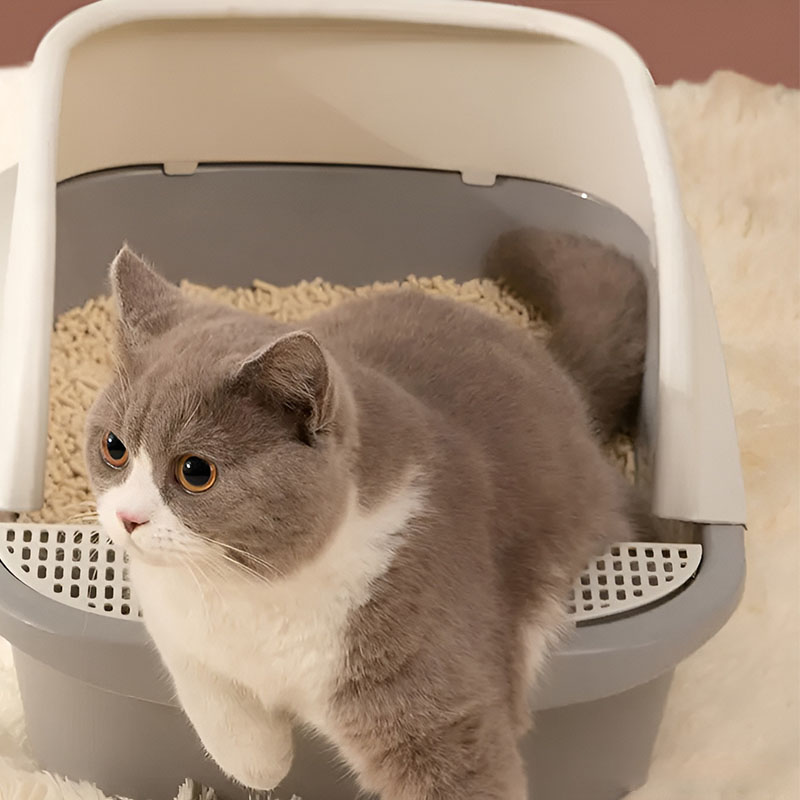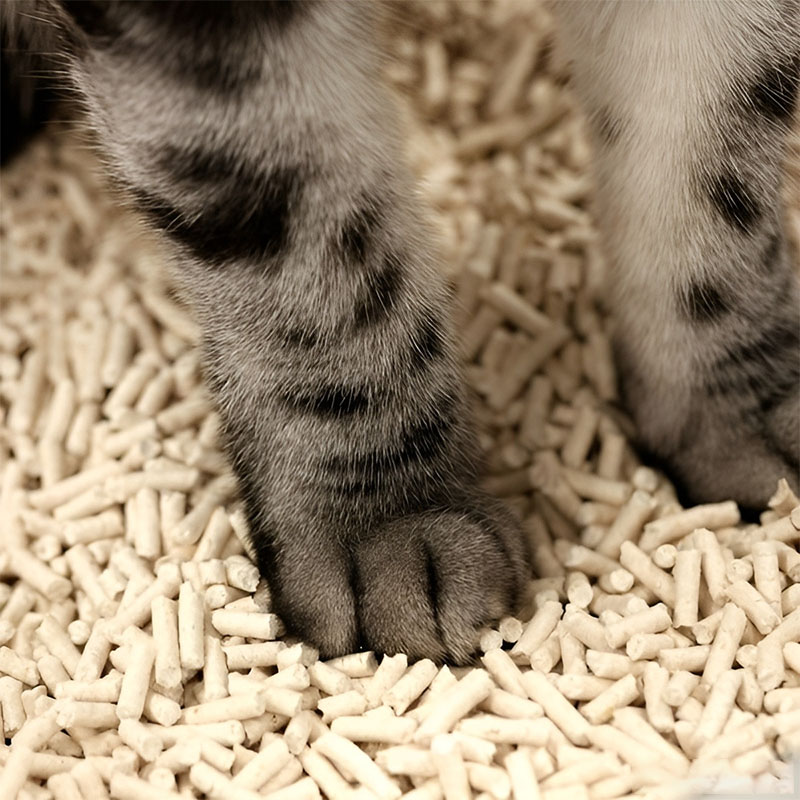
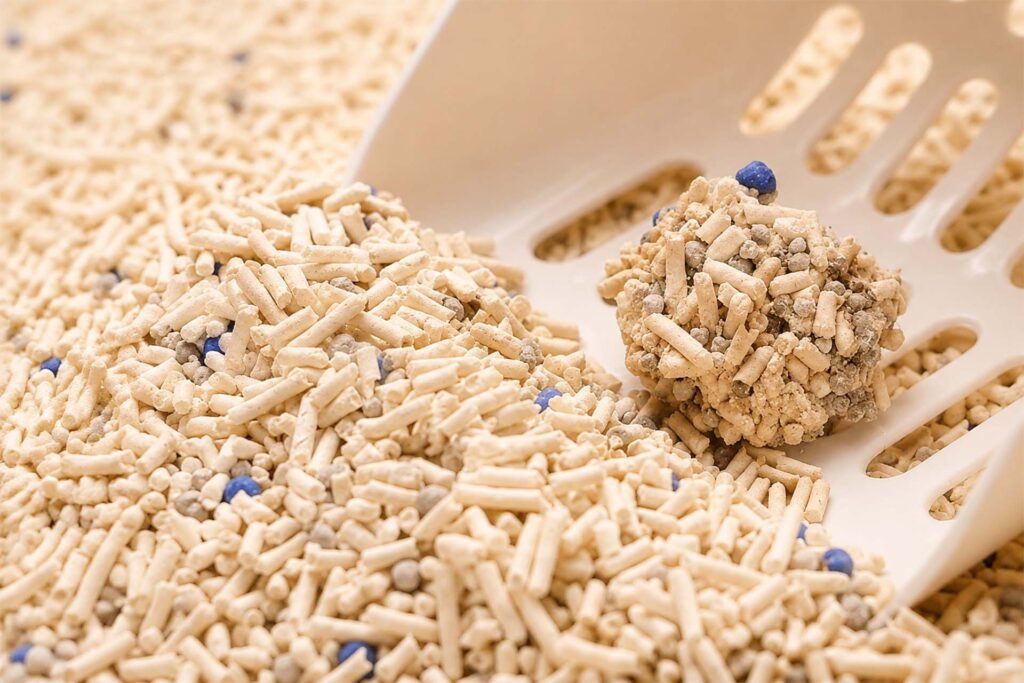
Puntos clave
- La aglomeración de la arena para gatos de tofu se basa en un proceso de gel flexible derivado del almidón, a diferencia de la unión mineral rígida de la bentonita. La formación de grumos blandos es normal y esperada.
- El 90 % de los fallos en el aglomerado de la arena para gatos de tofu (grumos blandos, desmoronamiento o adherencia al fondo) se deben a capas de arena demasiado finas, a la retirada prematura de los desechos o a una humedad elevada, y no a defectos del producto.
- Extiende la arena de tofu hasta alcanzar una profundidad de 6 a 7 cm. Cualquier espesor inferior a 4 cm garantiza que la orina se filtre y se adhiera al fondo.
- Espera entre 5 y 10 segundos después de que tu gato orine antes de retirar los desechos. El almidón de tofu necesita tiempo para gelificarse y asentarse; retirar la arena inmediatamente rompe el aglomerado.
- Durante las temporadas húmedas, traslada el arenero a un lugar ventilado y reduce el ciclo de renovación total a entre 15 y 25 días para mantener la eficacia de la aglomeración.
- Limpia a fondo el arenero una vez al mes; la acumulación de residuos microscópicos es la causa oculta de que la arena se pegue al fondo de forma recurrente, incluso cuando se utiliza arena limpia.
- La arena para gatos de tofu de alta calidad utiliza residuos de soja puros y almidón de maíz, sometidos a un proceso de secado a baja temperatura. Evite los productos que contengan rellenos de paja, generen polvo excesivo o presenten gránulos irregulares.
1. Por qué la arena para gatos de tofu se aglomera de forma diferente a la de bentonita
Propietarios de gatos familiarizados con arena de tofu para gatos es conocida y valorada por generar poco polvo, ser desechable por el inodoro, segura para gatitos y gatos sensibles, y por su suave fórmula de origen vegetal. Actualmente, es la arena para gatos de origen vegetal más popular del mercado. Sin embargo, casi todos los usuarios terminan enfrentándose a las mismas frustraciones: en comparación con la arcilla de bentonita, la aglomeración de la arena de tofu puede resultar blanda, los grumos se deshacen al usar la pala y los residuos húmedos se adhieren obstinadamente al fondo de la caja. Muchos dueños llegan a la conclusión de que la arena de tofu es simplemente inferior y prueban varias marcas antes de desistir y volver a la arena de arcilla.
En realidad, los problemas de aglomeración de la arena para gatos de tofu rara vez se deben únicamente a defectos del producto. Las causas fundamentales son una combinación de las propiedades físicas del material vegetal, los hábitos de uso, la gestión de la profundidad de la arena y la humedad ambiental. La estructura fibrosa de la arena de tofu absorbe el agua rápidamente y forma un gel blando, un mecanismo totalmente distinto al de la aglomeración dura y mineral de la bentonita. Intentar gestionar la arena de tofu aplicando la lógica de la bentonita conducirá inevitablemente a la frustración.
Esta guía se basa en las propiedades únicas del material de la arena para gatos de tofu para analizar las causas reales de la formación de aglomerados blandos o sueltos y de la adherencia. Distingue claramente entre los problemas genuinos de calidad del producto y los errores comunes de uso, además de ofrecer un plan práctico de optimización, consejos para la adaptación estacional y una lista de verificación para la compra. El contenido es objetivo y está respaldado por investigaciones, por lo que resulta adecuado tanto para propietarios de gatos como para minoristas de mascotas y distribuidores de comercio electrónico transfronterizo que buscan material educativo diferenciado.
1.1 La ciencia de la aglomeración de productos de origen vegetal
Para resolver definitivamente los problemas de aglomeración de la arena para gatos de tofu, primero es necesario comprender qué hace que la aglomeración de origen vegetal sea fundamentalmente distinta de la mineral. La bentonita actúa mediante la absorción en los poros del mineral y el entrecruzamiento iónico: el agua provoca que las partículas de arcilla se unan firmemente formando una masa dura y compacta que resiste la rotura una vez formada.
La arena para gatos de tofu, en cambio, utiliza residuos de soja, almidón de maíz y fibra vegetal como materias primas principales. Cuando la orina entra en contacto con los gránulos, el almidón vegetal experimenta un proceso de gelatinización —una reacción de hinchazón y aglutinación activada por el agua— que genera un aglomerado flexible y de consistencia similar a un gel. Estos aglomerados son, por naturaleza, más suaves, elásticos y menos duros que los de bentonita. Es precisamente este mecanismo de gelificación el que confiere a la arena de tofu sus ventajas: es suave para las patas, no genera polvo y resulta delicada al tacto; no obstante, esto también implica que los aglomerados son más propensos a romperse ante un volumen excesivo de orina, una exposición prolongada a la humedad o una manipulación física prematura.
1.2 Aglomeración blanda frente a dura: ¿qué es normal?
Muchos dueños de gatos confunden la formación de aglomerados blandos con una mala calidad del producto. Se trata de una idea errónea. La arena de tofu de alta calidad forma aglomerados naturalmente blandos y flexibles; siempre que el aglomerado mantenga su forma, no se desmorone en fragmentos, no filtre orina ni deje residuos pegajosos, está funcionando exactamente según lo previsto. La formación de aglomerados duros, similares a piedras, en la arena de tofu suele indicar la adición excesiva de aglutinantes químicos, lo cual puede suponer un riesgo digestivo si el gato los ingiere durante su aseo.
La gran mayoría de los problemas de aglomeración en casa —como grumos que se deshacen, residuos dispersos o adherencia al fondo de la bandeja— no se deben a una mala calidad del producto, sino a aplicar hábitos de mantenimiento propios de la arena de bentonita a la arena de origen vegetal. Existe una incompatibilidad entre las características del material y el método de uso. Adoptar una rutina específica para este tipo de arena vegetal es la única forma de aprovechar al máximo el potencial de la arena de tofu para gatos y, al mismo tiempo, eliminar sus inconvenientes más conocidos.
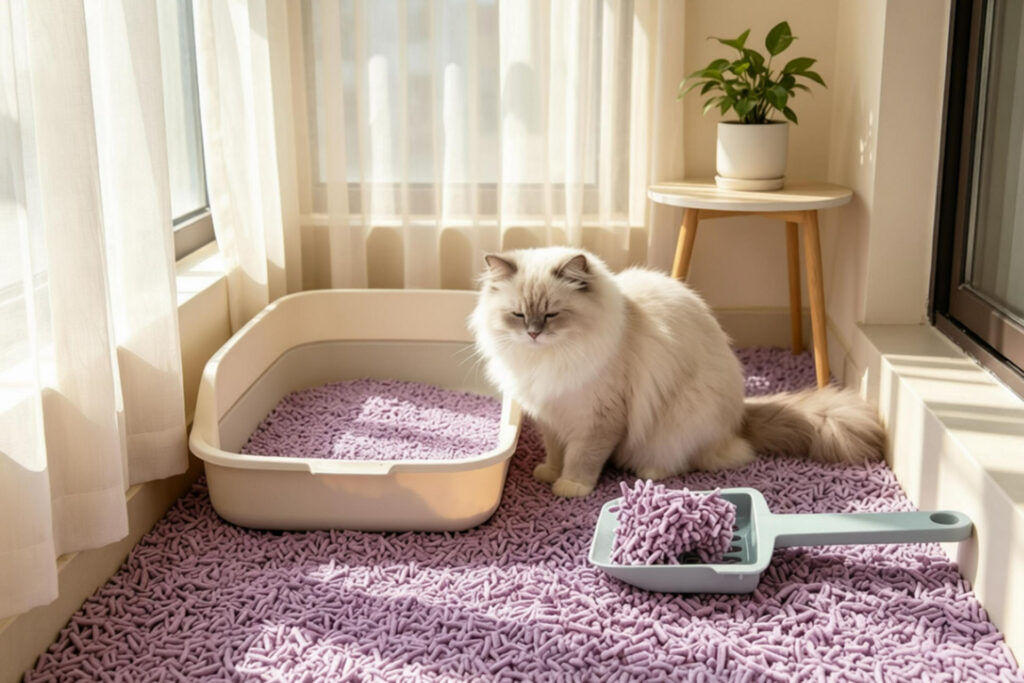
2. Cuatro razones por las que tu arena para gatos de tofu no se aglomera correctamente
A partir de una amplia experiencia de uso doméstico, los problemas de aglomeración de la arena para gatos de tofu se clasifican en dos categorías generales: defectos de fabricación y errores del usuario. Identificar la causa exacta es el primer paso para lograr una solución duradera.
2.1 Materia prima y defectos de fabricación
La arena para gatos de tofu de baja calidad presenta deficiencias desde la materia prima. Para reducir costes, algunos pequeños talleres cargan sus fórmulas con residuos de paja, polvo reciclado y almidón de baja calidad. El resultado son materias primas impuras, proporciones de fibra irregulares y una gelatinización desigual tras absorber el agua. Los aglomerados se forman con demasiada lentitud (la orina se extiende y se filtra) o son tan frágiles que se deshacen al contacto con la pala. Por otro lado, la arena que no ha pasado por un secado adecuado a baja temperatura retiene humedad interna, lo que genera una estructura granular inestable que se reblandece, se descama y se convierte en una capa de pasta viscosa en el fondo de la bandeja.
2.2 Una capa de lecho demasiado fina provoca fugas y adherencia.
Este es el error más común entre quienes empiezan a usar arena de tofu para gatos. Esta arena absorbe y dispersa el líquido más rápido que la de bentonita. Si la capa de arena es demasiado fina, la orina llega rápidamente al fondo del arenero antes de que pueda formarse un aglomerado completo. En lugar de un bloque sólido y fácil de retirar, se obtiene una capa fina y húmeda de pasta adherida firmemente a la superficie del recipiente. Muchos hogares extienden solo entre 3 y 4 cm de arena, una cantidad muy inferior a la mínima recomendada para este tipo de producto. Mantener una capa insuficiente de forma habitual provoca inevitablemente que la arena se pegue persistentemente, que haya filtraciones de orina y que los aglomerados se deshagan.
2.3 Retirar la arena demasiado pronto deshace los grumos aún no formados.
La arena para gatos de tofu aglomerante requiere un breve periodo de asentamiento. La gelatinización del almidón que mantiene unido el aglomerado no se endurece al instante; el proceso tarda varios segundos en completarse tras el contacto con el agua. Muchos dueños retiran los desechos justo cuando su gato sale de la caja. En ese momento, el aglomerado aún está blando y es frágil; la pala lo rompe, esparciendo residuos húmedos que se acumulan en el fondo. La repetición de este proceso, que fragmenta los aglomerados, genera residuos incrustados y difíciles de eliminar, mucho más complicados de limpiar que un bloque compacto e intacto.
2.4 La humedad destruye la estabilidad de la aglomeración.
Las fibras vegetales de la arena de tofu son altamente higroscópicas, por lo que absorben con facilidad la humedad ambiental. En entornos húmedos, los gránulos se ablandan prematuramente, su capacidad de absorción de agua disminuye y su facultad para aglomerarse se reduce drásticamente. Durante la temporada de lluvias del sur de China, en baños sin ventilación o en apartamentos húmedos situados en plantas bajas, la arena permanece en un estado constante de absorción de humedad. El resultado son unos gránulos blandos y pegajosos que no se aglomeran correctamente y se adhieren con tenacidad al arenero, duplicando así el esfuerzo de limpieza.
3. Cómo distinguir una buena aglomeración de una mala aglomeración
Muchos dueños de gatos no saben distinguir entre el comportamiento normal de aglomeración de la arena de tofu y un fallo real de calidad. Esto lleva a desechar arena que está en perfecto estado (lo que supone un gasto innecesario) o a seguir utilizando una arena defectuosa que conlleva riesgos higiénicos. A continuación, presentamos una guía comparativa clara para una evaluación diaria rápida.
Aglomerados normales de arena para gatos de tofu de alta calidad: Forma aglomerados compactos y redondeados con una superficie ligeramente cerosa. Se retiran limpiamente con una pala, sin desmoronarse ni dejar residuos importantes. La orina queda totalmente encapsulada en el interior del aglomerado; el fondo de la bandeja permanece seco, sin restos ni capas pastosas. Tras unos instantes, los aglomerados se endurecen gradualmente sin filtraciones continuas ni olores desagradables. Esta capacidad de aglomeración flexible a base de gel es la característica distintiva de una arena de tofu que funciona correctamente.
Terrones defectuosos de arena para gatos de tofu de baja calidad: No se forman aglomerados tras el contacto con el agua; la orina se extiende formando un charco amplio y solo quedan restos húmedos y disgregados. La pala deshace todo al instante y una gran cantidad de residuos húmedos se adhiere al fondo. Tras un breve periodo de uso, aparecen masas blandas, pastosas y pegajosas, a menudo acompañadas de un ligero olor agrio. Ni ajustar la profundidad del lecho ni modificar la frecuencia de limpieza con la pala mejora la situación. Se trata de un defecto de materia prima y de fabricación; el lecho debe sustituirse de inmediato.
4. Cuatro pasos para solucionar problemas de aglomeración de la arena de tofu para gatos en casa
Al adaptar tu rutina a las características naturales de la arena de tofu, puedes mejorar drásticamente la compactación de los aglomerados sin necesidad de cambiar de marca. Estos cuatro sencillos ajustes eliminan la adherencia al fondo, evitan las fugas de orina y prolongan la vida útil de cada carga de arena.
4.1 Ajuste correctamente la profundidad de la cama
La profundidad recomendada para la arena de tofu difiere de la de bentonita. Extienda una capa de 6 cm para hogares con un solo gato y de 7 cm para hogares con varios gatos. Una capa de arena suficiente encapsula totalmente la orina, proporciona al almidón vegetal espacio suficiente para completar la gelatinización y evita que la orina entre en contacto directo con el fondo del arenero. Mantenga la superficie nivelada y uniforme, sin depresiones ni zonas descubiertas. Una profundidad constante elimina la causa principal de que la arena se pegue al fondo y garantiza que cada micción forme un aglomerado compacto y fácil de retirar.
4.2 Calcula bien el momento de recoger
Adopta el hábito de esperar un poco antes de retirar los desechos. Cuando tu gato salga del arenero, deja reposar el aglomerado entre 5 y 10 segundos antes de recogerlo; esta breve pausa permite que el gel de almidón se asiente por completo. Retira los desechos con suavidad: desliza la pala en posición plana por el fondo del arenero y levanta el aglomerado con un movimiento fluido. Evita remover o hacer palanca con fuerza, ya que esto rompe los aglomerados intactos y esparce residuos húmedos. Una mayor integridad del aglomerado se traduce en una menor acumulación de residuos con el paso del tiempo.
4.3 Controlar la humedad para una mejor aglomeración
Durante las temporadas de lluvia y en espacios habitables húmedos, traslade el arenero a un lugar seco y ventilado; evite los rincones húmedos de cocinas y baños. Aumente la ventilación diaria abriendo las ventanas para acelerar el secado superficial de la arena y reducir la absorción de humedad. Acorte el ciclo de renovación total de la arena: de 20 a 25 días para hogares con un solo gato y de 15 a 20 días para hogares con varios gatos. Esto evita que la arena vieja, saturada de humedad, pierda su capacidad de aglomeración y se adhiera constantemente al fondo.
4.4 Limpia a fondo el arenero mensualmente.
Tras semanas de uso, se acumulan residuos microscópicos de arena húmeda en el fondo de la caja, formando una fina capa invisible. Incluso la arena limpia se adhiere a estos residuos, haciendo que el problema de que la arena se pegue al fondo parezca persistir indefinidamente. Una vez al mes, vacíe toda la arena, friegue bien la caja con agua tibia para eliminar cualquier rastro de residuo, séquela completamente al sol y rellénela con arena limpia. Esto corta de raíz el ciclo de adherencia.
5. Errores comunes con la arena de tofu aglomerante para gatos (el 90 % de los dueños los comete)
Error 1: Copiar los hábitos de uso de la bentonita y extender la arena en una capa demasiado fina. La arena para gatos de tofu no está diseñada para extenderse en capas poco profundas. Las capas finas inevitablemente dejarán filtrar la orina y se adherirán al fondo. Lo que parece un ahorro de arena a corto plazo, en realidad aumenta los costes a largo plazo debido a la frecuencia de los cambios de arena y al trabajo adicional de limpieza.
Error 2: Remover y airear la arena con frecuencia. La estructura de capas blandas de la arena de tofu se deshace con facilidad. Removerla repetidamente deshace los aglomerados aún no formados, aumenta la fragmentación, genera polvo y acelera la absorción de humedad. Retire únicamente los aglomerados a diario; no remueva ni airee el lecho de arena.
Error 3: Ir tras los grumos duros como una piedra. La arena para gatos de tofu es naturalmente flexible al aglomerarse. Una dureza excesiva indica la presencia de demasiados aditivos químicos, lo cual puede sobrecargar el sistema digestivo del gato si este ingiere restos al asearse. Un aglomerado normal, suave y cohesivo (íntegro, sin romperse y sin ser pegajoso) es señal de una aglomeración de origen vegetal de alta calidad.
Error 4: Añadir más arena sin hacer nunca una renovación completa. El lecho antiguo de la base se satura de humedad y sus fibras se degradan. Aunque se añada lecho nuevo por encima, la capa inferior sigue apelmazándose y desmoronándose. Solo la renovación completa y periódica del contenido de la caja garantiza un rendimiento estable en la formación de aglomerados del lecho de tofu para gatos.
6. Guía estacional: Arena para gatos de tofu aglomerante para todo el año
6.1 Primavera y verano: combatir el reblandecimiento y la adherencia
La primavera y el verano traen consigo una elevada humedad ambiental que provoca que la arena de tofu absorba humedad, se ablande y pierda su capacidad de aglomeración. Priorice la ventilación y mantenga la zona seca a diario. Retire de inmediato todos los aglomerados reblandecidos y los restos deshechos para evitar que la arena húmeda fermente. Aumente ligeramente la profundidad de la arena para compensar la estructura más suelta resultante de la absorción de humedad. Acorte el ciclo de renovación total para evitar que la arena pierda eficacia a largo plazo debido a la humedad.
6.2 Otoño e invierno: prevención de grietas y polvo
El otoño y el invierno traen condiciones de sequedad que hacen más estables los aglomerados de la arena para gatos de tofu; sin embargo, los grumos duros pueden desarrollar grietas y generar partículas de polvo fino. Reduzca la ventilación innecesaria y mantenga el ambiente interior seco pero estable para evitar una pérdida excesiva de humedad en la arena. Retire los desechos con suavidad para evitar que los grumos endurecidos se rompan. Añada una pequeña cantidad de arena nueva a diario para mantenerla en buenas condiciones generales.
7. Cómo elegir arena para gatos de tofu que aglomere bien
El mercado de arena para gatos a base de tofu se caracteriza por una marcada homogeneización de los productos. La mayoría de las marcas destacan los mismos argumentos de venta (posibilidad de desecharla por el inodoro, baja generación de polvo y seguridad), pero pasan por alto los problemas de aglomeración que más señalan los usuarios. La eficacia de la aglomeración es el verdadero factor diferenciador que determina la satisfacción diaria del usuario, las tasas de reclamaciones posteriores a la compra y la propensión a repetir la compra.
Para los dueños de gatos: Elija arena para gatos de tofu elaborada principalmente a base de residuos de soja pura y almidón de maíz, que presente gránulos uniformes y compactos con una mínima cantidad de polvo fino. El producto debe absorber el agua rápidamente y formar aglomerados redondeados y sólidos que no se desmoronen al retirarlos. Evite las alternativas económicas que presenten impurezas visibles, grandes cantidades de polvo suelto o gránulos de tamaños irregulares. Un producto que equilibre la suavidad y comodidad para las patas con una capacidad de aglomeración fiable es la mejor opción para el uso diario, especialmente en hogares con varios gatos y en entornos húmedos.
Para distribuidores y minoristas B2B: La arena para gatos de tofu, caracterizada por una aglomeración estable, resistencia al desmoronamiento y una adherencia mínima al fondo de la bandeja, aborda el principal problema que la mayoría de las marcas pasan por alto. Gracias a la optimización de las proporciones de fibra vegetal y al perfeccionamiento de los procesos de secado a baja temperatura, la arena de tofu de alta calidad combina la suavidad y biodegradabilidad de los productos de origen vegetal con una integridad de aglomeración muy superior. Diferencie su línea de productos acompañándola de contenido educativo, como esta guía, para enseñar a los usuarios finales la profundidad adecuada de la arena, los momentos óptimos para retirar los desechos y los hábitos de mantenimiento correctos. Esto reduce las quejas de los usuarios tras la compra, mejora la satisfacción del cliente y las tasas de recompra, y le permite evitar la guerra de precios a la baja.
Preguntas frecuentes
Respuestas rápidas a las preguntas más frecuentes sobre la capacidad de aglomeración de la arena para gatos de tofu, basadas en opiniones de usuarios reales y en la ciencia de los materiales.
¿Por qué mi arena para gatos de tofu no se aglomera correctamente?
El fallo en la formación de aglomerados de la arena de tofu para gatos suele deberse a uno de estos cuatro factores: una capa de arena demasiado fina (menos de 6 cm), retirar los desechos demasiado pronto tras la micción del gato, una humedad ambiental elevada que reblandece los gránulos o el uso de materias primas de baja calidad con un contenido insuficiente de almidón. Ajustar la profundidad de la arena y el momento de la limpieza resuelve el 90 % de los problemas de aglomeración sin necesidad de cambiar de marca.
¿Cómo evitar que la arena de tofu para gatos se pegue al fondo de la caja?
Para evitar que los aglomerados de la arena de tofu se peguen al fondo, mantén una profundidad mínima de 6 cm en hogares con un solo gato y de 7 cm en hogares con varios gatos. Deja que los aglomerados se asienten entre 5 y 10 segundos después de que el gato salga de la caja antes de retirarlos. En épocas de humedad, traslada la caja a una zona ventilada y límpiala a fondo una vez al mes para eliminar la acumulación de residuos que provoca que los nuevos aglomerados se adhieran.
¿Es el aglutinación suave normal para la arena para gatos tofu?
Sí, la formación de aglomerados blandos es el comportamiento normal y esperado de la arena para gatos de tofu de alta calidad. A diferencia de la arcilla de bentonita, que crea aglomerados duros y similares a piedras, la arena de tofu forma aglomerados flexibles a base de gel, producto de la gelatinización del almidón vegetal. Un aglomerado de tofu bien formado debe mantener su forma, retirarse limpiamente con la pala y no desmoronarse en fragmentos húmedos. Si los aglomerados se deshacen al instante o dejan una pasta húmeda en el fondo de la caja, ello indica un problema de calidad o un error de uso.
¿Qué grosor debe tener la arena para gatos de tofu para lograr un buen aglomerado?
Para lograr un aglomerado eficaz con la arena de tofu, extiéndala hasta alcanzar una profundidad de 6 cm en hogares con un solo gato y de 7 cm en hogares con varios gatos. Este espesor garantiza que la orina se absorba y encapsule completamente dentro de la capa de arena antes de llegar al fondo del arenero. Una profundidad inferior a 4 o 5 cm provocará que la orina se filtre, dando lugar a manchas húmedas y planas, así como a residuos pegajosos en el fondo que resultan difíciles de limpiar.
¿Cuánto tiempo debo esperar antes de retirar la arena aglomerante de tofu para gatos?
Espera entre 5 y 10 segundos después de que tu gato salga del arenero antes de retirar los desechos. La capacidad de aglomeración de la arena de tofu depende de la gelatinización del almidón, proceso que tarda varios segundos en completarse tras el contacto con la orina. Si retiras los desechos inmediatamente mientras el aglomerado aún está blando, este se romperá, dejando residuos húmedos que se acumularán en el fondo del arenero y provocarán que la arena se pegue persistentemente.
¿Puede la humedad afectar el aglomerado de la arena de tofu para gatos?
Sí, la humedad elevada es uno de los mayores enemigos de la capacidad de aglomeración de la arena para gatos de tofu. Las fibras vegetales de este tipo de arena absorben rápidamente la humedad del ambiente, lo que provoca que los gránulos se ablanden prematuramente. En condiciones de humedad —como durante las temporadas de lluvias, en baños sin ventilación o en apartamentos situados en plantas bajas—, la capacidad de absorción de la arena disminuye y los aglomerados se vuelven sueltos y pegajosos. Para evitarlo, aumente la ventilación, reduzca el tiempo entre cambios completos de arena y mantenga el arenero en un lugar seco.
¿Cómo elegir arena para gatos de tofu que aglomere bien y no se pegue?
Elija arena para gatos de tofu elaborada con materias primas de origen vegetal puro (residuos de soja y almidón de maíz como ingredientes principales), con un tamaño de partícula uniforme y un proceso de secado a baja temperatura. Evite los productos que contengan exceso de polvo fino, mezclas con rellenos de paja o gránulos de dureza irregular. La arena de tofu aglomerante de alta calidad absorbe el agua rápidamente, forma aglomerados redondeados y compactos, y deja limpio el fondo de la bandeja tras la limpieza, sin dejar residuos pastosos ni olores ácidos.
 Spanish
  English
  Russian
  Japanese
  Arabic