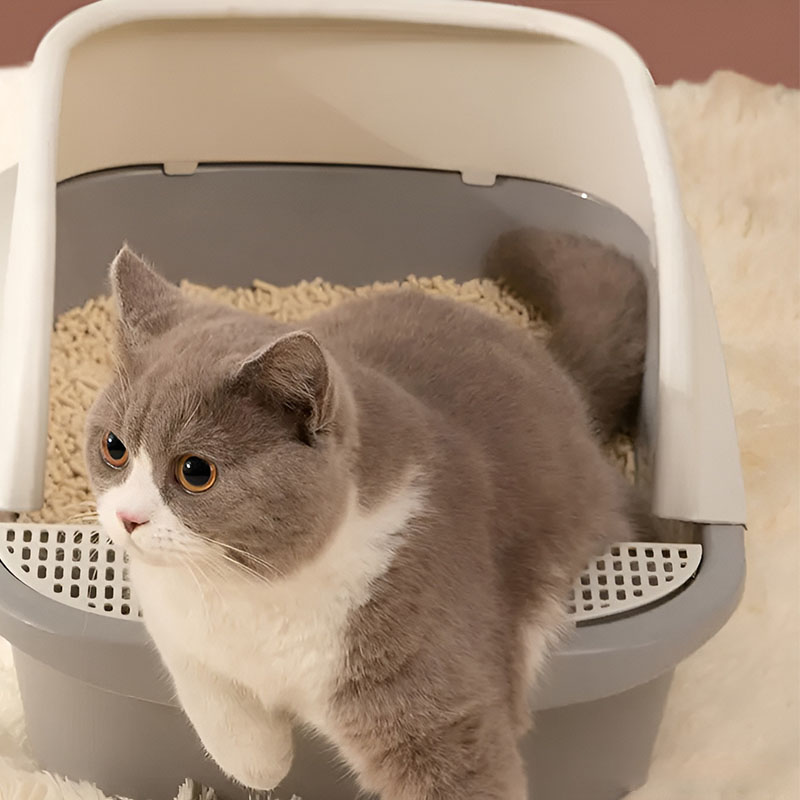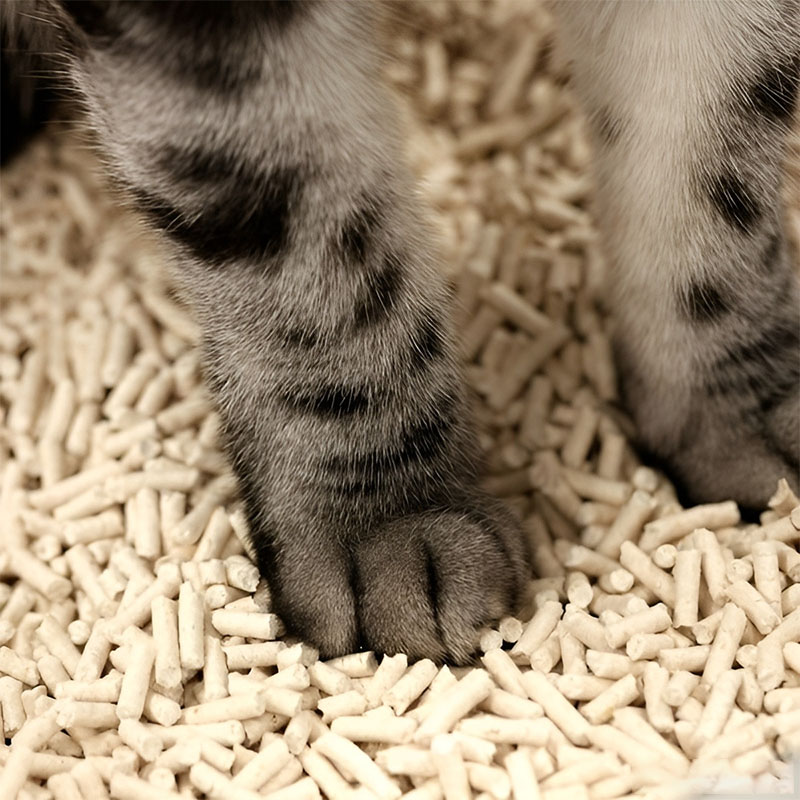
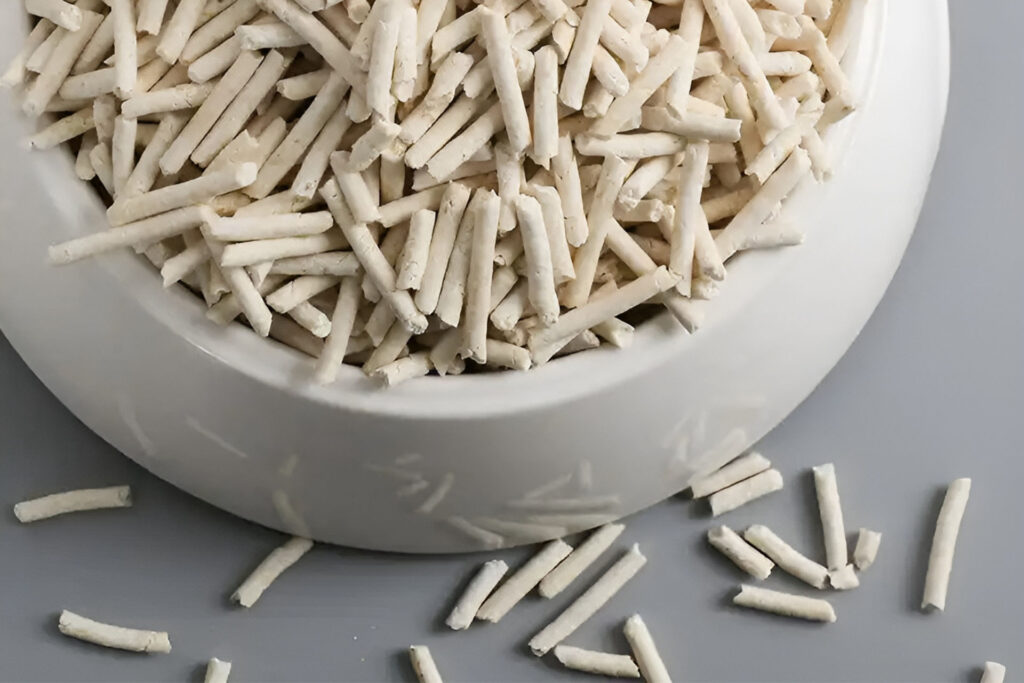
For many cat owners, the biggest challenge of indoor living is managing the smells coming from the litter box. If you are looking for a natural solution that actually works, understanding tofu cat litter odor control is the first step toward a fresher home. Unlike traditional litters that often rely on heavy artificial fragrances to mask smells, high-quality tofu litter uses advanced plant-based technology and physical adsorption to stop odors at the source. In this guide, we will explore the science behind how these eco-friendly pellets keep your air clean and provide practical tips to maximize their deodorizing power.
Raw Materials of Tofu Cat Litter
Litière pour chat en tofu is mainly made of natural plant-based materials such as okara, pea fiber, and corn starch. It is produced through mixing, high-temperature extrusion, drying, sieving, and dust removal processes. High-quality formulas use pure okara as the base, paired with food-grade guar gum to enhance clumping. Some premium products add odor-control ingredients like activated carbon, yucca extract, compound bio-enzymes, and natural plant essential oils. They contain no industrial fragrances or chemical adhesives, making them natural, safe, low-dust, and eco-friendly. Suitable for kittens, sensitive cats, cats of all ages, and multi-cat households.
Core Odor-Control Principles of Tofu Cat Litter
1. Physical adsorption and odor locking to quickly capture odor molecules
Okara and plant fibers have a porous, loose structure with a large specific surface area. They actively absorb odor molecules such as ammonia from urine and hydrogen sulfide from feces like a sponge, reducing the spread of odors into the air. Formulas with activated carbon or diatomite further boost adsorption with microporous structures, achieving fast odor absorption and long-lasting locking to prevent whole-house odor.
2. Fast clumping and isolation to block odor emission paths
When in contact with urine, starch and plant fibers absorb water and swell rapidly. With the effect of guar gum, they form tight clumps quickly, fully wrapping and sealing waste to isolate it from air and moisture. This blocks bacterial decomposition and odor volatilization at the source. Tighter clumps provide stronger odor locking; odors spread much slower even if not scooped immediately.
3. Bio-enzymatic decomposition to destroy odor sources fundamentally
Premium tofu cat litter contains compound bio-enzymes and probiotics, which directly break down odor-causing substances such as urea, uric acid in urine, and skatole and sulfides in feces, rather than simply masking odors. Bio-enzymes work continuously to inhibit bacterial reproduction and reduce secondary odor generation for long-lasting freshness.
4. Natural plant neutralization for gentle, non-irritating deodorization
Some formulas add natural extracts such as green tea, coffee grounds, and yucca. They neutralize odors with mild plant scents, react with odor molecules to reduce volatility, and release a natural light fragrance. Unlike harsh industrial fragrances, they do not irritate cats’ respiratory tracts, balancing odor control and comfort.
5. Moisture control and antibacterial protection to keep the litter box dry
Plant fibers have excellent hygroscopicity, quickly absorbing urine and environmental moisture to keep litter dry. This inhibits the growth of bacteria and mold. Excess moisture is the main cause of strong odors; moisture control reduces bacteria-produced odors and stabilizes deodorizing effects.
6. Low-dust technology for sensitive cats to reduce odor carriers
High-quality tofu cat litter undergoes multiple rounds of sieving and dust removal with an extremely low dust rate. It prevents dust from carrying odors and sticking to cat fur, floors, and furniture, reducing whole-house odor residue. It also protects cats’ respiratory health and lowers the risk of respiratory issues from dust irritation.
How to Use Tofu Cat Litter Properly for Better Odor Control
1. Apply enough litter to ensure odor-locking thickness
Litter should be laid 5–7 cm thick. Insufficient thickness leads to incomplete clumping, urine seepage, and sticky, smelly bottoms. Multi-cat households may thicken the layer to boost adsorption and odor-locking capacity for longer effectiveness.
2. Scoop promptly to avoid odor buildup
Scoop urine clumps and feces daily. Do not leave waste for long to prevent heavy bacterial growth and odor spread. Empty the litter box completely every week, clean and disinfect it, then refill with fresh litter to avoid odor from leftover dirt fermenting on the box walls.
3. Store correctly to prevent moisture damage
Keep unopened litter in a dry, ventilated area away from direct sunlight and humidity. Seal opened packages to avoid moisture-induced clumping or odor absorption, which weakens adsorption and clumping and reduces deodorizing effects.
4. Use combinations to boost efficiency
Sprinkle a layer of deodorizing powder at the bottom of the litter box, or mix with a small amount of activated carbon or bentonite litter to enhance overall adsorption. Keep the litter box area well-ventilated to speed up air circulation and assist odor dissipation.
5. Choose the right formula for your cat
Kittens and sensitive cats prefer fragrance-free, low-dust, probiotic-added basic formulas. Multi-cat households or strong-odor environments should choose premium formulas with activated carbon and bio-enzymes. For humid southern regions, prioritize moisture-controlling and odor-inhibiting formulas to avoid sour odors.
FAQ
Does tofu cat litter odor control irritate cats?
High-quality tofu cat litter uses plant materials and natural deodorizing ingredients with no industrial fragrances or chemical additives, so it is gentle and non-irritating. Avoid strong-fragrance types; it will not irritate cats’ sense of smell or respiratory tracts, even for sensitive cats.
Why is there still odor after using tofu cat litter?
Common causes include too thin litter layer, infrequent scooping, incomplete box cleaning, poor ventilation or high humidity, or low-quality litter with insufficient deodorizing ingredients. Following proper usage, prompt cleaning, and dry conditions can greatly improve odor issues.
Can tofu cat litter be mixed with other types?
Yes. Mixing with bentonite litter improves clumping and adsorption; mixing with activated carbon litter strengthens odor control. Keep the mixture fluffy and non-caking to maintain clumping and deodorizing performance.
What should I note when using tofu cat litter in humid areas?
Choose moisture-controlling, odor-inhibiting, bio-enzyme-added formulas. Increase scooping frequency, keep the litter box area ventilated and dry, and use a dehumidifier if needed to prevent litter from absorbing moisture, turning sour, and losing deodorizing effects.
How to dispose of used tofu cat litter in an eco-friendly way?
Tofu cat litter is biodegradable and water-soluble. Small clumps can be flushed down the toilet directly. Large amounts of used litter can be sealed and disposed of as wet waste. Natural plant ingredients cause no environmental pollution, combining odor control with green cat care.
 French
  English
  Spanish
  Russian
  Indonesian