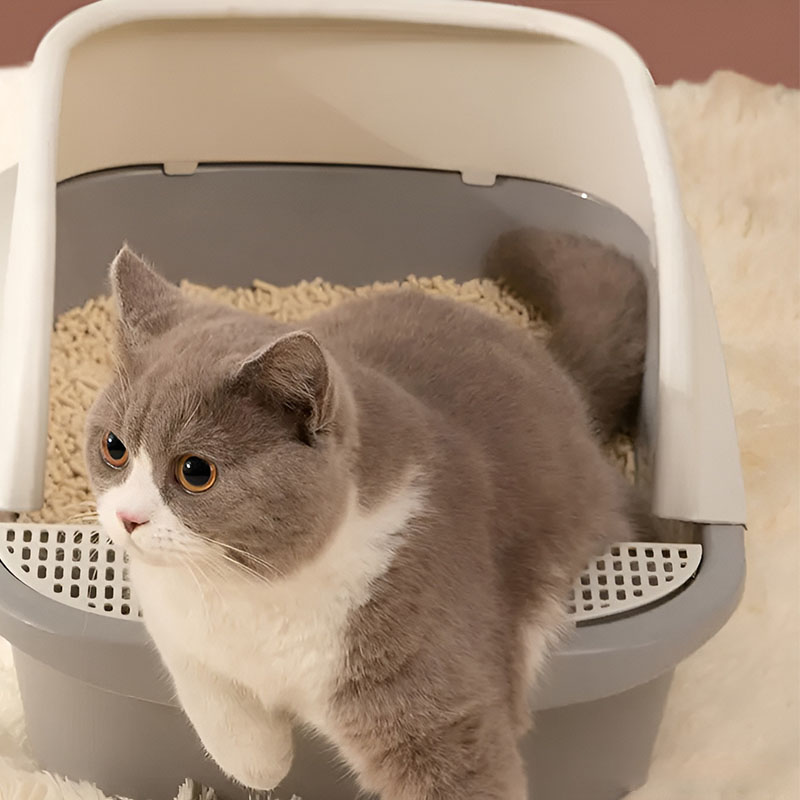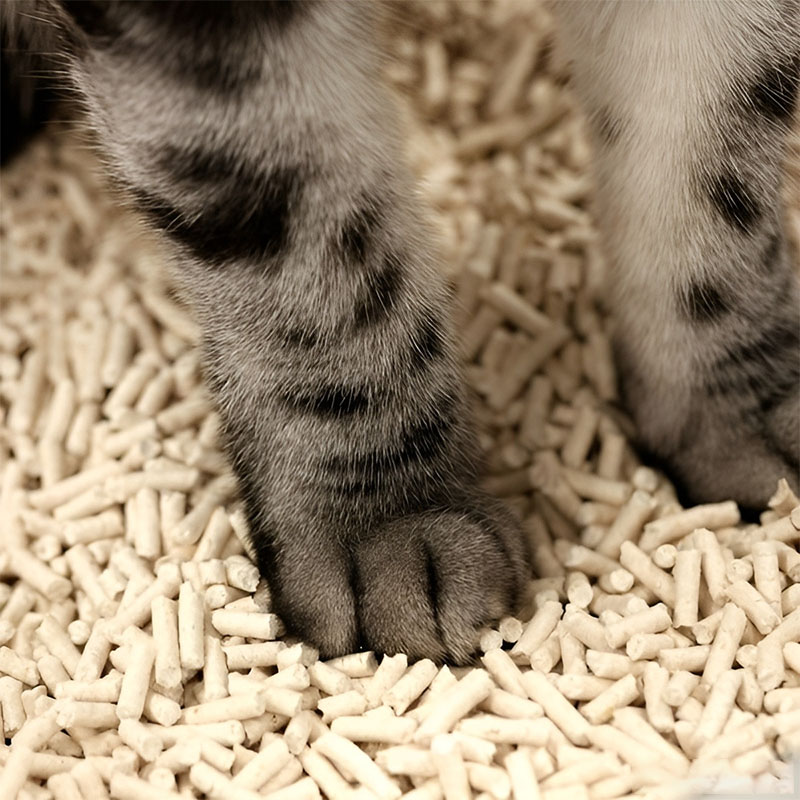
To understand why is my cat eating litter, you must look at their habits, the characteristics of the litter, and their living environment. Kittens are much more likely to eat litter than adult cats because they’re curious and often bite or explore things. Adult cats might eat it accidentally if the litter grains are too small, if the litter has an attractive smell, or if they swallow some while cleaning their fur after using the litter box. Besides, if there are food crumbs in the litter box or if your cat has pica, the chance of them eating litter goes up too. Litters made of different materials have different physical properties and ingredients, so when a cat eats them, the danger level, symptoms, and how to handle it are all different. Pet owners need to identify and deal with it accordingly.
Danger Levels of Different Litters and Corresponding Symptoms
Low-Danger Litter: Natural Plant Litter (Tofu, Corn, Wheat Litter)
This kind of litter is made from natural grains, pressed at high temperatures. It has no chemical additives, is biodegradable, and some even say it’s edible—it’s the least dangerous litter if eaten by mistake.
If your cat eats a small amount, there are usually no obvious symptoms. Their digestive system can break it down and metabolize it on its own, and they might only have a little soft stool. If they eat a large amount at once, the grain fiber swells when it gets wet, which might cause bloating, vomiting, or diarrhea. But the chance of it blocking the intestines is very low overall—it doesn’t irritate the cat’s stomach much, and the danger is manageable.
Medium-Danger Litter: Bentonite Litter
Bentonite litter is made from natural bentonite. It has small grains and strong water absorption, making it the most common type of litter on the market. It’s not toxic itself, but the main risk is that it clumps when wet and the grains stick easily.
If your cat eats a small amount of bentonite litter, they might have a little vomiting or loss of appetite, but the grains will pass through their stool. If they eat a lot, the grains clump when they come into contact with digestive juices in the stomach and intestines, and they can stick to the intestinal walls. This might cause intestinal blockage or constipation, which shows up as your cat being listless, squatting in the litter box frequently but not pooping, or having a hard, bloated belly. If you don’t handle it in time, it will put more strain on their stomach and intestines and might lead to secondary intestinal inflammation.
High-Danger Litter: Crystal Litter (Silica Gel Litter), Mineral Litter
Crystal litter is mainly made of silica gel grains, and mineral litter contains minerals like quartz sand. Neither is biodegradable—they have hard grains and strong water absorption, making them the most dangerous type of litter if eaten by mistake.
Silica gel grains can’t be digested by a cat’s stomach and intestines. Eating a small amount might scratch the lining of their mouth, esophagus, or intestines, which makes your cat drool, refuse to eat, or vomit blood-tinged fluid. Eating a large amount will directly cause intestinal blockage (ileus), and your cat will have severe vomiting, depression, hunched back from abdominal pain, and stop eating or pooping. If you don’t take them to the vet right away, it might lead to intestinal perforation and even death. The hard grains of mineral litter can also wear down the cat’s intestines, and the mineral components might increase the burden on their kidneys, leading to kidney discomfort.
Special Risk Litter: Scented/Additive-Containing Litter
No matter what the base material is, any litter with artificial fragrances, deodorants, antibacterial agents, or other chemical additives will increase the risk if eaten. Chemical additives irritate the cat’s intestinal lining, causing vomiting or diarrhea. If your cat eats a small amount over a long time, the additives will build up in their body and might damage metabolic organs like the liver and kidneys. This is especially true for kittens, cats with sensitive stomachs, and senior cats—they’ll have more severe symptoms after being irritated.
Emergency Handling Methods If Your Cat Eats Litter
Step 1: Determine the Type of Litter Eaten, the Amount, and Your Cat’s Condition
First, check what type of litter is in the litter box. Then, judge how much your cat ate based on their mental state and behavior. If your cat is acting normal, has no vomiting or diarrhea, and is eating and pooping normally, it’s probably a small amount—you can observe them at home. If your cat is vomiting, refusing to eat, bloated, listless, or if you’re sure they ate a lot of high-danger litter, you need to take immediate action.
Step 2: At-Home Handling by Case (Only for Small Amounts of Low/Medium-Danger Litter)
1. Natural Plant Litter: No special treatment is needed for a small amount. Just give your cat more water to help their digestive system metabolize it. If they have a little bloating or diarrhea, you can stop feeding them for 1-2 meals and give them a small amount of probiotics to regulate their stomach.
2. Bentonite Litter: If they eat a small amount, do NOT give them water (to avoid the grains clumping when wet). You can give them a little hairball paste or cat-specific dietary fiber to promote intestinal peristalsis and help the grains pass through their stool. Also, keep a close eye on their pooping.
Step 3: When to Go to the Vet Immediately (High-Danger Litter/Large Amount Eaten/Abnormal Symptoms)
If your cat eats crystal litter or mineral litter, a large amount of bentonite litter, or has any abnormal symptoms like blood-tinged vomiting, hunched back from abdominal pain, stopped eating or pooping, or depression, take them to the vet right away. The vet will check the amount of litter in their intestines through X-rays or tests, and use methods like inducing vomiting, administering lubricants, enemas, or even surgery to clear it out. This prevents intestinal blockage or further damage to the intestinal lining.
How to Prevent Your Cat from Eating Litter
1. Choose Litter as Needed: For kittens, cats with sensitive stomachs, or cats with pica, prioritize large-grain natural plant litter. Avoid crystal litter and fine-grain bentonite litter. If adult cats have a habit of biting, also avoid high-danger litter and don’t choose scented litter.
2. Use Litter Properly: Keep the litter depth between 5-8 centimeters. If it’s too thin, your cat might touch the bottom of the litter box and accidentally eat litter while biting the box. Clean the feces and clumped litter in the box in time to avoid food crumbs mixing with the litter, which reduces the temptation for your cat to bite.
3. Monitor and Train Your Cat: Keep a close eye on kittens. When they try to bite litter, stop them immediately and guide them to toys to develop good habits. If your cat has pica, supplement them with trace elements in time and take them to the vet to check if it’s caused by intestinal parasites, vitamin/trace element deficiencies, or endocrine diseases.
4. Check Your Cat’s Condition Regularly: Observe your cat’s eating, pooping, and mental state every day. If you find them licking their fur frequently or approaching the litter box to bite, intervene in time to reduce the chance of them eating litter from the source.
PERTANYAAN YANG SERING DIAJUKAN
Can I give my cat milk to induce vomiting if they ate litter?
No, most cats are lactose intolerant. Giving them milk will make their stomach discomfort worse, causing diarrhea and vomiting. Besides, milk doesn’t work to induce vomiting—it will only interfere with subsequent treatment. To induce vomiting, you need to use a professional emetic under the vet’s guidance.
How much hairball paste should I give my cat if they ate bentonite litter?
Feed it according to your cat’s weight. For kittens, 1-2 centimeters each time; for adult cats, 3-5 centimeters each time, once a day. Feeding too much will make your cat vomit, which puts more strain on their stomach.
How to completely improve if a cat with pica keeps eating litter?
First, take your cat to the vet to check if pica is caused by intestinal parasites, vitamin/trace element deficiencies, or endocrine diseases, and treat it accordingly. Supplement them with cat-specific multivitamins and trace elements daily, spend more time interacting with them, prepare chew toys to distract them from biting, and replace the litter with large-grain ones that are hard to eat by mistake.
Do I need to take my cat to the vet immediately if they ate crystal litter crumbs?
Yes. Even crumbs of crystal litter can’t be digested by the stomach and intestines, and they can scratch the lining. Even if your cat has no obvious symptoms for now, you still need to take them to the vet to check for crumbs piling up in their intestines, which could cause blockage later.
 Indonesian
  English
  Spanish
  Russian
  French