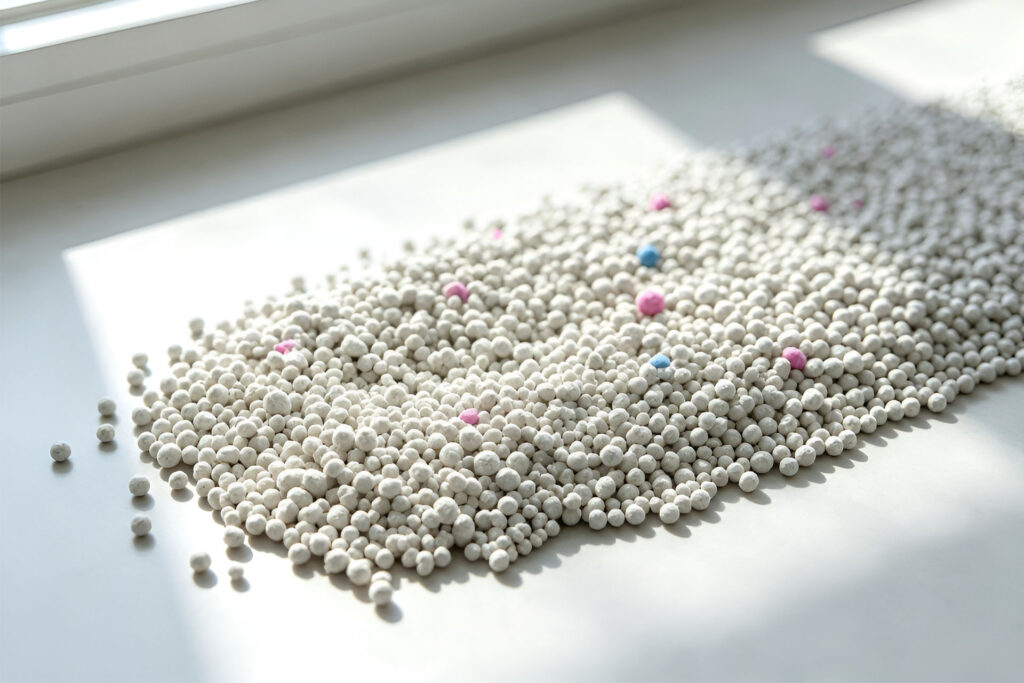
Cats come into direct contact with it every day, making the quality of cat litter closely related to feline respiratory health, skin health, and the overall home environment. This is why Cat Litter Manufacturing plays a critical role in determining the safety, performance, and consistency of cat litter products. Although there are many types of cat litter available on the market and prices vary widely, the user experience can differ significantly even within the same category. Common complaints include excessive dust, weak clumping performance, poor odor control, and rapid moisture absorption leading to mold or deterioration.
The root causes of these problems are often found in three critical areas of cat litter manufacturing: raw material selection, production and processing technology, and factory quality control. Because most consumers cannot visit a cat litter manufacturing factory or directly evaluate production standards, it can be difficult to identify high-quality products based solely on packaging or appearance.
From the perspective of modern cat litter manufacturing processes, this article breaks down the complete production logic behind bentonite cat litter and pine cat litter, covering every stage from raw material sourcing to finished-product inspection. By understanding how professional cat litter manufacturers produce their products, consumers can better evaluate product quality and make informed purchasing decisions. The second half of this guide also introduces industry benchmark standards used by large-scale cat litter manufacturing factories for reference by buyers, importers, and cat owners.

First: Raw Material Selection – The Foundation of Successful Cat Litter Manufacturing
Raw materials are the cornerstone of quality cat litter manufacturing. Whether producing bentonite cat litter or pine cat litter, the grade and purity of raw materials directly influence water absorption, clumping strength, deodorization performance, dust control, and overall product consistency.
Bentonite Cat Litter Manufacturing Raw Materials
The core active component in bentonite cat litter is natural montmorillonite clay. High-quality bentonite cat litter manufacturing requires mineral resources with sufficient montmorillonite purity and a naturally layered microporous structure capable of absorbing moisture and odors effectively.
Inferior products often contain excessive loess, gravel, or industrial waste soil, significantly reducing adsorption performance while increasing dust and contamination risks. In professional cat litter manufacturing facilities, raw materials undergo impurity sorting and laboratory testing before entering production to eliminate oversized stones, contaminated materials, and substandard minerals.
Pine Cat Litter Manufacturing Raw Materials
In pine cat litter manufacturing, the primary raw material is natural wood. Quality manufacturers avoid moldy timber, chemically treated wood, and recycled composite boards. Mold-contaminated wood can introduce spores and bacteria that negatively affect product safety and storage stability.
Standardized cat litter manufacturing processes require both manual and mechanical screening to remove decayed, insect-damaged, and contaminated wood materials before production begins.
Raw Material Storage Standards in Cat Litter Manufacturing
After raw materials arrive at the factory, compliant cat litter manufacturers use dedicated storage zones with controlled temperature and humidity conditions. Proper storage prevents moisture absorption, caking, and deterioration before production. Excessive moisture can negatively affect particle formation and ultimately increase breakage and dust generation in the finished product.
Second: Cat Litter Manufacturing Process – Standardized Production Workflows
1. Bentonite Cat Litter Manufacturing Process
According to mature cat litter manufacturing standards, bentonite raw materials first undergo preliminary screening and then enter a precision grading and grinding stage.
Unlike basic crushing methods used by small workshops, professional cat litter manufacturing factories employ controlled grinding systems to regulate particle size and shape, reducing sharp edges and improving comfort for cats.
Following grinding, multiple dust-removal stages eliminate surface dust and reduce airborne particles before packaging. The materials then move through shaping, drying, and moisture-control processes.
Proper moisture control is essential in cat litter manufacturing. Excess moisture leads to sticking and poor storage stability, while insufficient moisture increases brittleness and dust generation.
After drying, semi-finished products undergo secondary screening to remove fine powder and irregular particles, resulting in consistent, high-quality bentonite cat litter.
2. Pine Cat Litter Manufacturing Process
The pine cat litter manufacturing process begins with crushing screened logs into uniform wood powder. The material then undergoes high-temperature sterilization, a critical stage that eliminates mold spores, insects, bacteria, and harmful microorganisms.
Professional cat litter manufacturing facilities use multi-stage dehydration and moisture-control systems to prepare the wood flour for high-pressure extrusion molding.
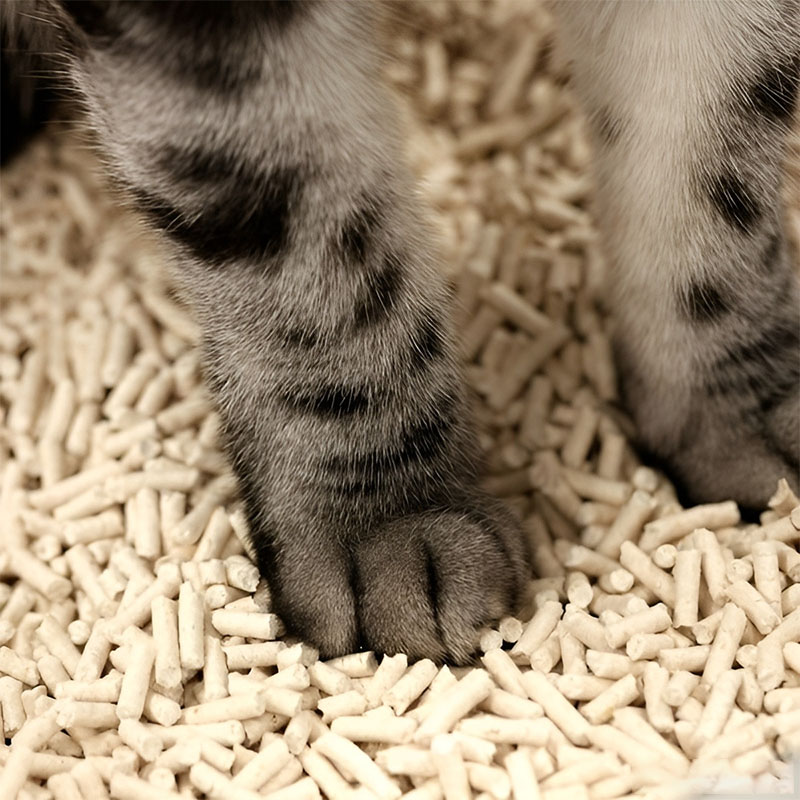
High-pressure molding is one of the most important steps in pine cat litter manufacturing, creating dense particles with superior absorption and controlled disintegration characteristics.
After molding, pellets are cooled, trimmed, and screened before packaging. Many low-cost products skip sterilization and fine screening, which often leads to higher odor levels and bacterial contamination.
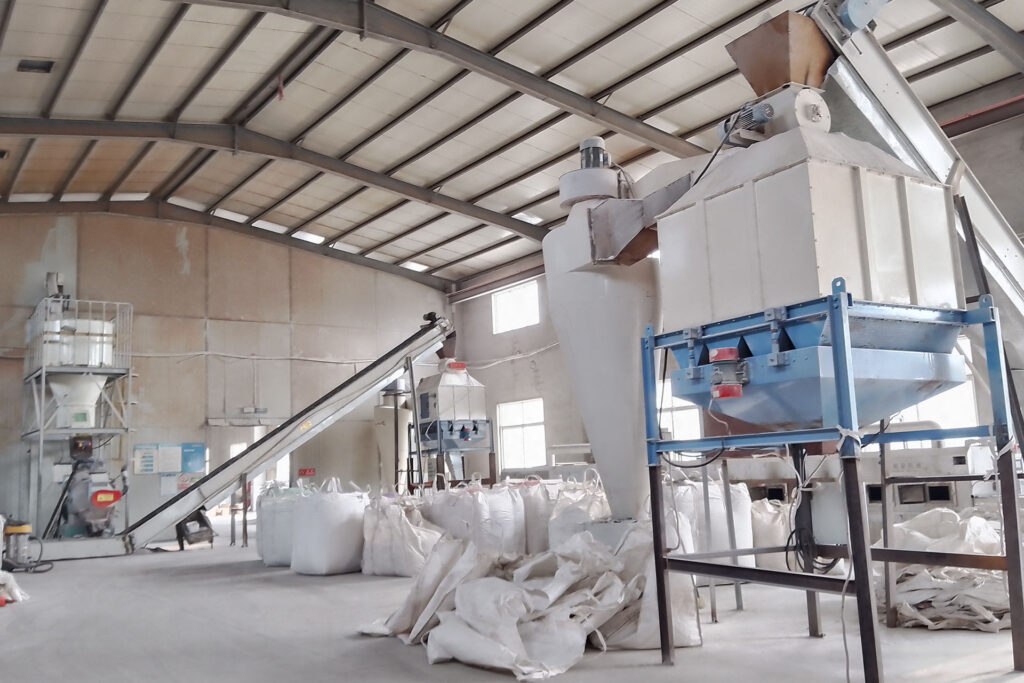
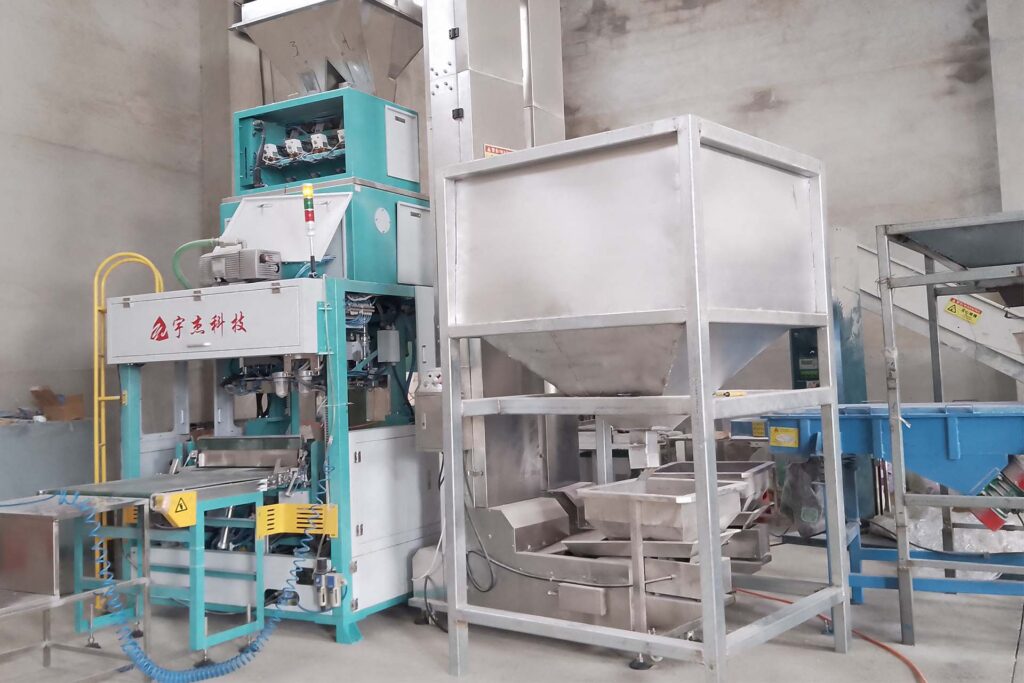
Large-scale cat litter manufacturing plants typically operate multiple automated production lines simultaneously to ensure consistency, production efficiency, and stable product quality.
Third: Quality Control in Cat Litter Manufacturing
A perfect quality control system is the guarantee for the landing of high-quality products. The mature control of the whole industry is divided into three stages: raw material incoming inspection, mid-production inspection and finished product ex-factory sampling inspection, which is also an important reference condition for international procurement to screen suppliers.
Raw material incoming inspection: each batch of raw materials is sampled and tested to detect impurity content, harmful residues, moisture content and microbial indicators. Unqualified raw materials are directly rejected and prohibited from being put into production.
Inspection of production process: Quality control personnel regularly inspect semi-finished products of each production line, and check the grinding granularity, drying temperature and molding parameters in real time. If semi-finished products fail to meet the standard, adjust equipment parameters in time to avoid batch defective products.
Factory inspection of finished products: the finished products are sampled to simulate the home use environment, and the water absorption speed, agglomeration performance, dust amount, odor adsorption capacity and bacterial indicators are measured. Only when all the data meet the standards can they be put into storage for delivery, and the unqualified products will be scrapped in a centralized manner. Many small processing plants directly omit multi-link testing, which is also the core reason for uneven product quality.
Fourth: Storage Management in Cat Litter Manufacturing
When evaluating a professional cat litter manufacturing factory, buyers often consider production capacity, automation level, quality-control systems, and warehousing capabilities.
The storage environment of cat litter products directly affects the use effect after storage. Wet and closed warehouses are easy to make cat litter absorb moisture, become moldy, agglomerate and deteriorate. The finished product warehouses of high-quality production enterprises in the industry generally realize partition management, constant temperature and humidity control, and different types of cat litter are stored separately to avoid odor and moisture. Reasonable planning of storage space can also support the large-scale stocking of factories and ensure the stable delivery of orders.
Fifth: Benchmark Standards for Large-Scale Cat Litter Manufacturing Factories
When evaluating a professional cat litter manufacturing factory, buyers often consider production capacity, Combined with the current situation of the global pet products procurement market, the head cat litter manufacturing factory with global supply capacity generally has perfect hardware strength. Here, the parameters of the industry benchmark factory are taken as a reference: the factory covers an area of 60,000 square meters, with more than 20 years of industry production accumulation, and the overall annual production capacity can reach 500,000 tons. The factory is equipped with a number of automatic production lines running simultaneously, supporting the whole process quality inspection laboratory and large-scale standardized warehousing.
In addition to the production of their own products, chemical plants of this scale can provide OEM and ODM OEM services to partners all over the world by relying on mature technologies and capacity reserves. They can adjust product formulas, particle specifications and product performance according to customer needs, customize differentiated cat litter products, and adapt to different national climates and different consumer market needs. It is also an important reference condition for overseas importers to select cooperative factories. The above data is only used as a reference scale for high-quality factories, which is convenient for buyers to screen suppliers.
Sixth: How Understanding Cat Litter Manufacturing Helps Consumers Choose Better Products
By understanding basic cat litter manufacturing principles, consumers can avoid many low-quality products.
1. Evaluate Dust Levels
Excessive dust often indicates poor raw materials or inadequate dust-removal systems during cat litter manufacturing.
2. Test Clumping Performance
Weak clumping in bentonite litter or poor disintegration performance in pine litter may indicate substandard manufacturing parameters.
3. Check Odor
Strong earthy smells, rotten wood odors, or chemical odors may suggest poor raw materials or insufficient sterilization during production.
4. Examine Particle Consistency
Large differences in particle size and excessive fines usually indicate inadequate screening procedures in the cat litter manufacturing process.

Conclusion
High-quality cat litter manufacturing depends on the combined effectiveness of raw material sourcing, standardized production processes, rigorous quality control, and proper storage management. Whether evaluating bentonite or pine cat litter, understanding how professional cat litter manufacturers operate provides valuable insight into product quality. By recognizing the key factors behind successful cat litter manufacturing, consumers, distributors, and importers can make more informed purchasing decisions and identify reliable long-term suppliers.
よくあるご質問
Is high-temperature sterilization a must for all cat litter?
It is suggested that pine-based cat litter should be sterilized at high temperature, and plant raw materials are easy to carry mold eggs; Bentonite mineral raw material itself has low microbial content, so it can be filtered by regular dust removal, and there is no requirement for forced high temperature sterilization.
Is the batch quality of cat litter produced by Dachang necessarily stable?
With the improvement of automatic production line and three-tier quality control system, the product batch difference of large-scale chemical plants is very small; Without quality control, there will be quality fluctuation in large factories.
Is the quality of OEM products the same as that of original products?
The quality of OEM products produced by the same production line, the same raw material standard and the same quality inspection system is no different from that of the original factory; Only changing the formula and raw material grade will change the performance of finished products.
Which craft of cat litter is preferred for raising cats in wet areas?
Bentonite with perfect drying control technology and accurate water content control is preferred, which has better moisture-proof performance than ordinary pine and is not easy to be damp and moldy.