スクープの背後にある科学:高品質な豆腐猫砂を定義する中核的な製造基準

High-Quality Tofu Cat Litter

The appearance of strip-shaped high-quality 豆腐猫砂 on the market often looks similar, making it difficult to distinguish product quality based solely on appearance and price. Many consumers and overseas buyers unknowingly purchase inferior products that are prone to odor, dust, and weak clumping performance. The real difference between good and bad tofu cat litter lies in the production processes and quality control systems of the source manufacturer.

As a source supplier with more than 20 years’ experience in cat litter manufacturing, covering an area of 60,000 ㎡ and an annual production capacity of 500,000 tons, we have the global mass supply and OEM/ODM OEM customization capabilities. In this paper, the key points of exclusive production control of high-quality tofu cat litter are dismantled in combination with the practical operation standards of the complete production line, so as to teach everyone to judge the technological level of the factory through the finished product, so that ordinary cat owners can avoid the trap of purchasing, and overseas purchasing customers can quickly screen reliable cooperative factories.

All raw material ratios and performance parameters in the full text are measured standards of the factory, and there is no exaggeration or fiction.

First, Raw Material Control: The First Quality Defense Line of High-Quality Tofu Cat Litter

The raw materials used in high-quality tofu cat litter directly determine product safety and performance, representing the most visible difference between small workshops and professional manufacturers.

The raw material formula used in our factory is fixed and compliant: pea fiber, edible starch, and 1%-2% food-grade guar gum. Straw waste, moldy grains, and industrial adhesives are never added.

Raw Material Inbound Inspection Standards

All incoming raw materials are sampled and tested for mold count, moisture content, and impurity levels. Unqualified materials are rejected before entering production. Small workshops often skip these inspections and process low-cost waste materials directly, resulting in finished products that easily ferment and develop odors.

Safety Standards for Food-Grade Additives

Guar gum is a food-industry thickener that is non-toxic and metabolizable, making it safe if accidentally ingested by cats. Inferior products often use industrial-grade adhesives to reduce costs, increasing the risk of digestive discomfort and gastrointestinal blockage.

Formulation Standards for Five Natural Fragrances

Original, corn, peach, lavender, and activated carbon variants are lightly scented using plant-derived extracts. Fragrances are blended only after the finished high-quality tofu cat litter has cooled, ensuring no irritating industrial perfumes are used. Inferior products often contain excessive chemical fragrances that may irritate a cat’s sensitive sense of smell.

Second, Four Core Production Processes Determine Dust Control, Clumping Performance, and Storage Stability

The production of high-quality tofu cat litter relies on four critical processes: sterilization, curing and extrusion, gradient drying, and negative-pressure dust removal with grading screening. Omitting any step significantly reduces product quality.

1. High-Temperature Sterilization Pretreatment

Raw materials undergo low-temperature drying followed by high-temperature sterilization to eliminate eggs and microorganisms. Factory moisture content is controlled below 8%. Products that skip sterilization are more likely to develop mold and insects in humid conditions.

2. Steam Curing and Extrusion Molding

After steam gelatinization, the material is extruded into standard 1.5mm granules. Properly cured particles remain flexible and durable. Poorly processed cat litter becomes brittle and easily breaks into powder.

3. Three-Stage Gradient Constant-Temperature Drying

Segmented temperature-controlled drying gradually removes internal moisture and ensures uniform water content. Small workshops often rely on one-time high-temperature drying, creating dry surfaces but damp interiors that later absorb moisture and generate sour odors.

4. Negative-Pressure Dust Removal and Multi-Layer Screening

Dried particles pass through a sealed dust-removal chamber before entering multi-layer screening equipment that removes broken particles and impurities. This process allows high-quality tofu cat litter to achieve a dust-free rate of up to 99.9%. Products without dust-removal systems often release large amounts of airborne dust during pouring and scratching.

Thanks to these standardized processes, our high-quality tofu cat litter consistently achieves the following performance standards:

  • Water absorption ≥600%
  • Clumping time ≤3 seconds
  • Instant urine absorption and water-locking
  • Strong clumps that resist breaking
  • No sticking to the bottom of the litter box

Third, Three-Level Quality Control Ensures Consistent Quality in Every Batch

Many buyers experience excellent quality in one shipment and poor quality in the next. The primary cause is the absence of a complete quality control system. To ensure stable high-quality tofu cat litter, our factory implements a three-stage inspection process:

1. Incoming Material Inspection

All raw materials are sampled, archived, and tested for moisture, mold, and impurities.

2. In-Process Production Inspection

Production line samples are tested hourly for dust levels, particle hardness, and water absorption speed. Equipment parameters are adjusted immediately if abnormalities occur.

3. Finished Product Inspection Before Shipment

Each batch undergoes laboratory testing for water absorption, clumping speed, dust content, and microbial indicators before packaging and shipment approval.

Small workshops generally rely on visual inspection without standardized testing equipment, resulting in inconsistent product quality. For long-term OEM projects and export orders, stable high-quality tofu cat litter production is essential.

Fourth, How to Identify High-Quality Tofu Cat Litter Through Appearance and Performance

Based on factory production standards, ordinary consumers can evaluate high-quality tofu cat litter without specialized equipment.

1. Look at the appearance of particles.

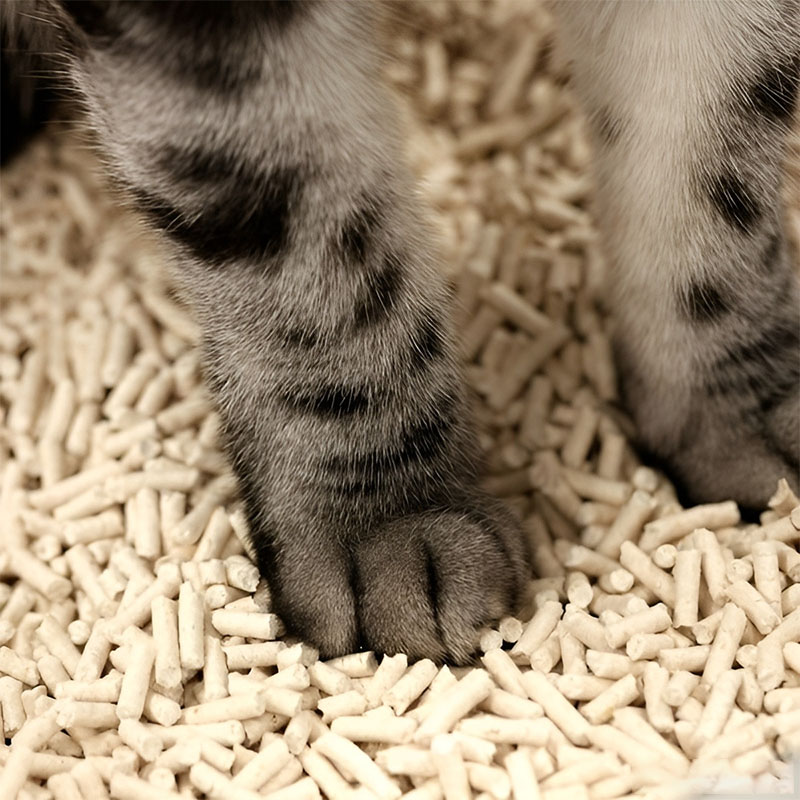
High-quality sand strips have a uniform thickness of 1.5mm, with a high proportion of complete strips and little slag; Inferior sand varies in thickness, with many broken bars and powders.

2. Observe Dust Levels

Pour a handful slowly. High-quality tofu cat litter should produce almost no visible dust. Excessive dust indicates insufficient dust-removal processing.

3. Test the agglomeration speed.

A small amount of clear water drips on the sand, and the compact lumps are quickly gathered within 3 seconds, and the kneaded lumps are not easy to disperse; Slow agglomeration and crushing at the first pinch represent that the curing and drying process is not up to standard.

4. Evaluate Smell

The high-quality models have a light and natural smell and no pungent chemical smell; Strong sweet smell and sour smell are the characteristics of inferior products.

5. Observe Moisture Resistance

After opening, high-quality tofu cat litter should remain stable at room temperature for at least one week without softening or developing odors.

Fifth, Source Factories Provide Flexible OEM Services While Maintaining High-Quality Tofu Cat Litter Standards

As a professional cat litter manufacturer with global supply capabilities, we have over 20 years of OEM export experience and multiple fully automated production lines operating simultaneously. With an annual production capacity of 500,000 tons, we support large-volume export orders while providing flexible OEM and ODM services for small and medium-sized brands.

Customization Options

  • Multiple fragrance selections
  • Various packaging sizes
  • Customized packaging design

Unified Quality Assurance

All OEM products share the same raw materials, production lines, and quality control standards as our original high-quality tofu cat litter products. There is no reduction in quality due to OEM production.

Marketing and Technical Support

We provide product educational materials and quality identification documents to help partners reduce after-sales issues and better serve cross-border e-commerce sellers, pet retailers, and overseas breeding facilities.

よくあるご質問

Tofu cat litter with complete particles and no crumbs must be produced by a big factory?

The high probability is yes. Complete particles depend on mature extrusion, screening and dust removal equipment. Small workshops are poorly equipped and can’t screen out broken strips, and the finished product has high slag content, so it is difficult to achieve complete and unified particles.

What are the practical effects of low moisture content < 8% on tofu cat litter?

Low moisture content combined with high temperature sterilization can delay moisture absorption and fermentation of cat litter, and it is not easy to be sour and moldy in the humid plum rainy season in the south, which greatly prolongs the storage and use cycle of the whole bag of cat litter.

Why is the same tofu cat litter, and the dust gap is so big?

The core difference lies in whether it is equipped with closed negative pressure dust removal and multi-stage screening equipment. The three dust removal processes in our factory can remove 99.9% of free floating dust, and the small workshop without supporting equipment can’t handle powder and the dust problem can’t be improved.

Is the technology of OEM tofu cat litter the same as the original product?

Exactly. All OEM orders use the original raw material ratio, a complete set of automated production processes and three-layer quality control testing standards. Only the outer packaging is adjusted according to customer needs, and the core performance is not reduced.

その他の投稿

お手伝いできること

ご都合の良い方法でご連絡ください。Eメールまたはお電話にて年中無休で受け付けております。.

jaJapanese
cat
cat litter

クイック見積もり

今すぐお問い合わせください。.

24時間以内に返信いたします!