1. What is Natural Pine Cat Litter? Core Ingredients and Raw Material System
1.1 Natural Pine Cat Litter Definition
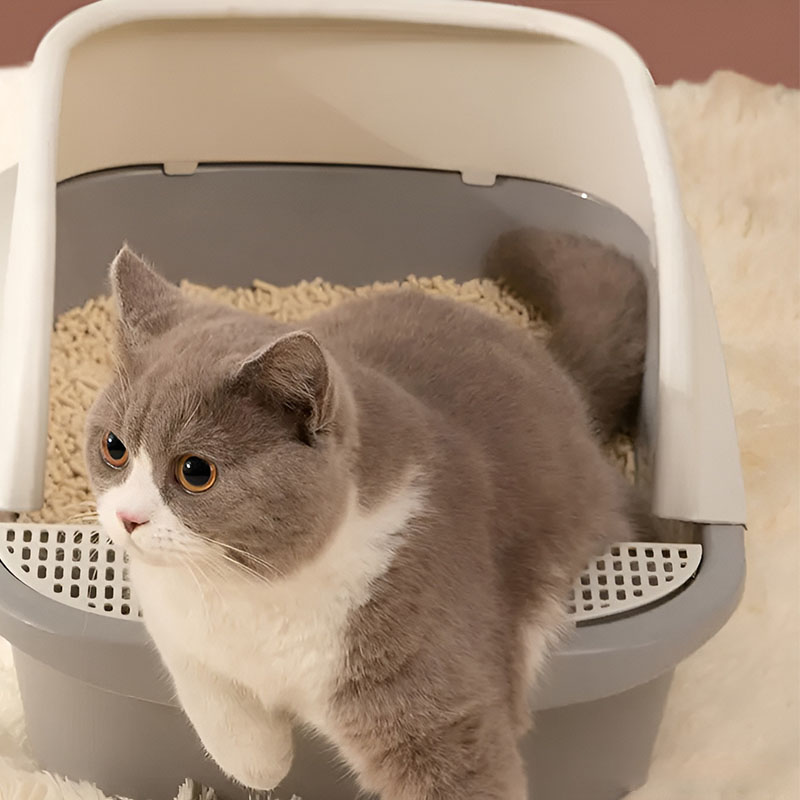
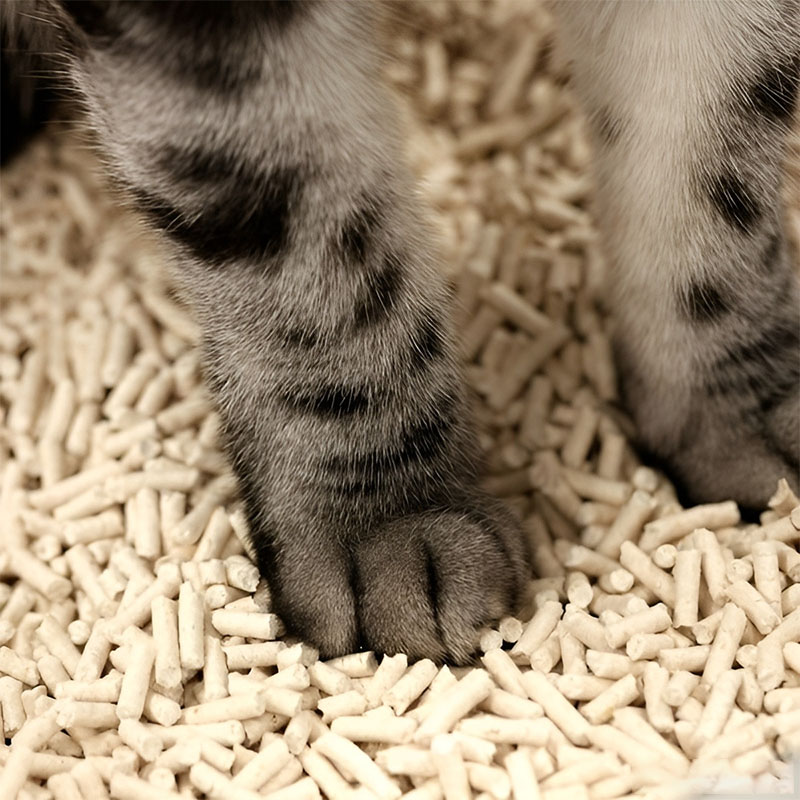
Natural Pine cat litter is a green pet hygiene product primarily made from natural pine wood or clean pine waste generated from wood processing. It is manufactured through a series of sophisticated processes including crushing, drying, high-temperature and high-pressure compaction, sieving, and sterilization. Its core functions involve rapid urine absorption, disintegration into powder upon contact with water, natural antibacterial and deodorizing properties, and feces encapsulation. When used with a double-layered cat litter box, it achieves effective separation of solid and liquid waste, making it an ideal choice for dry environments, pet owners pursuing eco-friendly and low-dust living, and households where cats show no aversion to woody scents.
Unlike ordinary wood shavings, natural pine cat litter leverages the porous capillary structure of pine fibers and natural rosin components to deliver three key benefits: water absorption, deodorization, and antibacterial protection. As a representative of plant-based eco-friendly cat litter, it aligns with the global trends of sustainable consumption and healthy pet raising.
1.2 Analysis of Core Ingredients
Natural Pine cat litter features natural and pure ingredients, with pine fibers as the main component and no harmful chemical additives. Some high-end variants are fortified with natural functional ingredients to ensure the health and safety of both cats and humans. Its core ingredients fall into three categories:
1.2.1 Basic Wooden Raw Materials
The primary raw material is natural pure pine, preferably from tree species with dense wood and moderate rosin content. The production uses log leftovers, clean sawdust, and wood shavings exclusively, avoiding furniture scraps and glued wood panels to eliminate formaldehyde and adhesive contamination at the source.
The porous capillary channels of pine endow it with exceptional water absorption capacity, capable of absorbing 3 to 5 times its weight in moisture. Natural rosin, the “core functional factor” of pine cat litter, acts as a natural antibacterial agent and decomposes ammonia molecules to neutralize odors, serving as a natural alternative to chemical deodorants.
1.2.2 Natural Functional Auxiliaries
- Natural starch adhesive: A small amount of corn or tapioca starch, added at a ratio of ≤1%, to enhance pellet strength and reduce powdering during transportation and use. It is fully biodegradable and eco-friendly.
- Activated carbon/nano mineral crystals: Physically absorb odors to boost deodorizing effects without chemical irritation, making them suitable for sensitive cats.
- Moisture-proof factor: Food-grade silane derivatives that improve pellet moisture resistance, minimizing caking and mold growth in humid environments.
1.2.3 Fragrance Components
To address the issue of some cats rejecting the natural pine scent, high-end products incorporate natural plant fragrances such as green tea, coconut milk, and lavender. These fragrances are extracted from natural plants without chemical essences, gently masking the pine odor while avoiding irritation to cats’ respiratory tracts and not interfering with their litter box habits.
1.3 Core Production Technology
The quality of natural pine cat litter is 80% dependent on raw material purity and 20% on production technology. Modern high-end products adopt a full-process dust-free, high-temperature sterilization, and glue-free bonding process, completely solving the pain points of traditional wood shavings litter such as high dust content, easy mold growth, and unpleasant odors. The core processes are as follows:
(1) Raw material selection and pretreatment
Bark, impurities, and moldy wood are removed, leaving only clean pine leftovers and sawdust. The raw materials are washed and dried to eliminate surface stains and insect eggs, ensuring purity and preventing the incorporation of formaldehyde, adhesives, and other harmful substances.
(2) High-temperature drying and dehydration
Raw pine materials are dried in a rotary kiln at 120–150°C to control moisture content at 6%–8%. This retains fiber toughness, prevents mold caused by excessive moisture, and kills bacteria and parasite eggs in the raw materials.
(3) High-pressure glue-free compaction
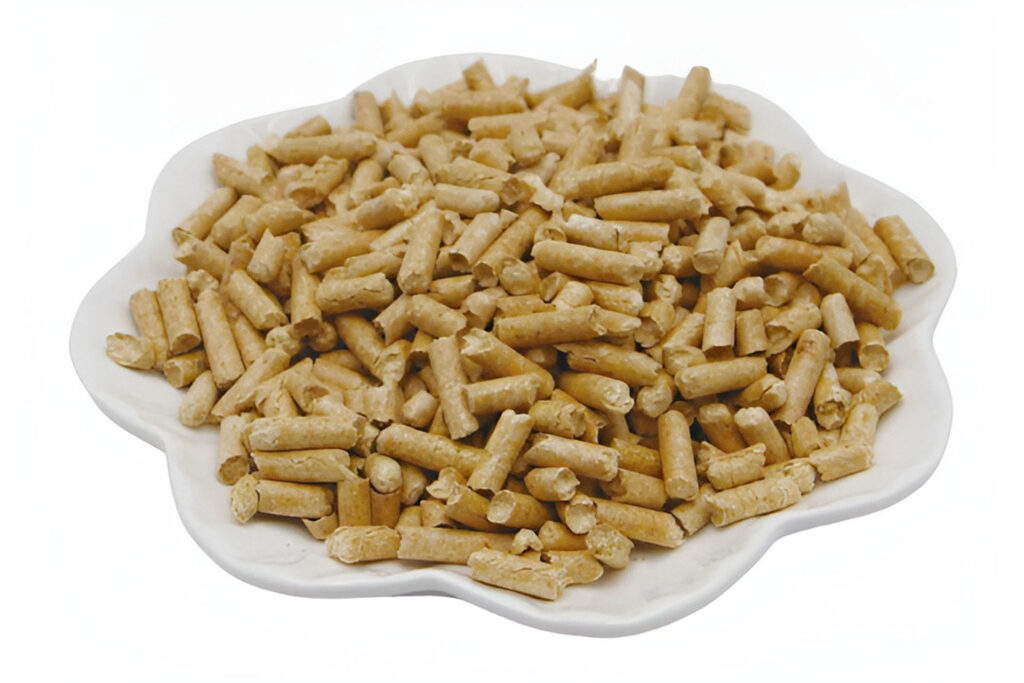
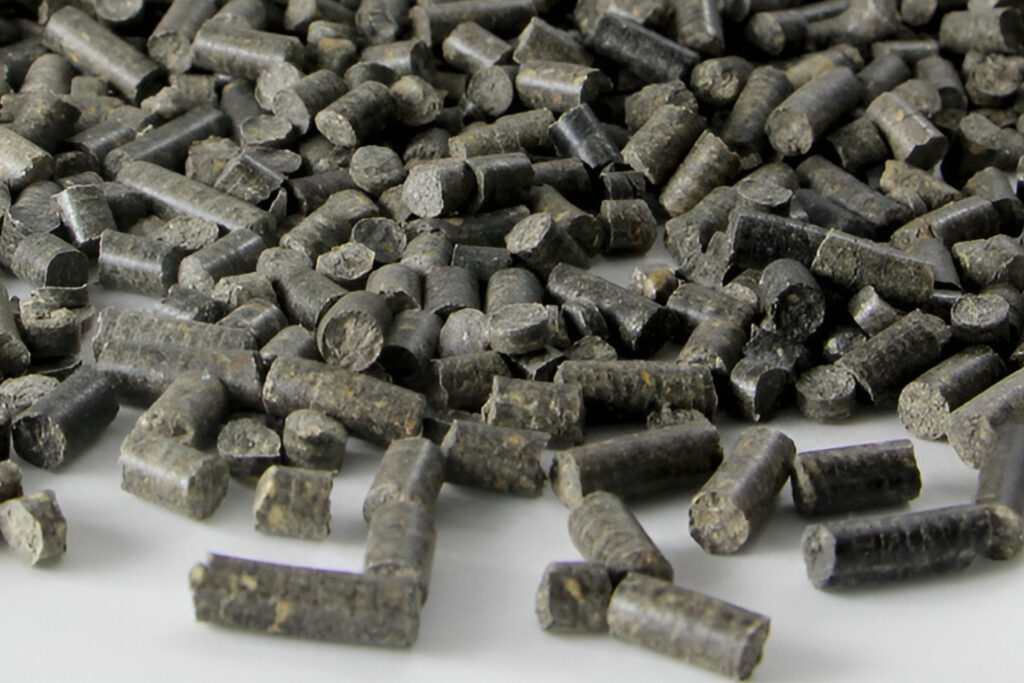
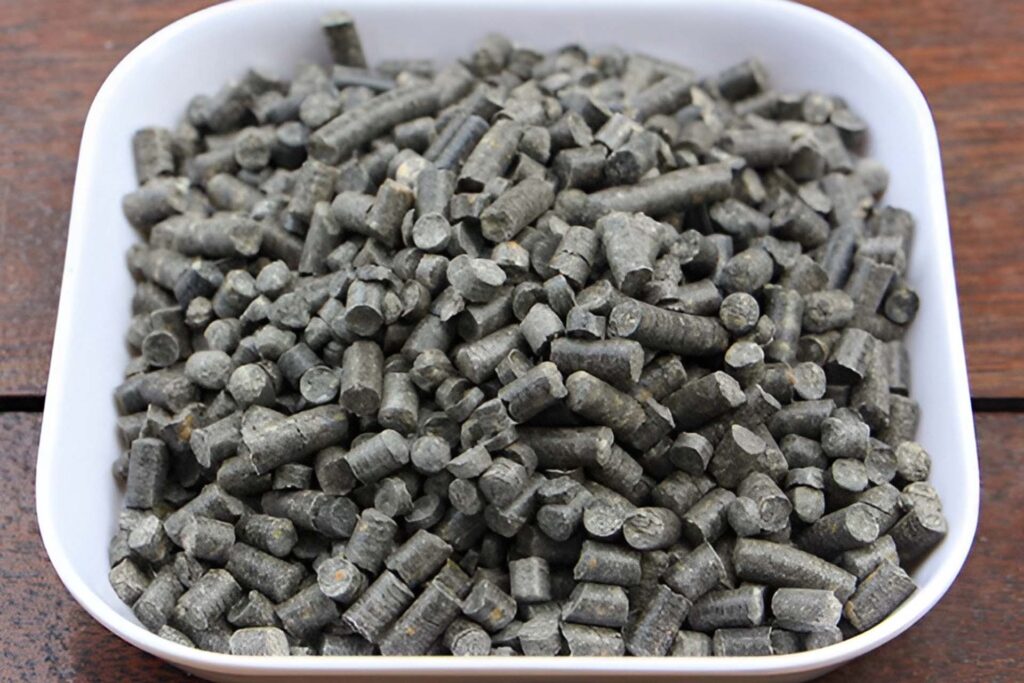
Utilizing the softening and bonding properties of pine lignin under high temperature and pressure, wood shavings are compressed into cylindrical pellets without chemical adhesives, eliminating formaldehyde, benzene, and other harmful substances at the source. The pellets have moderate hardness and are not easily broken.
(4) Multi-stage sieving and shaping
Uniform pellets with a diameter of 6–8mm and length of 10–30mm are screened out, while fines and powder are removed to keep the dust rate ≤0.03%, ensuring regular, low-dust, and user-friendly pellets.
(5) Secondary sterilization and quality inspection
Dual sterilization via ultraviolet light and high-temperature steam ensures no bacteria or mold. Each batch passes authoritative testing for zero formaldehyde, heavy metals, and harmful additives, complying with domestic and international pet product safety standards.
(6) Sealed packaging
Moisture-proof sealed packaging is used to block air and moisture, extend shelf life, and prevent moisture absorption, mold growth, and odor diffusion during storage.
2. Core Physical and Functional Characteristics of Pine Cat Litter
Through technological iteration, natural pine cat litter has evolved from traditional wood shavings into an eco-friendly, low-dust, antibacterial, and long-lasting modern cat litter, precisely addressing three core pain points: eco-friendly pet raising, cat health, and household cleaning. Its core characteristics are reflected in seven dimensions:
2.1 Natural Antibacterial and Long-Lasting Deodorization Without Irritation
Natural rosin in pine acts as a natural antibacterial agent, inhibiting the growth of common bacteria in cat excrement such as Escherichia coli and Staphylococcus, and reducing odors like ammonia and hydrogen sulfide produced by bacterial decomposition of urine. Lignin and porous fibers physically absorb odor molecules without relying on chemical fragrances for masking, maintaining fresh indoor air for a long time. It is suitable for closed balconies, small apartments, and multi-cat households.
Compared with bentonite litter that relies on fragrances and tofu litter that depends on deodorizing additives, natural pine cat litter’s natural deodorization is milder, does not irritate cats’ sensitive sense of smell, and reduces the risk of cats refusing to use the litter box.
2.2 Ultra-Low Dust to Protect Human and Cat Respiratory Health
High-end natural pine cat litter, processed by high-temperature and high-pressure compaction and multi-stage sieving, has a dust rate ≤0.03%. There is no obvious dust when cats dig or when the litter is poured, and it does not adhere to cat paws, fur, or furniture. It effectively protects cats’ fragile respiratory tracts, lowering the risk of rhinitis, asthma, and respiratory infections. It is also suitable for allergic pet owners, families with children, and elderly families, making it the preferred cat litter for people with respiratory sensitivities.
2.3 Disintegration Upon Contact With Water for Easy Separation of Solid and Liquid Waste
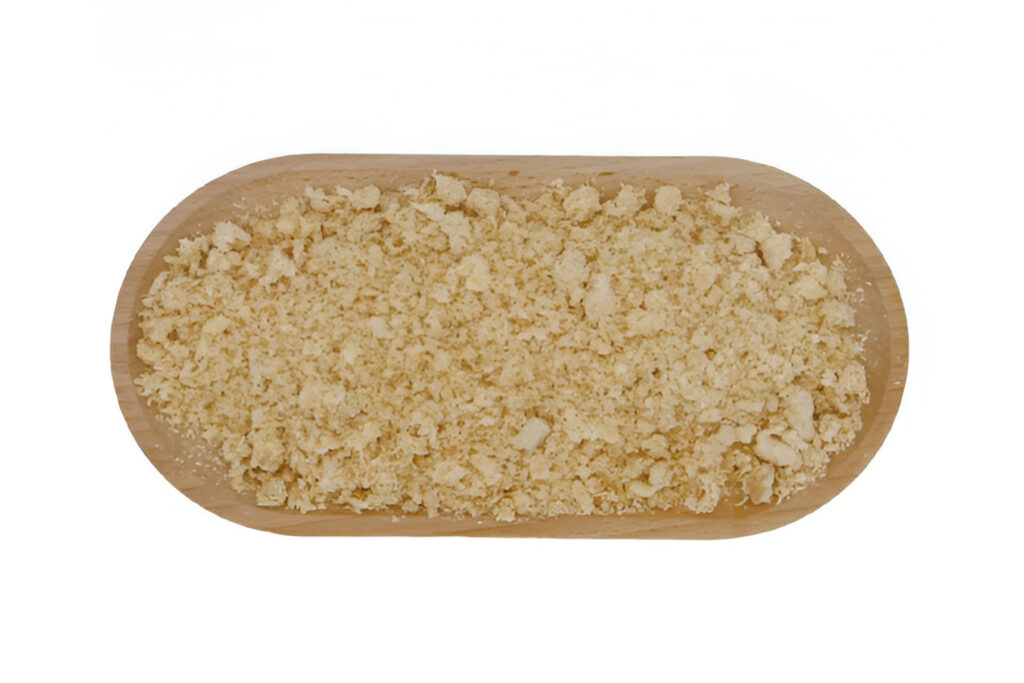
Natural pine cat litter quickly absorbs urine and swells upon contact, disintegrating into fine wood powder within 10–20 seconds. The powder falls through the mesh of a double-layered cat litter box to the lower layer, leaving dry pellets and feces on the upper layer. This enables automatic separation of urine and independent cleaning of feces, eliminating the need to repeatedly scoop clumps like bentonite or tofu litter, greatly improving cleaning efficiency.
The disintegrated wood powder is non-sticky, so it will not stick to the bottom of the litter box or cat paws, leaving no residue during cleaning. This reduces the frequency of litter box washing and lightens the workload for pet owners.
2.4 Cost-Effective With Minimal Usage
Pine pellets are dense and lightweight. For a single-cat household, a litter depth of 3–5cm is sufficient, with a single usage of only 2–3L. Since pellets only disintegrate when in contact with urine, unused dry pellets can be reused continuously. A 10L bag can last 30–45 days, using about 2/3 less than bentonite litter and 40%–50% less than tofu litter. Although the unit price is slightly higher, the overall usage cost is lower, with more obvious advantages for multi-cat households.
2.5 Eco-Friendly and Biodegradable With Zero Environmental Burden
The raw materials are pine processing waste, so no live trees are cut down, achieving “waste utilization”. After use, it can biodegrade naturally without polluting soil, and can also be used as flower fertilizer or fuel, reducing landfill waste. Some high-quality products can be flushed down the toilet in small quantities (large flushing is not recommended to avoid pipeline deposition), aligning with the green living philosophy of eco-conscious pet owners. It is a promoted eco-friendly cat litter in the EU and North American markets.
2.6 Stable Pellets With Minimal Tracking and No Fur Adhesion
Pine pellets are cylindrical, high in hardness, and have high friction. They are not easy to roll or break when cats dig, will not get stuck in cat paw gaps, and will not adhere to cats’ fur. This is especially suitable for long-haired cats, Ragdolls, Exotics, and other breeds prone to fur adhesion, reducing the risk of cats ingesting cat litter while grooming and fur matting, and keeping the home floor clean.
2.7 Safe and Non-Toxic With Extremely Low Risk of Ingestion
Made from natural pine with no chemical adhesives, fragrances, or heavy metals, pine cat litter is safe for cats to pass if ingested in small quantities without causing poisoning or gastrointestinal discomfort. Pine fibers have no sharp edges and will not scratch cats’ digestive tracts, making it suitable for cats of all ages: kittens, senior cats, pregnant cats, and post-operative recovery cats. It is highly recommended by veterinarians.
3. Comprehensive Comparison Between Natural Pine Cat Litter and Mainstream Cat Litters
To help pet owners clearly understand the advantages and suitability of pine cat litter, it is compared with bentonite cat litter, tofu cat litter, cassava cat litter, mixed cat litter, and crystal cat litter across 9 core indicators: environmental friendliness, dust content, cleaning method, safety, price, water absorption speed, clumping ability, deodorizing effect, and applicability. The results are as follows:
| Characteristics | Pine Cat Litter | Bentonite Cat Litter | Tofu Cat Litter | Cassava Cat Litter | Tofu-Pine Mixed Cat Litter | Crystal Cat Litter |
| Environmental Friendliness | Extremely high (natural pine, biodegradable) | Low (mineral raw materials, non-biodegradable) | Extremely high (plant raw materials, biodegradable) | Extremely high (plant raw materials, biodegradable) | Extremely high (plant raw materials, biodegradable) | Very low (synthetic chemicals, non-biodegradable) |
| Dust Content | Ultra-low (high-end ≤0.03%) | Low (high-end ≤0.05%) | Ultra-low (≤0.1%) | Low (0.2%–0.4%) | Ultra-low (≤0.1%) | Ultra-low (≤0.1%) |
| Cleaning Method | Double-layer box + pee pad/trash can | Trash can only (non-flushable) | Flushable/trash can | Trash can only | Flushable/trash can | Trash can only |
| Safety | Extremely high (natural glue-free, non-toxic) | Low (natural minerals, medical attention needed for large ingestion) | Extremely high (food-grade, safe for ingestion) | Extremely high (food-grade, safe for ingestion) | Extremely high (food-grade, safe for ingestion) | Low (chemical ingredients, medical attention needed for ingestion) |
| Price | Medium (8–15 yuan/L) | Very low (2–12 yuan/kg) | Medium (8–20 yuan/kg) | High (15–30 yuan/kg) | Medium (15–25 yuan/kg) | High (20–35 yuan/kg) |
| Water Absorption Speed | Fast (5–10 seconds) | Extremely fast (1–2 seconds) | Fast (2–3 seconds) | Medium (3–5 seconds) | Extremely fast (1–2 seconds) | Medium (2–4 seconds) |
| Clumping Ability | No clumping (disintegrates in water) | Extremely strong (tight and unbreakable) | Medium (easy to loosen) | Strong (tight) | Extremely strong (tight and unbreakable) | No clumping |
| Deodorizing Effect | Excellent (natural antibacterial + physical absorption) | Excellent (physical odor locking, 98%+) | Medium (fragrance masking) | Good (starch absorption) | Excellent (triple deodorization, 98.1%+) | Poor (no deodorization) |
| Applicability | Wide (dry environments, multi-cat, sensitive cats, eco-friendly families) | Extremely wide (all cat breeds, multi-cat, budget families) | Wide (high-rise, flushable needs, kittens) | Medium (sensitive cats, fragile skin cats) | Wide (all-round, all scenarios) | Narrow (single cat, cats disliking clumps) |
The comparison shows that pine cat litter is a specialty litter with eco-friendliness, low dust, antibacterial properties, and long-lasting effects. It has absolute advantages in dust control, environmental friendliness, antibacterial deodorization, and minimal tracking. Its core drawbacks are the requirement for a double-layered litter box, non-clumping nature, and aversion to pine scent by some cats. It is perfectly suitable for pet owners pursuing eco-friendliness, focusing on respiratory health, multi-cat households, long-haired cats, and dry environments.
4. Summary of Applicable Scenarios for Pine Cat Litter
Natural pine cat litter is an eco-friendly, low-dust, antibacterial, and long-lasting specialty cat litter, preferred by the following households:
(1) Eco-conscious families: Pursue biodegradability and green recycling, rejecting mineral and chemical cat litters.
(2) Respiratory-sensitive families: Cats/pet owners with rhinitis or asthma need ultra-low-dust cat litter.
(3) Multi-cat/long-haired cat families: Long-lasting deodorization, minimal tracking, and no fur adhesion reduce cleaning workload.
(4) Dry environment families: Northern regions and dry indoor spaces avoid mold issues.
(5) Cats of all ages: Kittens, senior cats, pregnant cats, and post-operative cats—safe and non-toxic with high adaptability.
(6) Families pursuing long-lasting convenience: No frequent litter changes, easy cleaning, and cost-effective with minimal usage.
5. Conclusion
Amid the trend of eco-friendliness and health in pet products, natural pine cat litter has become a benchmark for high-end eco-friendly cat litter with its core advantages of natural pine raw materials, ultra-low dust, natural antibacterial properties, long-lasting deodorization, eco-friendly biodegradability, and cost-effectiveness. It is highly favored by pet owners who value health and green living. Upgraded modern technology has completely solved the pain points of traditional wood shavings litter such as high dust content, easy mold growth, and unpleasant odors, making it a high-quality hygiene product suitable for dry environments, multi-cat households, and sensitive cats.
For pet owners, choosing natural pine cat litter means choosing a natural, healthy, eco-friendly, convenient, and odor-free pet-raising life. By following the principles of scientific selection, proper matching with double-layered boxes, and proper moisture-proof storage, this green cat litter will provide cats with a dry, safe, and comfortable toilet environment, lighten the burden on pet owners, and promote harmonious coexistence between humans and cats.
FAQ
Must pine cat litter be used with a double-layered litter box? Can it be used with a single-layer box?
It is strongly recommended to use a double-layered litter box; the experience with a single-layer box is extremely poor. Pine cat litter disintegrates into powder when exposed to urine, and a single-layer box cannot separate the wood powder from dry pellets. After being soaked in urine, it is prone to caking, mold growth, and odor emission. Cats stepping on wet litter will easily get their fur dirty and breed bacteria. A double-layered box has litter on the upper layer and a pee pad on the lower layer; disintegrated wood powder falls to the lower layer, keeping the upper layer dry and achieving solid-liquid separation—this is the best way to use pine cat litter.
What to do if a cat rejects the pine scent and refuses to use the litter box?
Some cats are sensitive to pine scent, and adaptation can be guided in 3 steps:
① Gradual transition: Mix old litter and pine cat litter at ratios of 1:3, 1:1, 3:1, completing the replacement in 7–10 days.
② Choose pine litter with natural light fragrance to weaken the natural pine scent.
③ Place a small amount of the cat’s excrement in the litter box for the first use to guide the cat to recognize the scent and reduce aversion. If rejection persists, switch to tofu litter, mixed litter, or other non-woody scented litters.
Does pine cat litter contain formaldehyde? Will low-quality products harm health?
High-quality regular pine cat litter contains no formaldehyde. It is made from natural pine with a glue-free high-pressure compaction process, and its formaldehyde content meets safety standards. Low-quality products use furniture glued scraps and add chemical adhesives, leading to excessive formaldehyde. Long-term use harms the respiratory health of cats and pet owners. When purchasing, look for pure pine raw materials, glue-free technology, and authoritative test reports, and reject low-cost inferior products.
Can pine cat litter be flushed down the toilet? Will it clog pipes?
Flushing large quantities down the toilet is not recommended. Although the disintegrated wood powder of pine cat litter can disperse, large flushes are easy to deposit on the inner wall of pipes, causing blockages and poor drainage over time. It can be flushed occasionally for small-scale cleaning; large-scale replacement should be disposed of as dry waste in garbage bags. Families in old communities or with aging pipes must strictly abide by this.
Can pine cat litter be used in humid environments? How to prevent moisture and mold?
Use with caution in humid environments. Pine fibers easily absorb moisture, making them prone to mold, caking, and bacterial growth during the rainy season or in humid southern regions, reducing effectiveness. Moisture-proof tips:
① Store sealed in a dry and ventilated place away from direct sunlight.
② Place the litter box in a dry area away from balconies and bathrooms.
③ Choose high-end products with added moisture-proof factors.
④ Regularly clean the lower pee pad, deeply wash and disinfect the litter box weekly, and replace all litter immediately if mold is found.
Is pine cat litter suitable for kittens, senior cats, and pregnant cats?
Absolutely suitable—it is a safe choice for cats of all ages.
① Kittens: Choose small cylindrical pellets for comfortable foot feel and easy adaptation; litter depth of 1–2cm for easy access.
② Senior cats: Stable pellets with minimal tracking reduce litter scattering while walking, and natural antibacterial properties lower infection risk.
③ Pregnant/sick cats: Low dust and non-irritating with good deodorization, keeping the litter box clean and protecting cat health. It is widely recommended by veterinarians.
How often should pine cat litter be replaced? How to extend its service life?
Frequent full replacement is unnecessary; follow the principle of “daily scooping, regular pad replacement, full box replacement”:
① Clean feces daily, replace the lower pee pad every 1–2 days.
② Full box replacement every 30–45 days for single-cat households, shortened to 20–30 days for multi-cat households.
③ Life extension tips: Control litter depth at 3–5cm, store moisture-proof, do not mix with other litters, and clean wet litter promptly—this can extend the service life by more than 30%.
Is pine cat litter really low in dust? Will it harm cats’ respiratory tracts?
High-end pine cat litter has extremely low dust and will not harm the respiratory tract. Processed by high-temperature and high-pressure compaction and multi-stage sieving, its dust rate ≤0.03%, with no obvious dust when cats dig. It is more suitable for cats with respiratory sensitivities than traditional bentonite and ordinary wood shavings litter. When purchasing, look for low-dust logos and regular pellets with no fines, avoiding low-cost inferior products with excessive fines.
Does pine cat litter stick to the bottom? How to avoid it?
It does not stick to the bottom under normal use; sticking is mostly caused by improper use:
① Insufficient litter depth, leading to urine directly penetrating to the bottom—recommend depth ≥3cm.
② Delayed cleaning, saturated pee pads, and accumulated wood powder—pee pads need regular replacement.
③ Moistened litter with reduced water absorption—store sealed. Following correct usage methods can completely avoid bottom sticking.
What is the difference between low-cost and high-end pine litter? How to choose?
The core differences lie in raw materials, technology, safety, and performance:
① Low-cost products: Use furniture scraps, contain adhesives, prone to excessive formaldehyde, high dust, easy to mold, and pungent pine scent.
② High-end products: Made of natural pine, glue-free high-pressure compaction, multi-stage dust removal, dual sterilization, low dust, antibacterial, moisture-proof, safe and odorless. Purchase advice: Choose domestic mid-range pure pine products on a budget, imported high-end products for quality pursuit. Be sure to select regular products with pure pine raw materials, glue-free technology, and qualified formaldehyde testing.
 English
  Spanish
  Russian
  Japanese
  Arabic