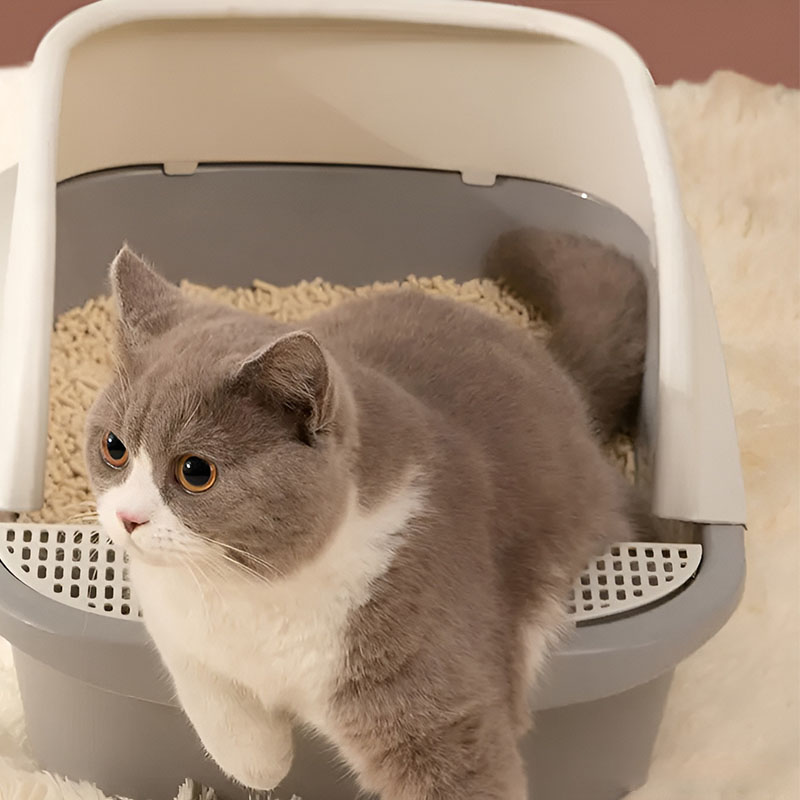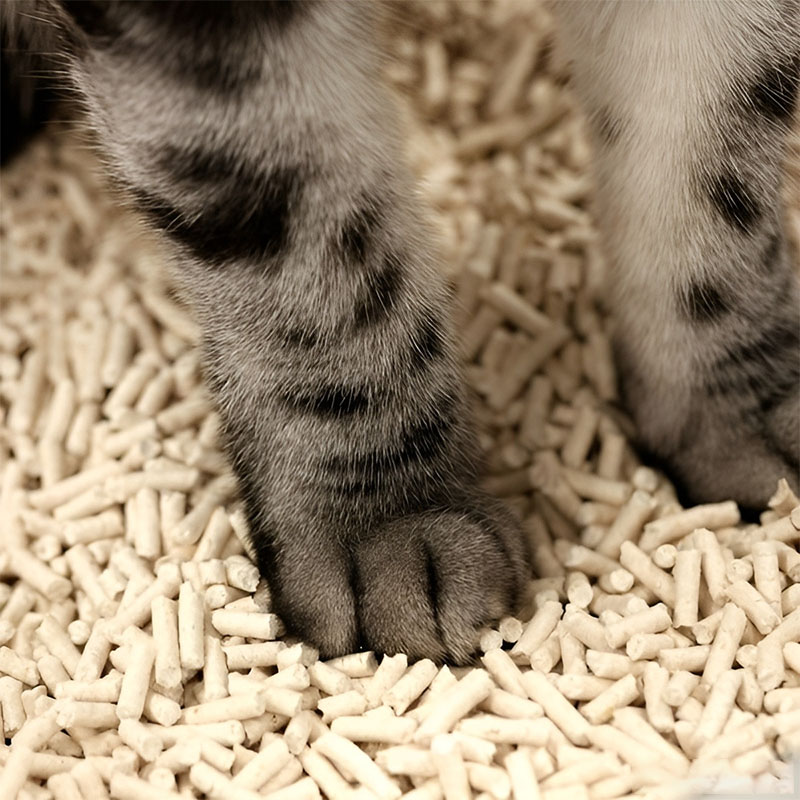
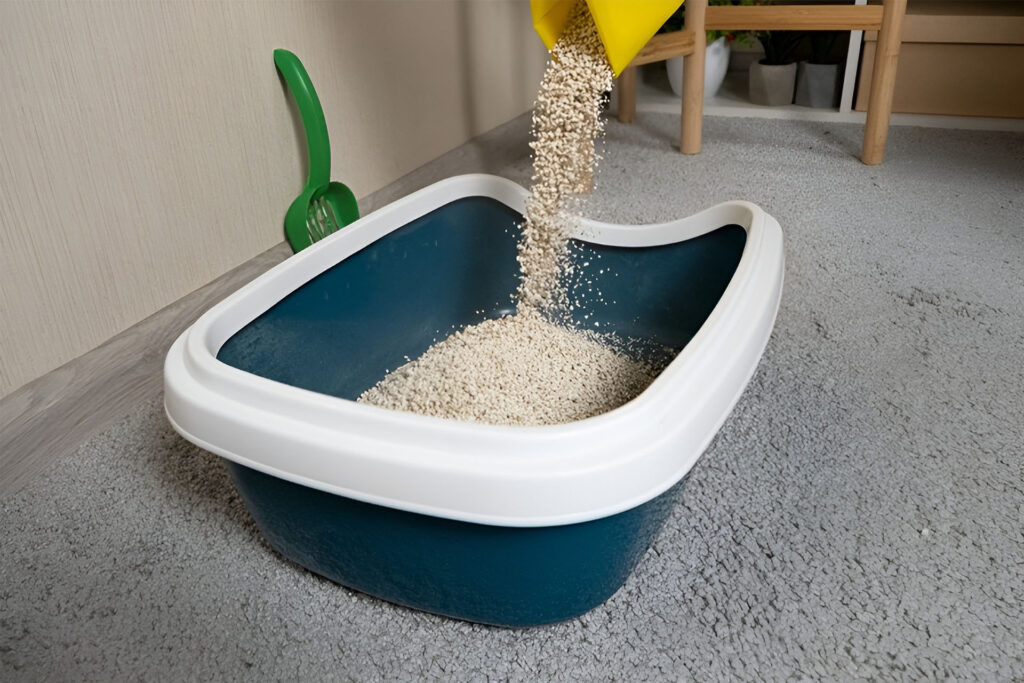
Главное при смене наполнителя для кошачьего туалета — делать это постепенно и шаг за шагом, учитывая особенности вашей кошки в отношении запаха и текстуры. Это позволяет свести к минимуму такие проблемы, как отказ от использования лотка, неконтролируемое испражнение и стресс. Кроме того, необходимо поддерживать чистоту лотка и соблюдать правильную глубину насыпания наполнителя. Этот метод подходит для перехода между всеми типами кошачьего наполнителя, такими как минеральный наполнитель, это касается и наполнителя из тофу, и бентонитовый наполнитель.
Пошаговая инструкция по переходу на другой кошачий наполнитель
Этап 1 (дни 1-2): В качестве основы используется старый наполнитель, затем добавляется небольшое количество нового наполнителя.
Оставьте 80% старого наполнителя в лотке и тщательно перемешайте с 20% нового, поддерживая глубину слоя наполнителя на уровне 5-8 сантиметров. Не перемещайте лоток и не меняйте окружающую обстановку. После ежедневной уборки загрязненных комков, добавляйте новый наполнитель в соотношении 80/20. Это позволит вашей кошке сначала привыкнуть к запаху и текстуре нового наполнителя.
Этап 2 (3-4 дни): Равное количество нового и старого подстилочного материала для ускорения адаптации.
Отрегулируйте соотношение нового и старого наполнителя до 1:1, тщательно перемешивая, чтобы предотвратить расслоение. Наблюдайте за тем, как ваша кошка пользуется лотком. Если она не решается копать или не закапывает свои отходы должным образом — небольшие признаки дискомфорта — вернитесь к этапу 1 и дайте ей больше времени на адаптацию. Если ваша кошка ведет себя нормально, придерживайтесь соотношения 1:1, добавляйте наполнитель по мере необходимости и проверяйте, насколько хорошо новый наполнитель комкуется и контролирует запахи.
Этап 3 (5-6 дни): Новый подстилочный материал в качестве основного, постепенно заменяем старый.
Перейдите на смесь из 20% старого и 80% нового наполнителя, тщательно перемешав его перед использованием. Если ваша кошка пользуется лотком без проблем, вы можете просто добавить свежий наполнитель после уборки, позволив старому наполнителю естественным образом раствориться. Если дискомфорт сохраняется, продлите этот этап на 1-2 дня.
Этап 4 (с 7-го дня): Полный переход на новый помет.
Полностью опорожните лоток, промойте его чистой водой и тщательно высушите. Добавьте новый наполнитель слоем от 5 до 8 сантиметров. Вернитесь к обычному режиму уборки и пополнения лотка, а также ухаживайте за ним в соответствии с инструкцией по применению нового наполнителя. Переход на новый наполнитель завершен.
Основные советы при переходе на новый тип наполнителя для кошачьего туалета
1. Сохраняйте обстановку неизменной. Не перемещайте лоток, не меняйте его окружение и не изменяйте вентиляцию. Множественные изменения одновременно приведут к большему стрессу у вашей кошки.
2. Убирайте скопившиеся комки наполнителя хотя бы один-два раза в день, чтобы лоток оставался чистым. Это предотвратит накопление неприятных запахов и распад комков, что может отпугнуть вашу кошку от использования лотка.
3. Не смешивайте наполнители с противоречивыми свойствами. Для перехода сначала выбирайте наполнители одного типа со схожим механизмом комкования. Это позволит избежать ухудшения комкования и контроля запаха.
4. Постоянно наблюдайте за тем, как ваша кошка пользуется лотком: как часто она ходит в туалет, как копает и закапывает ли она свои отходы. Если она постоянно избегает лотка, испражняется в неположенных местах или кажется вялой, немедленно вернитесь к старому наполнителю. Как только она вернется в норму, замедлите темп перехода.
5. Убедитесь, что новый наполнитель находится на нужной глубине. Плотно закройте пакет после открытия, чтобы он не намок и не комковался, благодаря чему он будет продолжать эффективно впитывать влагу, комковаться и нейтрализовать запах.
6. Котята и пожилые кошки более чувствительны к переменам. Увеличьте переходный период до 10-14 дней, разделив его на 5 или 6 этапов. Также выбирайте новый мелкозернистый наполнитель с низким содержанием пыли, чтобы защитить их дыхательную систему и лапы.
ЧАСТО ЗАДАВАЕМЫЕ ВОПРОСЫ
Что делать, если моя кошка избегает лотка?
Сразу же вернитесь к старому наполнителю и прекратите переход. После того, как ваша кошка начнет нормально пользоваться лотком в течение 3-5 дней, начните сначала с этапа 1 — уменьшайте процент нового наполнителя на каждом этапе и дайте кошке больше времени на адаптацию. Также проверьте, не имеет ли новый наполнитель сильного, неприятного запаха; если да, попробуйте новую партию или другую марку.
Можно ли менять наполнитель в лотке одновременно с заменой лотка?
Не рекомендуется. Одновременное изменение двух условий содержания значительно повысит вероятность стресса у кошки. Подождите, пока кошка полностью привыкнет к новому наполнителю, затем поставьте новый лоток рядом со старым. Как только кошка освоится с новым лотком, можно убрать старый.
Есть ли какие-либо особые требования к настройке при переходе на разные виды наполнителя для кошачьего туалета?
Да. Например, при переходе с тофу-наполнителя на минеральный, на первом этапе уменьшите процент нового наполнителя до 10%. При переходе с минерального наполнителя на тофу, во время переходного периода лучше разрыхлите смешанный наполнитель, чтобы предотвратить слипание комков.
На что следует обратить внимание при смене наполнителя в доме, где живут несколько кошек?
Следуйте правилу: один лоток на кошку, плюс ещё один запасной. Меняйте наполнитель во всех лотках одновременно, постепенно — это предотвратит выбор кошек из одного лотка в другой. Также чаще убирайте скопившийся наполнитель, чтобы все лотки оставались чистыми.
Если после смены наполнителя он прилипает кошке кошачий нос или плохо комкуется, значит ли это, что она к нему не привыкла?
Не обязательно. Сначала проверьте, правильно ли вы засыпан наполнитель, не стал ли новый наполнитель влажным или смешан со старым наполнителем, обладающим несовместимыми свойствами. Если это не так, возможно, ваша кошка еще не адаптировалась.
 Russian
  English
  Spanish
  Japanese
  Arabic