In the global pet-bedding trade, the old logic of buying low and selling high has hit its ceiling. For importers and distributors the question is no longer where to find the cheapest factory, but how to upgrade from a raw-material handler into a brand owner with a technical moat. AiSha has served hundreds of medium and large buyers worldwide, and from that experience it has built what it calls an empowering one-stop cat litter solution. This guide walks through how an order moves from a one-line inquiry to a globally competitive brand asset — research-first co-creation, packaging engineering, logistics as profit, a certificate matrix for mainstream retailers, and a transparent fulfilment commitment.
The economics behind the shift are straightforward. Commodity litter competes on price per tonne, and the margin belongs to whoever holds the freight advantage; a branded line competes on performance and design, and the margin belongs to the owner of the formula. One-stop OEM solutions exist to move the buyer from the first row to the second. This guide maps how AiSha describes doing that across five levers: research, packaging, logistics, compliance, and fulfilment. The full production base sits at AiSha’s OEM/ODM cat litter factory in Dalian, China.
The consolidation in pet-bedding sourcing is pushing mid-size buyers toward suppliers that can carry the full value chain; buyers who keep a long list of single-function factories carry the coordination cost themselves (industry observation).
AiSha is an export-oriented cat-litter manufacturer whose official materials describe 24 years of global export experience, nearly 90 export markets, and an in-house Q/AS enterprise standard series for its main categories. All case results, performance figures, and service commitments in this guide are company statements to confirm by current documents before ordering. For background on
AiSha’s 24-year export background and the export track record, see the company profile.
For the public product range and cooperation details, explore the full cat litter product range. This guide is an educational sourcing resource, not a substitute for a current quotation, technical data sheet, or written agreement. It is benchmarked against global pet-industry standards such as the FEDIAF pet-industry standards.
Who This Cat Litter OEM Solutions Guide Is For
This guide is for importers, regional distributors, chain retailers, and private-label brands that want more from a supplier than a quote — covering formula customisation, packaging and mixed-loading, freight optimisation, compliance files, and transparent fulfilment in cat litter OEM solutions. Buyers evaluating the full full cat litter product range will find the capability checklist below most useful.
Key Takeaways from Cat Litter Solutions
- The shift is from supply chain to value chain: a one-stop OEM partner turns a purchase order into a brand asset instead of a commodity transaction.
- Research comes first: co-created formulas built for the target market outperform generic stock, and AiSha describes a Middle East case with claimed returns down 80% and unit premium up 15%.
- Packaging engineering covers granule matching, vacuum compression, and mixed-container loading — lower freight per bag and a fuller price-ladder shelf for the buyer.
- Logistics can be an invisible profit centre: a described loading model pushes 20-foot containers to 26 tonnes, with one Oceania chain reporting a 12% lower sea-freight cost per bag.
- The certificate matrix — in-validity third-party testing, BSCI social audit, Q/AS enterprise standards, MSDS and certificates of origin — is the entry ticket to mainstream supermarket shelves.
- Transparent fulfilment — 7-10 day sample response, loading videos, and departure updates — protects both sides when markets move.
- Every case figure in this guide is an anonymised company statement to confirm in writing.
Traditional OEM vs Cat Litter Solutions: A Comparison
| Размер | Traditional contract manufacturing | Value-chain solution partner |
| Role | Executes a given spec | Co-creates the formula with the buyer |
| R&D | None or minimal | Market-driven customisation |
| Упаковка | Standard bags | Granule, pack, and compression engineering |
| Logistics | Passed through as a cost | Loading optimisation, lower freight per bag |
| Compliance | Basic documents | Certificate matrix and full clearance files |
Research First in Cat Litter OEM Solutions
Most contract factories only execute: they wait for a spec and produce it. AiSha describes the opposite approach — co-creation, where the factory researches the market question first and designs the product around the answer.
Co-Creation in Cat Litter Solutions
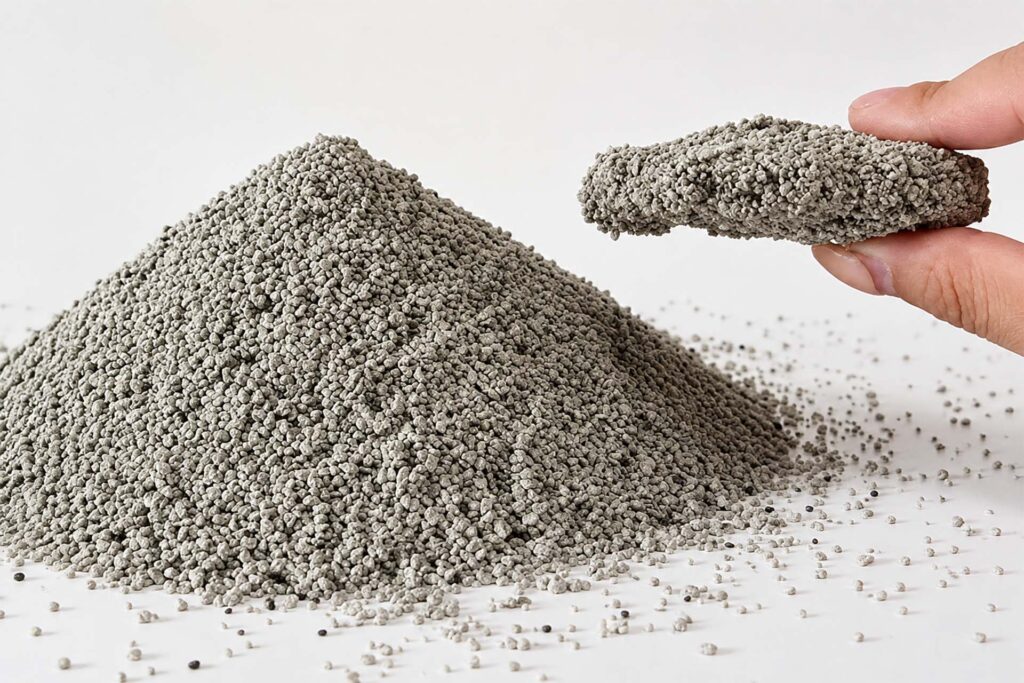
A described Middle East case shows the model: a leading regional distributor faced complaints that traditional bentonite litter failed on odour control in hot weather and multi-cat homes. AiSha’s R&D team stepped in and built an exclusive formula — spherical high-expansion montmorillonite, high-pressure dust removal, and a lavender and coffee compound fragrance. The brand reported a claimed 80% reduction in return rate and a 15% higher unit premium in the local market. These results are anonymised company statements to confirm with current documents.
From “What Can You Make” to “What the Market Wants” in Cat Litter Solutions
The co-creation process AiSha describes runs in three steps: collect the market evidence, lock the formula parameters (clay type, dust removal, fragrance, granule size), then validate with paid samples before production. The formula belongs to the buyer under the agreement, which is what turns a purchase into an asset.
The shift in the question changes the output: a formula built from regional climate, household structure, and fragrance preference sells itself, while a generic formula competes on price alone. Buyers should bring the market evidence — complaints, climate data, price ladders — into the product brief so the supplier can design to it.
Packaging Engineering in Cat Litter Solutions
Packaging is not only armour for the goods; it is also a silent salesperson on the shelf. AiSha describes a full set of packaging engineering services, from granule matching to vacuum compression.
Granules and Vacuum Packs in Cat Litter Solutions
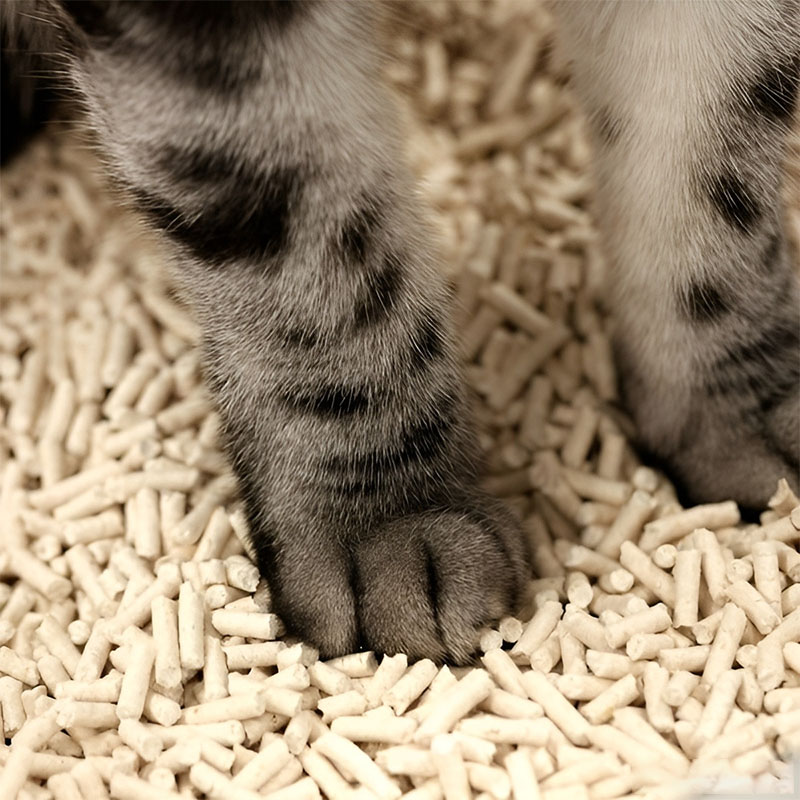
AiSha describes matching granule sizes (for example 2 mm and 1.5 mm) to the buyer’s market and offering vacuum-compressed packaging for plant-based lines. Vacuum packs cut storage volume, extend shelf life in humid regions, and display cleanly on the shelf.
Mixed-Loading in Cat Litter Solutions
AiSha also describes mixing different materials in one sea container — for example bentonite together with blended litter. Mixed loading lowers freight per unit, enriches the buyer’s shelf across price tiers, and shortens the time to market for a new brand line. For a distributor entering a new market, a mixed container is also a low-risk market test: one container can carry a few pallets of several SKUs instead of a full container of one untested product, so the buyer learns the market before committing volume. Confirm the current mixed-loading options and minimum quantities.
Logistics as Value in Cat Litter OEM Solutions
Logistics is usually booked as a cost line; AiSha describes treating it as a source of invisible profit for the buyer.
Container Loading in Cat Litter OEM Solutions
Loading density is not only about the container: the same model also guides palletisation, bag dimension, and moisture protection, so the cargo arrives in the same condition it left the factory. Buyers should ask for the loading plan together with the quotation and compare cost per bag, not cost per container. Sitting at Dalian port, AiSha describes a scientific loading model that pushes a 20-foot container to a claimed 26-tonne limit. One described Oceania chain brand achieved a 12% lower sea-freight cost per bag through this maximum-loading strategy — a direct pricing weapon in a high-freight environment. The figure is a company statement to confirm against the current loading plan and freight quotation.
The Certificate Matrix in Cat Litter OEM Solutions
The most stable value in B2B cooperation is peace of mind: the buyer’s goods clear, and the buyer’s customer accepts them without drama.
Compliance Files in Cat Litter OEM Solutions
AiSha describes holding in-validity third-party testing such as
SGS third-party testing, a BSCI social-audit report, and Q/AS enterprise standards across categories, plus full clearance documentation including MSDS and certificates of origin. For European market entry the framework aligns with the
Регламент ЕС «REACH», the EU’s core chemicals compliance regime. The certificate matrix also de-risks the buyer’s own downstream: a retailer onboarding audit looks for the same documents in the same format, and a supplier that already holds them shortens the buyer’s time-to-shelf by weeks. In one described European case, this file set helped a brand pass a major local supermarket’s supplier onboarding review within 45 days, and the company reports zero border detentions across the documented shipments. Confirm the current validity and scope of each certificate before the order.
The One-Stop Commitment in Cat Litter OEM Solutions
Fast Response in Cat Litter OEM Solutions
AiSha describes a 7-10 day response window from sample request to shipment of the sample, so buyers can test and approve before committing volume. Confirm the current sampling terms and any sample fees in writing.
Transparent Fulfilment in Cat Litter OEM Solutions
AiSha describes high-definition video of the loading process shared with the buyer, plus real-time departure updates. For a buyer, this evidence trail is the basis for the incoming inspection on the other end.
Brand Partnership in Cat Litter OEM Solutions
Beyond the order, AiSha positions the relationship as a strategic alliance that faces global market volatility together — joint planning on raw-material price swings, seasonal demand, and new-market entries rather than one-off transactions. In practice, brand partnership shows up in seasonal capacity reservations, raw-material price notices, and new-market formula pre-work; ask for the cooperation framework in writing before the first order.
3 Mistakes to Avoid in Cat Litter OEM Solutions
Mistake 1: Sourcing on Price Alone in Cat Litter OEM Solutions
A transactional buyer gets a transactional product. The cheapest quote usually pairs with generic formulas, standard bags, and minimum compliance — the opposite of what turns an order into a brand asset. Compare total landed cost and capability, not the per-bag quote.
Mistake 2: Treating Logistics as a Cost in Cat Litter OEM Solutions
Freight is the fastest lever on landed cost. Buyers who skip mixed-loading and loading-model optimisation pay the same sea freight for less cargo and lose the price advantage to competitors. Ask for the loading plan and cost per bag in the quotation.
Mistake 3: Skipping the Certificate Matrix in Cat Litter OEM Solutions
Supermarket onboarding runs on documents, not promises. A buyer who discovers the compliance gap after signing misses the selling season and the shelf slot. Request the certificate list and validity dates at the inquiry stage.
Evidence Trail and Incoming Checks in Cat Litter OEM Solutions
The fulfilment evidence — loading videos, departure updates, batch reports, retained samples — becomes the buyer’s incoming inspection tool. Keep the trail complete: the records should match the packing list at receiving, and any mismatch is easier to resolve with documents than with memory. At receiving, check the container against the loading record, open representative bags for granule and dust checks, and keep sealed samples per batch. Confirm replacement and compensation terms in writing before the first order.
Conclusion: Upgrade Your Supply Chain with Cat Litter OEM Solutions
In a challenging market, a good supplier is one that solves problems rather than only making products. AiSha describes its role as turning each customer’s purchase order into a brand moat through continuous R&D investment and a complete service loop. For buyers, the practical path is the same: bring market evidence into the product brief, engineer packaging and loading for the price ladder, collect the certificate matrix early, and verify every claim against documents. That is how a supply chain becomes a value chain. Choose the partner by capability and evidence, and the purchase order becomes the first line of the brand moat.
AiSha describes itself as a source manufacturer open to wholesalers, importers, and private-label brands, with co-creation across formulas, packaging, and compliance. To request a quotation and samples for quotations, samples, and cooperation details. All product claims, case figures, and commercial terms must be confirmed in writing before purchase.
Buyer note: This article is an educational sourcing guide. It does not replace a current quotation, technical data sheet, test report, or written agreement.
Часто задаваемые вопросы
The questions below cover the most common buyer queries about cat litter solutions and AiSha’s one-stop OEM model.
What does a one-stop OEM service include?
AiSha describes market-driven R&D and formula customisation, granule and vacuum-pack engineering, mixed-container loading, a certificate matrix, full clearance documentation, and transparent fulfilment — from inquiry to after-sales. Ask for a service scope sheet that lists each step.
Can AiSha customise formulas for regional conditions?
Yes, by description: a Middle East case used spherical high-expansion montmorillonite with high-pressure dust removal and a lavender and coffee fragrance blend. Confirm the current formula options and development timeline in writing.
How does mixed-container loading save freight?
Different materials in one container — for example bentonite with blended litter — spread the sea freight over more product and enrich the shelf across price tiers. A described loading model reaches 26 tonnes per 20-foot container; confirm the mixed-loading minimums for your SKU mix.
What compliance files support supermarket entry?
In-validity third-party testing, a BSCI social-audit report, Q/AS enterprise standards, MSDS, and certificates of origin. A described European case passed supplier onboarding within 45 days.
How fast is the sampling process?
AiSha describes a 7-10 day window from sample request to dispatch; express options may shorten it. Confirm current sampling terms and fees in writing.
How transparent is fulfilment?
AiSha describes high-definition loading videos shared with the buyer and real-time departure updates, giving the buyer a full evidence trail for incoming inspection.
Are the case results in this guide verified?
The cases are anonymised and the figures — 80% lower returns, 15% premium, 12% lower freight, 45-day onboarding, zero documented detentions — are company statements to confirm against current documents and orders; ask for the case documentation and current data when available.
 Russian
  English
  Spanish
  Japanese
  Arabic