Mantener un hogar fresco y un gato feliz comienza por dominar los fundamentos de la higiene. Saber cómo limpiar eficazmente el arenero va más allá del simple control de olores; es una parte esencial del cuidado proactivo de la salud de tu mascota. Tanto si eres un nuevo propietario como si gestionas un hogar con varios gatos, establecer una rutina constante garantiza que tus gatos se sientan seguros y que tu vivienda se mantenga en condiciones higiénicas.
Importancia fundamental de limpiar la caja de arena
La caja de arena es el espacio esencial para que los gatos hagan sus necesidades. Una limpieza oportuna y adecuada mantiene su hogar fresco y protege la salud urinaria, digestiva y mental de su gato. Una caja de arena limpia reduce problemas como la retención de orina, la micción inadecuada y la excavación anormal, al tiempo que disminuye los riesgos de moho, proliferación de bacterias y propagación de olores. Sirve para gatitos, gatos adultos, gatos mayores y hogares con varios gatos.
Principios básicos de la limpieza de areneros
1. Retirar los residuos rápidamente para evitar olores
Limpie las heces y la orina aglomerada justo después de que su gato utilice la caja para evitar que los olores se impregnen en la arena, las jaulas y los muebles. Esto reduce el amoníaco irritante y protege su salud respiratoria y la de su gato.
2. Mantener seco para combatir las bacterias
La arena húmeda favorece la proliferación de bacterias y hongos, que pueden causar dermatitis en las patas e infecciones urinarias. Tamiza todos los grumos húmedos para mantener la arena suelta y seca.
3. Utiliza suficiente arena para estar cómodo
Un lecho demasiado pequeño dificulta la excavación y hace que los residuos se peguen a la caja. La profundidad adecuada ayuda a que se formen bien los grumos, lo que facilita la limpieza.
4. Cambio completo y limpieza a fondo con regularidad
El tamizado por sí solo no puede eliminar las bacterias y los olores ocultos. Cambia toda la arena y desinfecta la caja con regularidad para evitar que vuelvan los olores.
5. Ajuste para su gato
Los gatitos, los gatos mayores y los gatos con vías urinarias sensibles necesitan una limpieza más frecuente. Los hogares con varios gatos deben seguir la regla del número de gatos + 1 para las cajas de arena.
6. Comprobar si los residuos presentan problemas sanitarios
Durante la limpieza, fíjate en la forma de las heces, el color de la orina y la cantidad. Los primeros signos de diarrea, sangre o grumos anormales ayudan a detectar a tiempo los problemas de salud.
Consejos prácticos de limpieza
1. Eliminación diaria de residuos: 2 veces al día
Limpie una vez por la mañana y otra por la noche. Utilice una pala para tamizar suavemente las heces y los grumos de orina. Alise la arena después. Los gatos solteros necesitan al menos 2 limpiezas al día; más para varios gatos.
2. Residuos adheridos: remojo y fregado suave
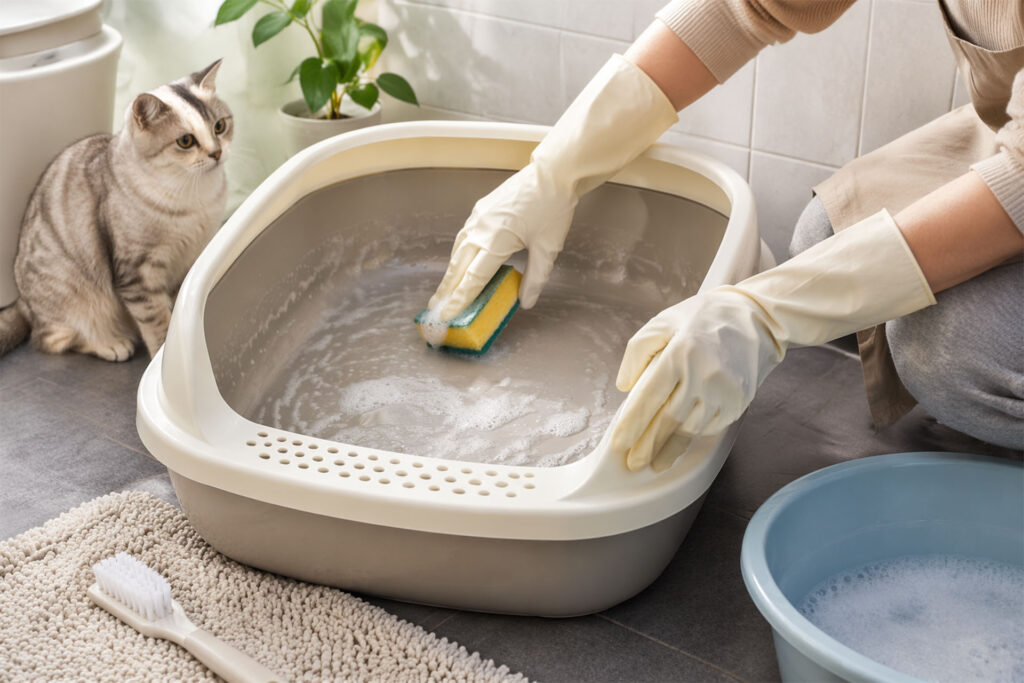
Si la arena se adhiere a la caja, tire el resto, sumerja la caja en agua caliente (unos 40 °C) durante 10 minutos y, a continuación, frótela con un cepillo suave. No utilices estropajos de acero, ya que los arañazos atrapan la suciedad y los gérmenes.
3. Rellenar la basura: mantener la profundidad adecuada
Añada arena nueva después de la limpieza. Lecho normal: 5-8 cm de profundidad. Lecho de tofu o mixto: 4-6 cm. Sustituya parcialmente el lecho sucio 2-3 veces por semana para evitar desperdicios.
4. Limpieza completa de la caja: cada 7-10 días
Pasos: tire la arena vieja → lávela con agua caliente → sumérjala en desinfectante apto para mascotas durante 5-10 minutos → aclárela bien → séquela completamente al aire → añada arena nueva. No utilice 84 desinfectantes ni alcohol para fricciones, ya que pueden envenenar a los gatos si los lamen.
5. Control de olores: natural y seguro
Espolvorea un poco de desodorante para mascotas después del secado, o coloca carbón activado/bicarbonato sódico cerca de la caja. No rocíes perfume ni ambientador: los olores fuertes hacen que los gatos eviten la caja.
6. Colocación: lejos de alimentos y agua
Coloca la caja en un lugar tranquilo, poco iluminado y bien ventilado, lejos de comida, agua y camas. Manténgala alejada de suelos húmedos para evitar la aparición de moho.
Diferencias de limpieza por tipo de camada
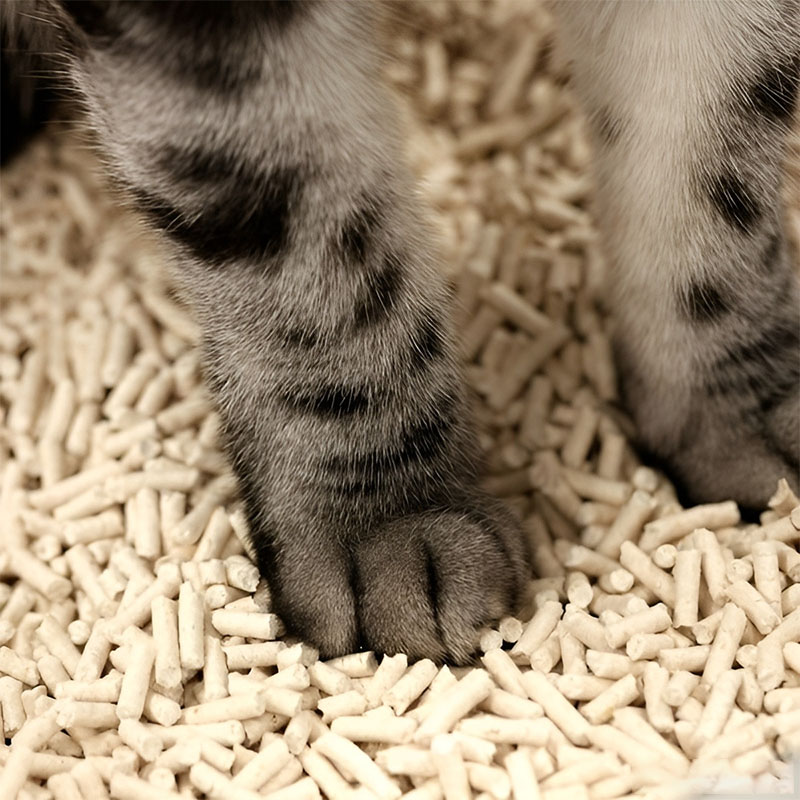
1. Lecho de tofu: se apelmaza rápidamente, se puede tirar de la cadena. Tamizar diariamente; sellar para mantener seco. Cambio completo cada ~7 días.
2. Lecho de bentonitaArena: tacto agradable, grumos compactos, polvorienta. Recoger con cuidado; utilizar una alfombrilla. Cambio completo cada ~10 días.
3. Lecho mixtoCombina tofu + bentonita. Limpia como el lecho de tofu; menos polvo, más duradero. Cambio completo cada 8-10 días.
4. Lecho de cristal: absorbe la humedad y cambia de color. No tamizar - sustituir por completo cuando esté totalmente coloreado. Recoger las heces superficiales semanalmente. Bueno para propietarios ocupados.
Preguntas frecuentes
Mi gato rechaza la caja de arena, ¿está sucia?
Muy probable. Las causas más comunes son los olores fuertes, la suciedad o la escasez de lecho. Otros motivos: tipo de lecho incorrecto, mala colocación, calor o enfermedad. Primero limpie más a menudo y luego compruebe otros problemas.
¿Puedo utilizar detergente para vajillas para limpiar el arenero?
Yes, if plain water doesn’t remove grease or odors. Use a small amount of pet-safe dish soap, rinse completely, and air dry fully. Residue irritates paws and stomachs.
¿Cuántas cajas higiénicas para varios gatos?
Follow number of cats + 1. For 2 cats, use 3 boxes. Place them separately. Clean each 2–3 times daily; full change every 5–7 days.
¿Consejos especiales para gatitos?
Utilice un lecho de tofu con poco polvo y de aglomeración lenta para evitar que se lo coman. Mantener el lecho a 3-4 cm de profundidad. Limpiar 1-2 veces al día; cambio completo cada ~5 días. Utilice una caja baja para facilitar la entrada.
¿Sigue oliendo mal justo después de limpiarlo?
Compruebe si hay suciedad en las grietas de la caja, arena húmeda o moho debajo de la caja. Realice una limpieza a fondo y cambie el lecho. Asegúrate de que la zona está ventilada; utiliza desodorantes seguros.
 Spanish
  English
  Russian
  Japanese
  Arabic